River bushwillow
Combretum erythrophyllum · Accepted scientific name
Scientific literature: Very Sparse (20 studies) · ★☆☆☆☆
River bushwillow, scientifically known as Combretum erythrophyllum, is a resilient deciduous tree native to African riverine ecosystems. Renowned for its medicinal properties, various parts of this plant are utilized in traditional healing to treat ailments ranging from digestive issues to skin inflammations, offering significant ethnobotanical value and therapeutic potential.
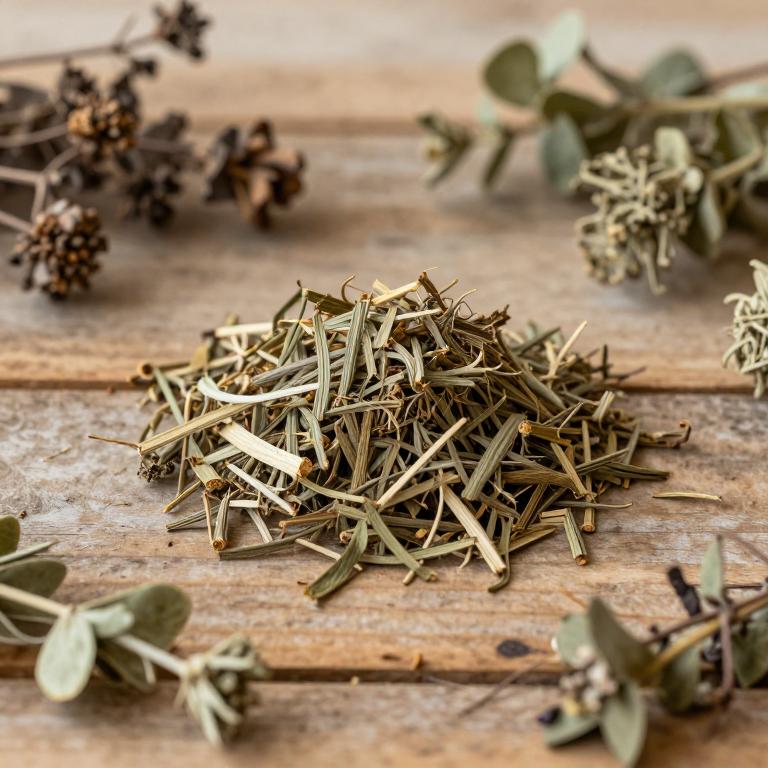
Names and Synonyms
Common Names
- bush-willow
- Bushveld Willow
- Bushveld-Willow
- River Bush Willow
- river combretum
Scientific Names
Accepted name
Combretum erythrophyllumSynonyms
- Terminalia erythrophylla
- Combretum glomeruliflorum var. riparium
- Combretum glomeruliflorum var. obscurum
- Combretum glomeruliflorum
- Combretum erythrophyllum var. obscurum
- Combretum lydenburgianum
- Combretum sonderi
- Combretum riparium
Regional and Traditional Names
German:
- Ufer-Buschweide
Sources: Wikidata, Catalogue of Life
Taxonomical Classification
This plant belongs to the kingdom Plantae and the phylum Streptophyta, falling under the class Equisetopsida and subclass Magnoliidae. Within the order Myrtales, it is classified under the family Combretaceae and the genus Combretum. Specifically, the medicinal species is known as Combretum erythrophyllum.
| Rank | Classification |
|---|---|
| Kingdom | Plantae |
| Phylum | Streptophyta |
| Class | Equisetopsida |
| Subclass | Magnoliidae |
| Order | Myrtales |
| Family | Combretaceae |
| Genus | Combretum |
Sources: The World Checklist of Vascular Plants (WCVP)
Distribution
This plant is widely distributed across several regions within the southern part of the African continent. In South Tropical Africa, its presence is documented in both Mozambique and Zimbabwe. Moving into the Southern Africa region, it can be found growing in Botswana. The species also extends its reach into the Cape Provinces. Finally, its geographical range includes the arid landscapes of Namibia.
| Region | Area |
|---|---|
| South Tropical Africa | Mozambique |
| South Tropical Africa | Zimbabwe |
| Southern Africa | Botswana |
| Southern Africa | Cape Provinces |
| Southern Africa | Namibia |
| Southern Africa | KwaZulu-Natal |
| Southern Africa | Free State |
| Southern Africa | Eswatini |
| Southern Africa | Northern Provinces |
Sources: The World Checklist of Vascular Plants (WCVP)
Botanical Identification
Ecology
The ecology of Combretum erythrophyllum is defined by its ability to thrive across a broad altitudinal gradient, demonstrating significant adaptability to varying topographical landscapes. It occupies a diverse vertical niche, ranging from low-lying areas at an elevation of 15 m AMSL to higher reaches reaching up to a maximum of 1525 m AMSL. This extensive elevational range suggests that the species can inhabit multiple ecological zones, from lowland tropical or subtropical environments to more temperate mid-elevation terrains, allowing it to interface with a wide variety of microclimates and soil compositions.
- Elevational range max:
- 1525 m AMSL
- Elevational range min:
- 15 m AMSL
Life history
The life history of Combretum erythrophyllum is characterized by its existence as a perennial species, allowing it to establish a long-term presence within its ecological niche. As a deciduous plant, it undergoes seasonal changes where it sheds its foliage, a strategy often employed to manage moisture levels and survive periods of environmental stress. This cycle of growth and dormancy is central to its survival pattern, enabling the plant to persist through multiple growing seasons.
- Deciduousness :
- deciduous
- Lifecycle :
- perennial
Morphology
The morphology of Combretum erythrophyllum is characterized by a woody growth habit that can manifest as either a shrub or a tree. This species is a self-supporting plant, lacking the climbing tendencies of a liana or vine, and it functions as an independent organism rather than a parasite. It is a terrestrial species, not adapted to aquatic or epiphytic lifestyles. In terms of stature, the plant exhibits significant vertical development, reaching an average height of approximately 12 meters, though it has the capacity to attain a maximum height of up to 30 meters.
- Aquatic :
- terrestrial
- Climber :
- self-supporting
- Epiphyte :
- terrestrial
- Growth form :
- tree
- Growth form :
- shrub
- Parasite :
- independent
- Plant height max:
- 30 m
- Plant height mean:
- 12 m
- Woodiness :
- woody
Physiology
The physiology of Combretum erythrophyllum is characterized by its specific metabolic strategies for carbon assimilation and nutrient acquisition. This species utilizes the C3 photosynthetic pathway, a process where carbon dioxide is fixed directly into a three-carbon compound during the initial stages of the Calvin cycle, which is typical for many woody shrubs and trees in its genus. Regarding its nutrient cycling capabilities, the plant is not a nitrogen fixer, meaning it lacks the specialized symbiotic relationship with nitrogen-fixing bacteria required to convert atmospheric nitrogen into biologically available forms; instead, it relies on the uptake of nitrogenous compounds available within the soil matrix to support its physiological development and growth.
- Nitrogen fixer :
- no
- Photosynthetic pathway :
- C3
Reproduction
The reproduction of Combretum erythrophyllum is characterized by the production of seeds that exhibit a high degree of uniformity in their physical dimensions. Based on empirical data, the seed mass of this species is remarkably consistent, with a calculated mean mass of 0.042665 g. This stability is further evidenced by the narrow range between the observed minimum seed mass of 0.04125 g and the maximum seed mass of 0.04408 g. Such precision in seed mass suggests a highly regulated developmental process during the reproductive cycle, ensuring that each individual seed possesses a standardized nutrient reserve for successful germination and early establishment.
- Seed mass max:
- 0.04408 g
- Seed mass mean:
- 0.042665 g
- Seed mass min:
- 0.04125 g
Sources: Global Inventory of Floras and Traits (GIFT)
Plant Parts
Combretum erythrophyllum has 4 reported plant parts identified across 5 scientific publications and several other databases that are studied for medicinal purposes. The most consistently reported plant part include leaf, root, seed, stem.
| Plant part | Supporting sources | Consensus |
|---|---|---|
| Leaf | 2 supporting sources | ★☆☆☆☆ |
| Root | 1 supporting sources | ★☆☆☆☆ |
| Seed | 1 supporting sources | ★☆☆☆☆ |
| Stem | 1 supporting sources | ★☆☆☆☆ |
Leaf
- Anti-cancer agents in medicinal chemistry
- Journal of ethnopharmacology
Root
- Genome announcements
Seed
- International journal of microbiology
Stem
- Anti-cancer agents in medicinal chemistry
Chemicals
Combretum erythrophyllum has 8 reported phytochemicals identified across 5 scientific publications and several other databases. The most consistently reported chemicals include (-)-Combretastatin, 5-Hydroxy-7,4'-dimethoxyflavone, Alkanes, Combretastatin A-1, Phenols.
| Chemical | Supporting sources | Consensus |
|---|---|---|
| (-)-Combretastatin | 1 supporting sources | ★☆☆☆☆ |
| 5-Hydroxy-7,4'-dimethoxyflavone | 1 supporting sources | ★☆☆☆☆ |
| Alkanes | 1 supporting sources | ★☆☆☆☆ |
| Combretastatin A-1 | 1 supporting sources | ★☆☆☆☆ |
| Phenols | 1 supporting sources | ★☆☆☆☆ |
| Phytosterols | 1 supporting sources | ★☆☆☆☆ |
| Terpenoids | 1 supporting sources | ★☆☆☆☆ |
| ketones | 1 supporting sources | ★☆☆☆☆ |
(-)-Combretastatin
- Journal of natural products
5-Hydroxy-7,4'-dimethoxyflavone
- Molecules (Basel, Switzerland)
Alkanes
- Scientific reports
Combretastatin A-1
- Journal of natural products
Phenols
- Scientific reports
Phytosterols
- Scientific reports
Terpenoids
- Scientific reports
ketones
- Scientific reports
Activities
Combretum erythrophyllum has 6 reported activities identified across 5 scientific publications and several other databases. The most consistently reported activities include Antibacterial, Antimicrobial, Antioxidant, Apoptotic, Cytotoxic.
| Activity | Supporting sources | Consensus |
|---|---|---|
| Antibacterial | 1 supporting sources | ★☆☆☆☆ |
| Antimicrobial | 1 supporting sources | ★☆☆☆☆ |
| Antioxidant | 1 supporting sources | ★☆☆☆☆ |
| Apoptotic | 1 supporting sources | ★☆☆☆☆ |
| Cytotoxic | 1 supporting sources | ★☆☆☆☆ |
| Mutagenic | 1 supporting sources | ★☆☆☆☆ |
Antibacterial
- Anti-cancer agents in medicinal chemistry
Antimicrobial
- International journal of microbiology
Antioxidant
- International journal of microbiology
Apoptotic
- Anti-cancer agents in medicinal chemistry
Cytotoxic
- Anti-cancer agents in medicinal chemistry
Mutagenic
- Mutation research
Conditions
Combretum erythrophyllum has 1 reported investigations on conditions identified across 5 scientific publications and several other databases. The most consistently reported conditions include antibiotic resistance.
| Condition | Supporting sources | Consensus |
|---|---|---|
| Antibiotic resistance | 1 supporting sources | ★☆☆☆☆ |
Antibiotic resistance
- Scientific reports
Preparations
Combretum erythrophyllum has 6 reported preparations identified across 5 scientific publications and several other databases. The most consistently reported preparations include Freeze dried and finely ground leaves, acetone extracts, extracts, leaf and stembark extracts, methanol extract.
| Preparation | Supporting sources | Consensus |
|---|---|---|
| Freeze dried and finely ground leaves | 1 supporting sources | ★☆☆☆☆ |
| Acetone extracts | 1 supporting sources | ★☆☆☆☆ |
| Extracts | 1 supporting sources | ★☆☆☆☆ |
| Leaf and stembark extracts | 1 supporting sources | ★☆☆☆☆ |
| Methanol extract | 1 supporting sources | ★☆☆☆☆ |
| Secondary metabolite extract | 1 supporting sources | ★☆☆☆☆ |
Freeze dried and finely ground leaves
- Journal of ethnopharmacology
Acetone extracts
- Plants (Basel, Switzerland)
Extracts
- Mutation research
Leaf and stembark extracts
- Anti-cancer agents in medicinal chemistry
Methanol extract
- Journal of natural products
Secondary metabolite extract
- Scientific reports