Four-leaved bushwillow
Combretum adenogonium · Accepted scientific name
Scientific literature: Very Sparse (22 studies) · ★☆☆☆☆
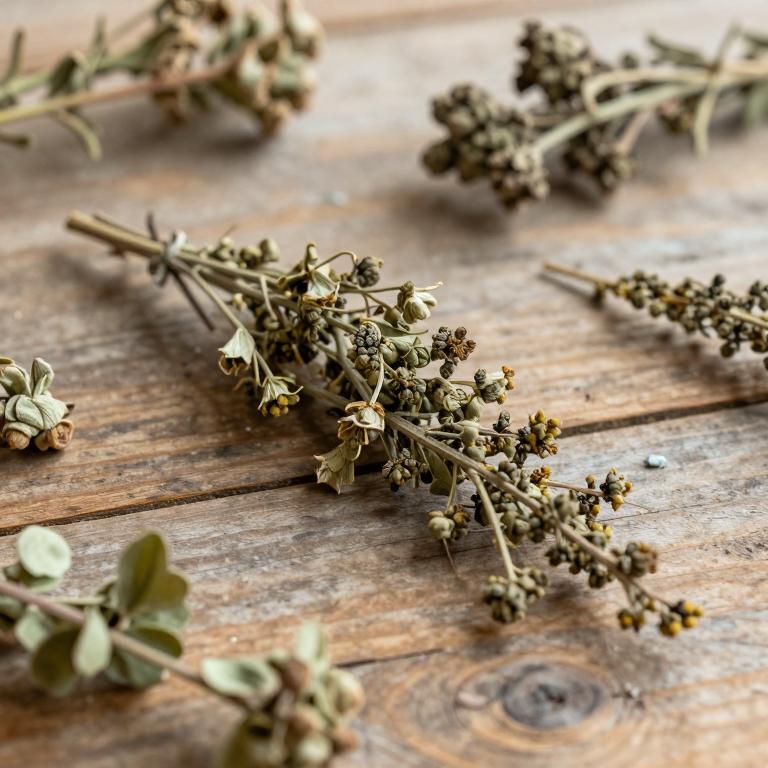
Four-leaved bushwillow, scientifically known as Combretum adenogonium, is a resilient woody shrub native to Southern Africa. Renowned for its unique foliage and ecological significance, this plant holds profound medicinal value. Traditional healers utilize its various parts to treat ailments ranging from digestive issues to inflammatory conditions, showcasing its botanical importance.
Names and Synonyms
Common Names
- Four-Leaved Combretum
- Ternate Combretum
- four-leaved bushwillow
Scientific Names
Accepted name
Combretum adenogoniumSynonyms
- Combretum multispicatum
- Combretum kamatutu
- Combretum kilossanum
- Combretum zechii
- Combretum reticulatum
- Combretum subvernicosum
- Combretum ternifolium
- Combretum tetraphyllum
- Combretum dalzielii
- Combretum fragrans
- Combretum ghasalense
- Combretum albidiflorum
- Combretum augustinum
- Combretum basarense
- Combretum chevalieri
Sources: Wikidata, Catalogue of Life
Taxonomical Classification
This plant belongs to the kingdom Plantae within the phylum Streptophyta and the class Equisetopsida. It is further classified under the subclass Magnoliidae and the order Myrtales. Finally, it is a member of the family Combretaceae and is specifically categorized under the genus Combretum.
| Rank | Classification |
|---|---|
| Kingdom | Plantae |
| Phylum | Streptophyta |
| Class | Equisetopsida |
| Subclass | Magnoliidae |
| Order | Myrtales |
| Family | Combretaceae |
| Genus | Combretum |
Sources: The World Checklist of Vascular Plants (WCVP)
Distribution
This plant is found across several specific regions within West Tropical Africa. Its geographical presence begins in the nation of Benin, where it grows in local habitats. It also extends into Burkina, contributing to the biodiversity of that area. Furthermore, the species is distributed through Ghana and Guinea-Bissau. Finally, its range includes the country of Guinea, completing its documented western African distribution.
| Region | Area |
|---|---|
| West Tropical Africa | Benin |
| West Tropical Africa | Burkina |
| West Tropical Africa | Ghana |
| West Tropical Africa | Guinea-Bissau |
| West Tropical Africa | Guinea |
| West Tropical Africa | Ivory Coast |
| West Tropical Africa | Mali |
| West Tropical Africa | Nigeria |
| West Tropical Africa | Senegal |
| West Tropical Africa | Sierra Leone |
Sources: The World Checklist of Vascular Plants (WCVP)
Botanical Identification
Life history
The life history of Combretum adenogonium is characterized by a perennial lifecycle, allowing the plant to persist through multiple growing seasons. As a phanerophyte, its reproductive buds are elevated above the ground on woody stems, a structural adaptation that defines its primary life form. The plant exhibits a deciduous growth habit, shedding its foliage periodically, which is a common strategy for managing resource availability and environmental stress.
- Deciduousness :
- deciduous
- Life form :
- phanerophyte
- Lifecycle :
- perennial
Morphology
The morphology of Combretum adenogonium is characterized by its robust growth form as a woody tree. This species is a self-supporting, terrestrial plant that functions independently, lacking both parasitic and epiphytic behaviors. In terms of stature, it exhibits significant vertical development, with plant heights ranging from a minimum of 3 meters to a maximum of 12 meters, maintaining an average height of approximately 11 meters.
- Aquatic :
- terrestrial
- Climber :
- self-supporting
- Epiphyte :
- terrestrial
- Growth form :
- tree
- Parasite :
- independent
- Plant height max:
- 12 m
- Plant height mean:
- 11 m
- Plant height min:
- 3 m
- Woodiness :
- woody
Physiology
The physiology of Combretum adenogonium is characterized by a C3 photosynthetic pathway, utilizing the standard Calvin cycle to fix atmospheric carbon dioxide into organic compounds. As a plant following this metabolic route, it does not employ the specialized CO2-concentrating mechanisms found in C4 or CAM species, making its carbon fixation processes sensitive to photorespiration under high-temperature or water-stressed conditions. Furthermore, regarding its nutrient acquisition strategies, this species is not a nitrogen fixer, meaning it lacks the symbiotic relationship with diazotrophic bacteria required to convert atmospheric nitrogen into usable forms, relying instead on the uptake of nitrates and ammonium available within the soil substrate.
- Nitrogen fixer :
- no
- Photosynthetic pathway :
- C3
Reproduction
The reproduction of Combretum adenogonium is characterized by a biotic pollination syndrome, relying primarily on insect vectors to facilitate the transfer of pollen between flowers. This reliance on biological agents for fertilization underscores its ecological integration within its habitat. Following successful pollination, the plant produces seeds with a highly consistent mass profile; the individual seed mass ranges from a minimum of 0.09726 g to a maximum of 0.09788 g, maintaining a calculated mean mass of 0.09757 g. This uniformity in seed size suggests a stabilized reproductive strategy aimed at ensuring consistent dispersal and establishment success for the offspring.
- Pollination syndrome :
- insect
- Pollination syndrome :
- biotic
- Seed mass max:
- 0.09788 g
- Seed mass mean:
- 0.09757 g
- Seed mass min:
- 0.09726 g
Sources: Global Inventory of Floras and Traits (GIFT)
Plant Parts
Combretum adenogonium has 2 reported plant parts identified across 5 scientific publications and several other databases that are studied for medicinal purposes. The most consistently reported plant part include leaf, stem.
| Plant part | Supporting sources | Consensus |
|---|---|---|
| Leaf | 3 supporting sources | ★★☆☆☆ |
| Stem | 2 supporting sources | ★☆☆☆☆ |
Leaf
- Planta medica
- Parasitology research
- Inflammopharmacology
Stem
- Journal of enzyme inhibition and medicinal chemistry
- Planta medica
Chemicals
Combretum adenogonium has 5 reported phytochemicals identified across 5 scientific publications and several other databases. The most consistently reported chemicals include Combretin A, Bellericagenin B, Betulin, STIGMASTEROL, betulinic acid.
| Chemical | Supporting sources | Consensus |
|---|---|---|
| Combretin A | 2 supporting sources | ★☆☆☆☆ |
| Bellericagenin B | 1 supporting sources | ★☆☆☆☆ |
| Betulin | 1 supporting sources | ★☆☆☆☆ |
| STIGMASTEROL | 1 supporting sources | ★☆☆☆☆ |
| betulinic acid | 1 supporting sources | ★☆☆☆☆ |
Combretin A
- Gastroenterology research and practice
- Inflammopharmacology
Bellericagenin B
- Natural product research
Betulin
- Natural product research
STIGMASTEROL
- Natural product research
betulinic acid
- Natural product research
Activities
Combretum adenogonium has 4 reported activities identified across 5 scientific publications and several other databases. The most consistently reported activities include Analgesic, Anticancer, Antioxidant, Antiviral.
| Activity | Supporting sources | Consensus |
|---|---|---|
| Analgesic | 1 supporting sources | ★☆☆☆☆ |
| Anticancer | 1 supporting sources | ★☆☆☆☆ |
| Antioxidant | 1 supporting sources | ★☆☆☆☆ |
| Antiviral | 1 supporting sources | ★☆☆☆☆ |
Analgesic
- Inflammopharmacology
Anticancer
- Inflammopharmacology
Antioxidant
- Gastroenterology research and practice
Antiviral
- Journal of ethnopharmacology
Conditions
Combretum adenogonium has 2 reported investigations on conditions identified across 5 scientific publications and several other databases. The most consistently reported conditions include Herpes Simplex Virus type 1, Plasmodium falciparum.
| Condition | Supporting sources | Consensus |
|---|---|---|
| Herpes simplex virus type 1 | 1 supporting sources | ★☆☆☆☆ |
| Plasmodium falciparum | 1 supporting sources | ★☆☆☆☆ |
Herpes simplex virus type 1
- Journal of ethnopharmacology
Plasmodium falciparum
- Planta medica
Preparations
Combretum adenogonium has 7 reported preparations identified across 5 scientific publications and several other databases. The most consistently reported preparations include 80 % MeOH extract of Combretum adenogonium (leaves), 80 % MeOH extracts of Combretum adenogonium (leaves and stem bark), Extracts, alkaloid leaf extract, chloromethylenic extracts.
| Preparation | Supporting sources | Consensus |
|---|---|---|
| 80 % meoh extract of combretum adenogonium (leaves) | 1 supporting sources | ★☆☆☆☆ |
| 80 % meoh extracts of combretum adenogonium (leaves and stem bark) | 1 supporting sources | ★☆☆☆☆ |
| Extracts | 1 supporting sources | ★☆☆☆☆ |
| Alkaloid leaf extract | 1 supporting sources | ★☆☆☆☆ |
| Chloromethylenic extracts | 1 supporting sources | ★☆☆☆☆ |
| Methanolic extracts | 1 supporting sources | ★☆☆☆☆ |
| Methanolic extracts of the stem barks | 1 supporting sources | ★☆☆☆☆ |
80 % meoh extract of combretum adenogonium (leaves)
- Planta medica
80 % meoh extracts of combretum adenogonium (leaves and stem bark)
- Planta medica
Extracts
- Journal of ethnopharmacology
Alkaloid leaf extract
- Parasitology research
Chloromethylenic extracts
- Parasitology research
Methanolic extracts
- Parasitology research
Methanolic extracts of the stem barks
- Journal of enzyme inhibition and medicinal chemistry