Shiva's Gift
Coleus vettiveroides · Accepted scientific name
Scientific literature: Very Sparse (17 studies) · ★☆☆☆☆
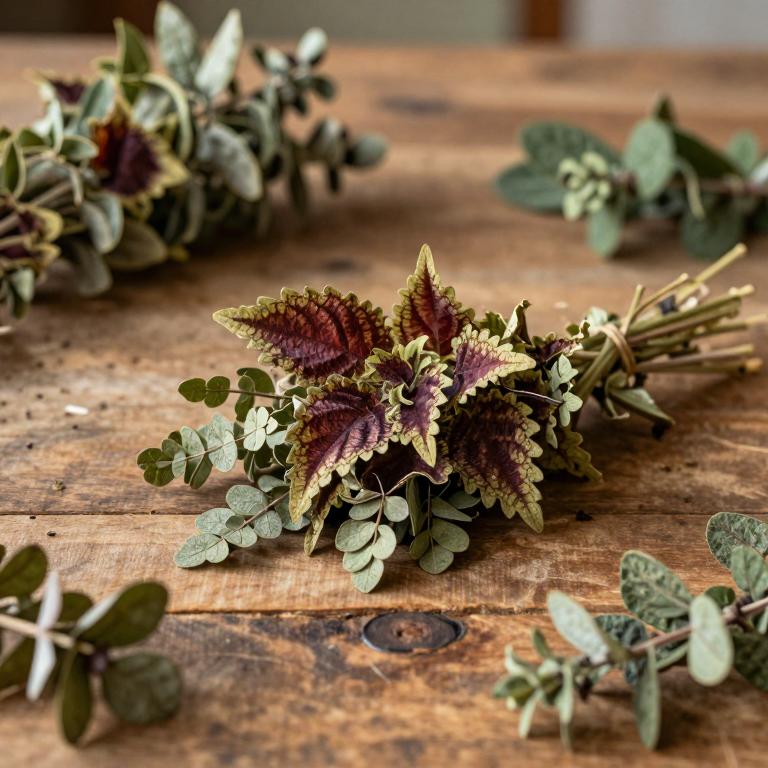
Shiva's Gift, scientifically known as Coleus vettiveroides, is a medicinal shrub native to the tropical regions of India. Renowned for its aromatic, minty fragrance, this plant is highly valued in traditional Ayurveda. It possesses potent antimicrobial and anti-inflammatory properties, making it essential for treating various skin and respiratory ailments.
- Family
- Lamiaceae
- Native range
- Asia-Tropical
- Parts used
- Root · Leaf
- Common names
- Shiva'S Gift
- Scientific synonyms
- Plectranthus Vettiveroides
Names and Synonyms
Common Names
- Shiva's Gift
Scientific Names
Accepted name
Coleus vettiveroidesSynonyms
- Plectranthus vettiveroides
Sources: Wikidata, Catalogue of Life
Taxonomical Classification
This plant belongs to the kingdom Plantae and the phylum Streptophyta, falling under the class Equisetopsida and subclass Magnoliidae. Within the order Lamiales and family Lamiaceae, it is specifically classified under the genus Coleus.
| Rank | Classification |
|---|---|
| Kingdom | Plantae |
| Phylum | Streptophyta |
| Class | Equisetopsida |
| Subclass | Magnoliidae |
| Order | Lamiales |
| Family | Lamiaceae |
| Genus | Coleus |
Sources: The World Checklist of Vascular Plants (WCVP)
Distribution
This plant is primarily recognized for its specific presence within the Indian Subcontinent. Its geographical range is highly localized, being found natively in India. Within this region, it thrives in particular environmental niches that support its growth. Because its distribution is limited to this specific area, it is considered an endemic species of the country. Therefore, the ecological study of this species is closely tied to the biodiversity of the Indian landscape.
| Region | Area |
|---|---|
| Indian Subcontinent | India |
Sources: The World Checklist of Vascular Plants (WCVP)
Plant Parts
Coleus vettiveroides has 2 reported plant parts identified across 4 scientific publications and several other databases that are studied for medicinal purposes. The most consistently reported plant part include root, leaf.
| Plant part | Supporting sources | Consensus |
|---|---|---|
| Root | 3 supporting sources | ★★☆☆☆ |
| Leaf | 1 supporting sources | ★☆☆☆☆ |
Root
- Journal of ethnopharmacology
- Environmental toxicology
- Cell biochemistry and function
Leaf
- Exploration of targeted anti-tumor therapy
Chemicals
Coleus vettiveroides has 1 reported phytochemicals identified across 4 scientific publications and several other databases. The most consistently reported chemicals include PVF.
| Chemical | Supporting sources | Consensus |
|---|---|---|
| PVF | 1 supporting sources | ★☆☆☆☆ |
PVF
- Exploration of targeted anti-tumor therapy
Activities
Coleus vettiveroides has 3 reported activities identified across 4 scientific publications and several other databases. The most consistently reported activities include Antidiabetic, Antioxidant, Antibacterial.
| Activity | Supporting sources | Consensus |
|---|---|---|
| Antidiabetic | 2 supporting sources | ★☆☆☆☆ |
| Antioxidant | 2 supporting sources | ★☆☆☆☆ |
| Antibacterial | 1 supporting sources | ★☆☆☆☆ |
Antidiabetic
- Environmental toxicology
- Cell biochemistry and function
Antioxidant
- Environmental toxicology
- Cell biochemistry and function
Antibacterial
- Cell biochemistry and function
Conditions
Coleus vettiveroides has 5 reported investigations on conditions identified across 4 scientific publications and several other databases. The most consistently reported conditions include inflammation, oxidative stress, antidiabetic, antioxidant, liver fibrosis.
| Condition | Supporting sources | Consensus |
|---|---|---|
| Inflammation | 2 supporting sources | ★☆☆☆☆ |
| Oxidative stress | 2 supporting sources | ★☆☆☆☆ |
| Antidiabetic | 1 supporting sources | ★☆☆☆☆ |
| Antioxidant | 1 supporting sources | ★☆☆☆☆ |
| Liver fibrosis | 1 supporting sources | ★☆☆☆☆ |
Inflammation
- Environmental toxicology
- Cell biochemistry and function
Oxidative stress
- Environmental toxicology
- Cell biochemistry and function
Antidiabetic
- Environmental toxicology
Antioxidant
- Environmental toxicology
Liver fibrosis
- Environmental toxicology
Preparations
Coleus vettiveroides has 7 reported preparations identified across 4 scientific publications and several other databases. The most consistently reported preparations include CV ethanolic root extract, dried leaf powder, ethanolic root extract, ethyl acetate extract, ethyl acetate leaf extract.
| Preparation | Supporting sources | Consensus |
|---|---|---|
| Cv ethanolic root extract | 1 supporting sources | ★☆☆☆☆ |
| Dried leaf powder | 1 supporting sources | ★☆☆☆☆ |
| Ethanolic root extract | 1 supporting sources | ★☆☆☆☆ |
| Ethyl acetate extract | 1 supporting sources | ★☆☆☆☆ |
| Ethyl acetate leaf extract | 1 supporting sources | ★☆☆☆☆ |
| Organic leaf extracts | 1 supporting sources | ★☆☆☆☆ |
| Root essential oil | 1 supporting sources | ★☆☆☆☆ |
Cv ethanolic root extract
- Environmental toxicology
Dried leaf powder
- Exploration of targeted anti-tumor therapy
Ethanolic root extract
- Cell biochemistry and function
Ethyl acetate extract
- Exploration of targeted anti-tumor therapy
Ethyl acetate leaf extract
- Exploration of targeted anti-tumor therapy
Organic leaf extracts
- Exploration of targeted anti-tumor therapy
Root essential oil
- Journal of ethnopharmacology