Chinese-potato
Coleus rotundifolius · Accepted scientific name
Scientific literature: Very Sparse (2 studies) · ★☆☆☆☆
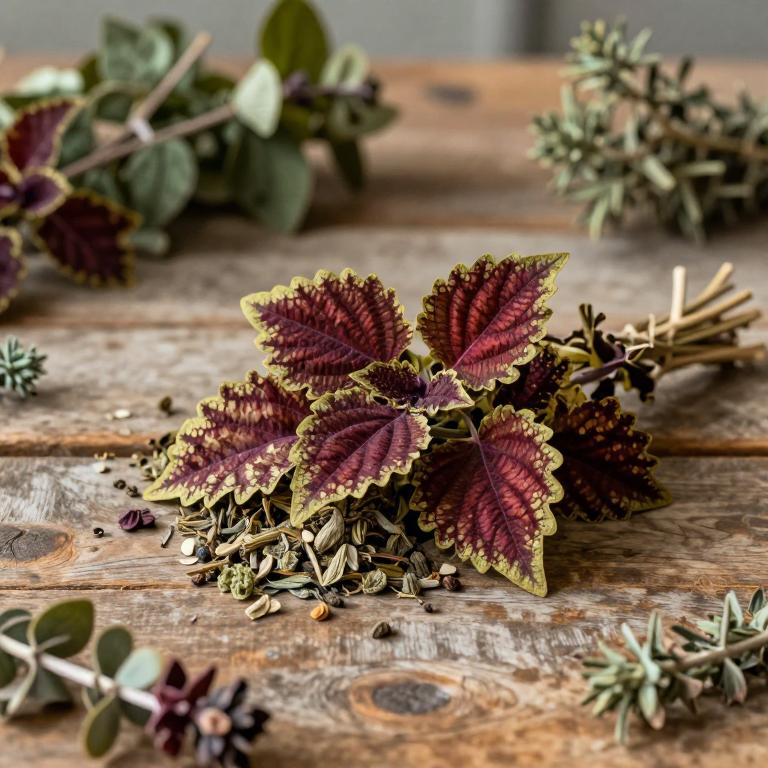
Chinese-potato, scientifically known as Coleus rotundifolius, is a versatile medicinal herb native to tropical regions. Renowned for its tuberous roots, it is widely utilized in traditional medicine to treat digestive ailments, inflammation, and skin conditions. This resilient plant offers significant therapeutic potential through its unique bioactive compounds and nutritional properties.
Names and Synonyms
Common Names
- Chinese-potato
- Hausa-potato
- Madagascar-potato
- Salaga-potato
- Sudan-potato
- country-potato
- fra-fra-potato
Scientific Names
Accepted name
Coleus rotundifoliusSynonyms
- Nepeta madagascariensis
- Germanea rotundifolia
- Coleus rotundifolius var. nigra
- Plectranthus rotundifolius
- Solenostemon rotundifolius
- Coleus dysentericus
- Plectranthus ternatus
- Coleus pallidiflorus
- Calchas parviflorus
- Plectranthus coppinii
- Coleus parviflorus
- Coleus rehmannii
- Majana tuberosa
- Coleus rugosus
- Coleus salagensis
- Coleus ternatus
Regional and Traditional Names
Spanish:
- patata de los Hausas
German:
- Hausakartoffel
French:
- pomme de terre du Madagascar
- pomme de terre du Soudan
Sources: Wikidata, Catalogue of Life
Taxonomical Classification
This plant belongs to the kingdom Plantae and the phylum Streptophyta, falling under the class Equisetopsida and subclass Magnoliidae. Within the order Lamiales and the family Lamiaceae, it is classified under the genus Coleus.
| Rank | Classification |
|---|---|
| Kingdom | Plantae |
| Phylum | Streptophyta |
| Class | Equisetopsida |
| Subclass | Magnoliidae |
| Order | Lamiales |
| Family | Lamiaceae |
| Genus | Coleus |
Sources: The World Checklist of Vascular Plants (WCVP)
Distribution
This plant, known as Coleus rotundifolius, exhibits a specific geographical distribution across the West Tropical Africa region. Its presence is documented within the borders of Benin, where it thrives in local ecosystems. The species can also be found extending through the territories of Burkina and Ghana. Furthermore, its range continues into the neighboring country of Guinea. Finally, the distribution of this medicinal plant includes the coastal landscapes of the Ivory Coast.
| Region | Area |
|---|---|
| West Tropical Africa | Benin |
| West Tropical Africa | Burkina |
| West Tropical Africa | Ghana |
| West Tropical Africa | Guinea |
| West Tropical Africa | Ivory Coast |
| West Tropical Africa | Nigeria |
| West Tropical Africa | Senegal |
| West Tropical Africa | Togo |
| West-Central Tropical Africa | Central African Republic |
| West-Central Tropical Africa | Congo |
Sources: The World Checklist of Vascular Plants (WCVP)
Botanical Identification
Life history
The life history of Coleus rotundifolius is characterized by its classification as a perennial plant, meaning it is capable of living for multiple years throughout its development. In terms of its ecological growth habit and survival strategy, the species functions as a cryptophyte, protecting its perennuating buds beneath the soil surface or leaf litter to endure unfavorable conditions. Furthermore, its specific life form is identified as a chamaephyte, indicating that its permanent buds are situated close to the ground level, which influences its structural resilience and adaptation to its environment.
- Life form :
- chamaephyte
- Life form :
- cryptophyte
- Lifecycle :
- perennial
Morphology
The morphology of Coleus rotundifolius is characterized by a growth form classified as a herb and a forb, reaching an average plant height of approximately 0.5 m. This species functions as a self-supporting plant rather than a climber and is strictly terrestrial in its habitat, neither being aquatic nor acting as an epiphyte. It maintains an independent lifestyle, functioning as a non-parasitic organism, and exhibits a non-woody structure throughout its development.
- Aquatic :
- terrestrial
- Climber :
- self-supporting
- Epiphyte :
- terrestrial
- Growth form :
- herb
- Parasite :
- independent
- Plant height mean:
- 0.5 m
- Woodiness :
- non-woody
Physiology
The physiology of Coleus rotundifolius is characterized by a robust metabolic framework optimized for rapid growth and high photosynthetic efficiency, driven by its specialized leaf structure and pigment concentration. As a non-leguminous herbaceous species, it is not a nitrogen fixer; therefore, it lacks the symbiotic relationship with rhizobia required to convert atmospheric nitrogen into bioavailable forms, meaning it must rely entirely on the uptake of nitrates and ammonium from the soil via its root system. Its physiological processes are heavily influenced by its secondary metabolite production, particularly the synthesis of essential oils and phenolic compounds, which are regulated through complex biochemical pathways in response to environmental stressors. Water regulation is managed through a coordinated transpiration process via stomatal movement, which balances CO2 uptake for photosynthesis with the prevention of excessive desiccation. The plant's nutrient assimilation relies on efficient mineral transport mechanisms to support its dense vegetative biomass and the structural integrity of its stems and leaves.
- Nitrogen fixer :
- no
Sources: Global Inventory of Floras and Traits (GIFT)
Chemicals
Coleus rotundifolius has 2 reported phytochemicals identified across 0 scientific publications and several other databases. The most consistently reported chemicals include Hexaconazole, TRIADIMEFON.
| Chemical | Supporting sources | Consensus |
|---|---|---|
| Hexaconazole | 1 supporting sources | ★☆☆☆☆ |
| TRIADIMEFON | 1 supporting sources | ★☆☆☆☆ |
Hexaconazole
- Colloids and surfaces. B, Biointerfaces
TRIADIMEFON
- Colloids and surfaces. B, Biointerfaces