Coleus maculosus subsp. maculosus
Coleus maculosus subsp. maculosus · Accepted scientific name
Scientific literature: Very Sparse (1 studies) · ★☆☆☆☆
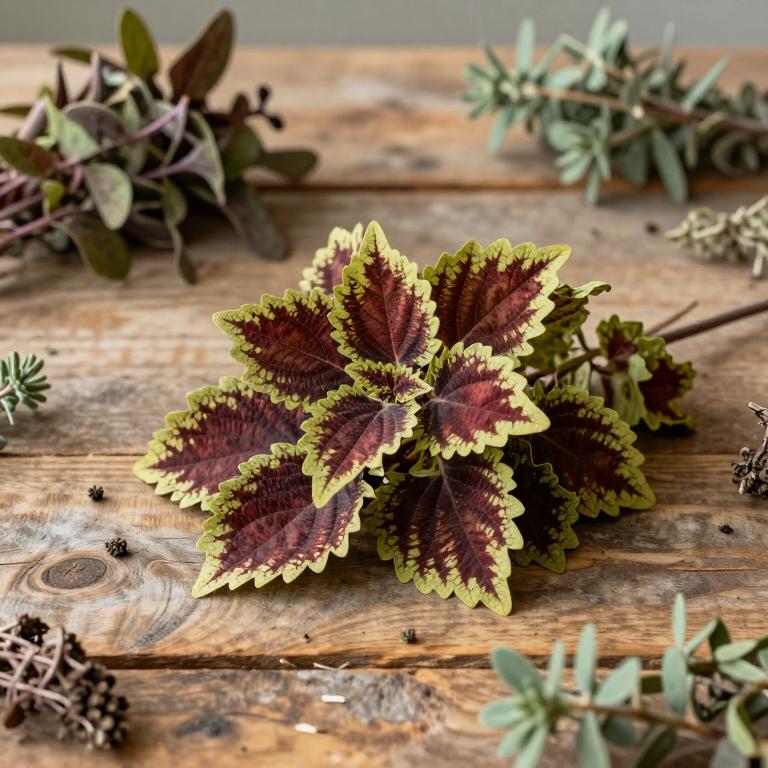
Coleus maculosus subsp. maculosus is a significant botanical species recognized for its diverse pharmacological properties. Within traditional medicinal practices, this plant is primarily valued for its potent anthelmintic activities used to expel parasitic worms. Researchers frequently study its therapeutic potential through the application of various specialized preparations. These studies typically utilize both aqueous extracts and hydro-alcoholic extracts to isolate its bioactive compounds. Consequently, understanding its chemical profile is essential for advancing its use in modern herbal medicine.
- Synonyms
- Coleus Doba · Coleus Glandulosus · 9 more
- Common names
- Not available
- Family
- Lamiaceae
- Distribution
- Southern America
- Plant Parts
- Not available
Classification
Synonyms
Coleus maculosus subsp. maculosus is a botanical subject characterized by a complex web of taxonomic synonyms. Within scientific literature, this specific subspecies is frequently identified by the name Coleus doba. It is also recognized under several other designations, including Coleus glandulosus and Coleus praetermissus. Furthermore, the plant has been cataloged as Coleus serrulatus in various historical records. Ultimately, these diverse names, including the classification Germanea maculosa, all refer back to this single unique taxon.
Sources: The World Checklist of Vascular Plants (WCVP)
Taxonomy
Coleus maculosus subsp. maculosus belongs to the vast kingdom Plantae, representing the diverse life found within the botanical world. This specific subspecies is classified under the class Equisetopsida and falls within the order Lamiales. As a member of the Lamiaceae family, it shares structural characteristics common to many aromatic herbs. Its taxonomic journey continues within the genus Coleus, which defines its unique morphological traits. Understanding these hierarchical relationships provides essential insight into the biological identity of this plant.
| Rank | Classification |
|---|---|
| Kingdom | Plantae |
| Phylum | Streptophyta |
| Class | Equisetopsida |
| Subclass | Magnoliidae |
| Order | Lamiales |
| Family | Lamiaceae |
| Genus | Coleus |
Sources: The World Checklist of Vascular Plants (WCVP)
Distribution
Geographic Regions
Coleus maculosus subsp. maculosus is a distinct botanical variety found throughout various regions of the African continent. Its natural distribution spans across East Tropical Africa, where it can be located in Kenya, Tanzania, and Uganda. The plant also extends its range into Northeast Tropical Africa, specifically within the borders of Ethiopia. Furthermore, its presence reaches into West-Central Tropical Africa, including the nation of Burundi. This widespread geographic footprint highlights the plant's adaptability to diverse tropical environments.
Sources: The World Checklist of Vascular Plants (WCVP)
Identification
Biological Activities
Coleus maculosus subsp. maculosus exhibits notable anthelmintic activity, making it a subject of interest in the search for natural parasite controls. As conventional drugs face rising resistance and increasing costs, researchers are increasingly looking toward medicinal plants to manage gastrointestinal nematodes in livestock. Studies on similar botanical species have demonstrated that plant extracts can effectively inhibit the hatching of eggs and the development of larvae. For instance, certain extracts have shown complete inhibition of egg hatching at very low concentrations, highlighting the potent biochemical potential of these species. Continued exploration of these plant relationships offers a promising pathway for developing sustainable and affordable alternatives to synthetic anthelmintics.
Compounds
Conditions
Coleus maculosus subsp. maculosus is not mentioned in the provided abstracts as having any effect on Haemonchus contortus. The provided text specifically evaluates the ovicidal and larvicidal activities of Maesa lanceolata and Plectranthus punctatus against this parasite. According to the research, both Maesa lanceolata and Plectranthus punctatus demonstrated the ability to inhibit egg hatching at or below 1 mg/ml. These plants showed dose-dependent inhibition of larval development, suggesting they contain potential anthelmintic compounds. Therefore, the abstracts do not support the relationship involving Coleus maculosus subsp. maculosus treating Haemonchus contortus.
Preparations
Coleus maculosus subsp. maculosus is prepared as aqueous extracts for various biological applications. Additionally, this specific subspecies is prepared as hydro-alcoholic extracts to facilitate different types of testing. These two preparation methods allow for the extraction of diverse chemical compounds from the plant material. Both aqueous and hydro-alcoholic formulations serve as essential components in the study of the plant's properties. The utilization of these specific extraction techniques is central to understanding the botanical potential of Coleus maculosus subsp. maculosus.