Hairy Spurflower
Coleus hadiensis · Accepted scientific name
Scientific literature: Very Sparse (2 studies) · ★☆☆☆☆
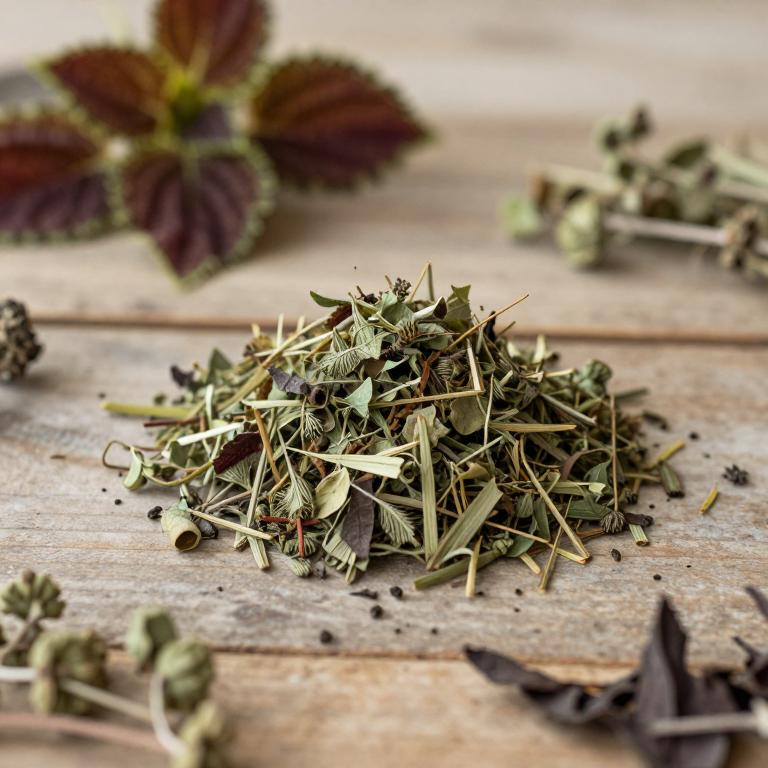
Hairy Spurflower, scientifically known as Coleus hadiensis, is a striking ornamental plant prized for its textured foliage and vibrant blooms. Native to tropical regions, this species is valued in traditional medicine for its potential healing properties, offering a unique combination of aesthetic beauty and therapeutic value in herbal practices.
- Family
- Lamiaceae
- Native range
- Africa
- Parts used
- Not available
- Common names
- Hairy Spurflower · Vicks Plant
- Scientific synonyms
- Plectranthus Hadiensis · Plectranthus Hadiensis Var. Tomentosus · 22 more
Names and Synonyms
Common Names
- Hairy Spurflower
- Vicks Plant
Scientific Names
Accepted name
Coleus hadiensisSynonyms
- Plectranthus hadiensis
- Plectranthus hadiensis var. tomentosus
- Plectranthus horridus
- Plectranthus zatarhendi var. tomentosus
- Plectranthus ramosior
- Coleus zeylanicus
- Plectranthus hadiensis var. woodii
- Plectranthus zatarhendi var. woodii
- Plectranthus woodii
- Plectranthus zeylanicus
- Plectranthus madagascariensis var. ramosior
- Plectranthus paucicrenatus
- Plectranthus rupestris
- Plectranthus tomentosus
- Plectranthus cyaneus
- Plectranthus draconis
- Plectranthus erlangeri
- Plectranthus fragrans
- Plectranthus hararensis
- Ocimum hadiense
- Germanea horrida
- Coleus personatus
- Coleus schweinfurthii
- Plectranthus petrensis
Regional and Traditional Names
Spanish:
- Planta de Vaporub
Sources: Wikidata, Catalogue of Life
Taxonomical Classification
This plant belongs to the kingdom Plantae within the phylum Streptophyta and the class Equisetopsida. It is further classified under the subclass Magnoliidae, the order Lamiales, and the family Lamiaceae. Finally, its taxonomic hierarchy concludes with its classification under the genus Coleus.
| Rank | Classification |
|---|---|
| Kingdom | Plantae |
| Phylum | Streptophyta |
| Class | Equisetopsida |
| Subclass | Magnoliidae |
| Order | Lamiales |
| Family | Lamiaceae |
| Genus | Coleus |
Sources: The World Checklist of Vascular Plants (WCVP)
Distribution
This plant exhibits a diverse geographical distribution across several regions of the African continent. In Northern Africa, its presence is specifically noted within the borders of Egypt. Moving toward West-Central Tropical Africa, the species can be found inhabiting Rwanda and the DR Congo. The plant also extends into Northeast Tropical Africa, where it grows in Chad. Finally, its range reaches the easternmost point of Djibouti within the Northeast Tropical region.
| Region | Area |
|---|---|
| Northern Africa | Egypt |
| West-Central Tropical Africa | Rwanda |
| West-Central Tropical Africa | DR Congo |
| Northeast Tropical Africa | Chad |
| Northeast Tropical Africa | Djibouti |
| Northeast Tropical Africa | Eritrea |
| Northeast Tropical Africa | Ethiopia |
| Northeast Tropical Africa | Somalia |
| East Tropical Africa | Kenya |
| East Tropical Africa | Tanzania |
Sources: The World Checklist of Vascular Plants (WCVP)
Botanical Identification
Ecology
The ecology of Coleus hadiensis is characterized by a broad altitudinal distribution that allows it to inhabit diverse montane and lowland environments. This species demonstrates significant ecological plasticity, occupying a wide vertical gradient that begins at low-lying areas as low as 30 m AMSL and extends to high-altitude habitats reaching a maximum of 2195 m AMSL. This extensive elevational range suggests that the plant is capable of adapting to varying temperature regimes, atmospheric pressures, and moisture levels found across different topographical strata. Such a wide distribution indicates its ability to thrive in both humid tropical lowlands and more temperate, montane ecosystems within its native range.
- Elevational range max:
- 2195 m AMSL
- Elevational range min:
- 30 m AMSL
Life history
The life history of Coleus hadiensis is characterized by its status as a perennial organism, allowing it to persist through multiple growing seasons. In terms of its structural growth habit and survival strategy, the plant is classified as a chamaephyte, a life form where the ascending or decumbent shoots are located close to the ground, typically with the buds positioned just above the soil surface. This chamaephyte designation, noted through both its primary and secondary life form classifications, dictates its ability to withstand varying environmental conditions by maintaining its regenerative capacity near the substrate.
- Life form :
- chamaephyte
- Lifecycle :
- perennial
Morphology
The morphology of Coleus hadiensis is characterized by a herbaceous growth form, appearing as a non-woody herb. It functions as an independent organism, neither acting as a parasite nor an epiphyte, maintaining a terrestrial existence. The plant displays a versatile growth habit, exhibiting both self-supporting structures and vine-like climbing tendencies. In terms of stature, it reaches a minimum height of 0.5 m, with a mean plant height of approximately 0.7 m, and can attain a maximum height of up to 1.5 m.
- Aquatic :
- terrestrial
- Climber :
- vine
- Climber :
- self-supporting
- Epiphyte :
- terrestrial
- Growth form :
- herb
- Parasite :
- independent
- Plant height max:
- 1.5 m
- Plant height mean:
- 0.7 m
- Plant height min:
- 0.5 m
- Woodiness :
- non-woody
Reproduction
The reproduction of Coleus hadiensis is characterized by the production of highly uniform seeds, which play a critical role in the plant's life cycle and propagation potential. Detailed morphological analysis reveals that the seed mass is remarkably consistent across all observed samples, exhibiting no variance in weight. Specifically, the seed mass mean is recorded at 0.00034 g, a value that is mirrored by both the maximum and minimum seed mass measurements of 0.00034 g. This extreme uniformity in seed mass suggests a highly stabilized reproductive mechanism, ensuring that each individual seed possesses an identical nutrient reserve to support early germination and seedling establishment.
- Seed mass mean:
- 0.00034 g
Sources: Global Inventory of Floras and Traits (GIFT)
Activities
Coleus hadiensis has 2 reported activities identified across 0 scientific publications and several other databases. The most consistently reported activities include Antimicrobial, Disinfectant.
| Activity | Supporting sources | Consensus |
|---|---|---|
| Antimicrobial | 1 supporting sources | ★☆☆☆☆ |
| Disinfectant | 1 supporting sources | ★☆☆☆☆ |
Antimicrobial
- Pharmaceuticals (Basel, Switzerland)
Disinfectant
- Pharmaceuticals (Basel, Switzerland)
Preparations
Coleus hadiensis has 5 reported preparations identified across 0 scientific publications and several other databases. The most consistently reported preparations include extracts, extracts prepared with dichloromethane, extracts prepared with n-hexane, lipophilic extracts, methanolic extracts.
| Preparation | Supporting sources | Consensus |
|---|---|---|
| Extracts | 1 supporting sources | ★☆☆☆☆ |
| Extracts prepared with dichloromethane | 1 supporting sources | ★☆☆☆☆ |
| Extracts prepared with n-hexane | 1 supporting sources | ★☆☆☆☆ |
| Lipophilic extracts | 1 supporting sources | ★☆☆☆☆ |
| Methanolic extracts | 1 supporting sources | ★☆☆☆☆ |
Extracts
- Plants (Basel, Switzerland)
Extracts prepared with dichloromethane
- Journal of ethnopharmacology
Extracts prepared with n-hexane
- Journal of ethnopharmacology
Lipophilic extracts
- Pharmaceuticals (Basel, Switzerland)
Methanolic extracts
- Evidence-based complementary and alternative medicine : eCAM