forskohlii
Coleus barbatus · Accepted scientific name
Scientific literature: Very Extensive (485 studies) · ★★★★★
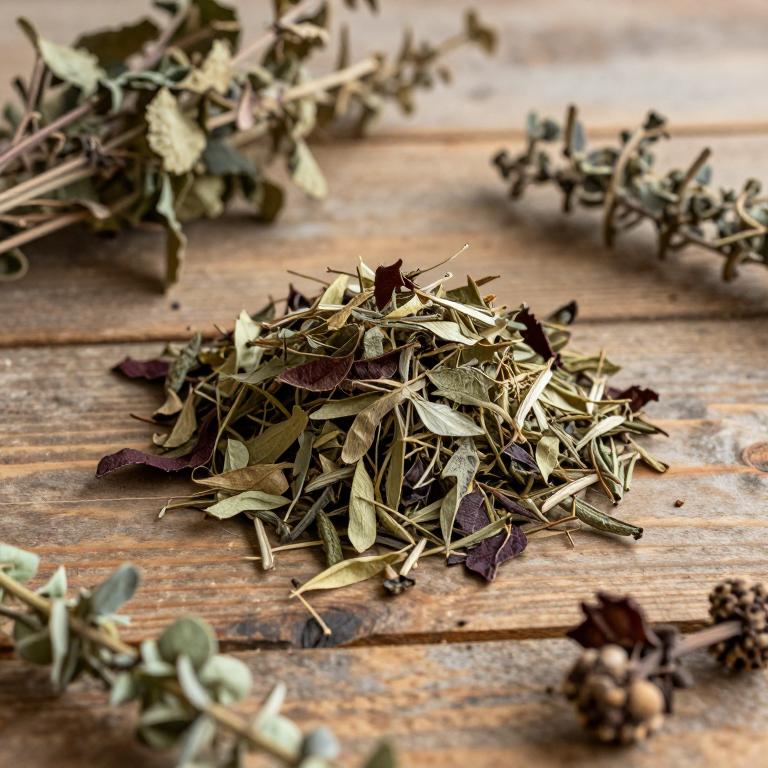
Forskoii, scientifically known as Coleus barbatus, is a versatile medicinal herb widely used in traditional African medicine. Renowned for its potent therapeutic properties, this plant is frequently employed to treat ailments ranging from digestive issues to skin infections, serving as a vital natural resource for holistic wellness and healing.
- Family
- Lamiaceae
- Native range
- Africa
- Parts used
- Root · Leaf
- Common names
- Forskohlii · Abyssinian Coleus · 4 more
- Scientific synonyms
- Plectranthus Barbatus
Names and Synonyms
Common Names
- forskohlii
- Abyssinian Coleus
- Bearded Hullwort
- Bearded Spurflower
- Woolly Plectranthus
- Indian Coleus
Scientific Names
Accepted name
Coleus barbatusSynonyms
- Plectranthus barbatus
Sources: Wikidata, Catalogue of Life
Taxonomical Classification
This plant belongs to the kingdom Plantae and is classified under the phylum Streptophyta and class Equisetopsida. Within the subclass Magnoliidae, it falls under the order Lamiales and the family Lamiaceae. Finally, it is categorized under the genus Coleus as Coleus barbatus.
| Rank | Classification |
|---|---|
| Kingdom | Plantae |
| Phylum | Streptophyta |
| Class | Equisetopsida |
| Subclass | Magnoliidae |
| Order | Lamiales |
| Family | Lamiaceae |
| Genus | Coleus |
Sources: The World Checklist of Vascular Plants (WCVP)
Distribution
This plant exhibits a wide-ranging geographical distribution across several distinct tropical and subtropical regions. In the Macaronesian islands, its presence can be specifically noted in Madeira. Moving to West-Central Tropical Africa, it is found within the borders of Burundi and Rwanda. The species also extends its reach into the Democratic Republic of the Congo. Finally, its range stretches toward Northeast Tropical Africa, where it is documented in Eritrea.
| Region | Area |
|---|---|
| Macaronesia | Madeira |
| West-Central Tropical Africa | Burundi |
| West-Central Tropical Africa | Rwanda |
| West-Central Tropical Africa | DR Congo |
| Northeast Tropical Africa | Eritrea |
| Northeast Tropical Africa | Ethiopia |
| Northeast Tropical Africa | Somalia |
| Northeast Tropical Africa | Sudan-South Sudan |
| East Tropical Africa | Kenya |
| East Tropical Africa | Tanzania |
Sources: The World Checklist of Vascular Plants (WCVP)
Botanical Identification
Ecology
The ecology of Coleus barbautus is characterized by its adaptation to lowland habitats, where it thrives across a broad altitudinal spectrum. The species is found at varying heights, with its distribution beginning at a minimum elevation of 213 m AMSL and extending up to a maximum elevation of 2300 m AMSL. This wide elevational range suggests a high degree of environmental plasticity, allowing the plant to occupy diverse ecological niches within lowland landscapes.
- Elevational range max:
- 2300 m AMSL
- Elevational range min:
- 213 m AMSL
- Habitat :
- Lowland
Life history
The life history of Coleus barbaatus is characterized by a versatile growth strategy, functioning primarily as a perennial plant with a lifecycle that can be categorized as variable depending on environmental conditions. In terms of its structural development and survival strategy, it exhibits different life forms, transitioning between being a phanerophyte, where its stems are elevated above the ground, and a chamaephyte, where the buds remain close to the soil surface. Its deciduousness is also variable, meaning the plant may shed its foliage or remain green depending on the specific climatic stressors and seasonal cycles it encounters.
- Deciduousness :
- variable
- Life form :
- chamaephyte
- Life form :
- phanerophyte
- Lifecycle :
- perennial
Morphology
The morphology of Coleus barbatus is characterized by its growth as a non-woody, self-supporting herb that typically functions as an independent organism rather than a parasite. As a terrestrial species, it does not exhibit epiphytic behavior, occupying land-based habitats rather than growing on other plants. The plant displays a versatile growth form, ranging from a simple herb to a shrub-like appearance, and it is categorized as a terrestrial species rather than being aquatic or semiaquatic. Structurally, it is not a climber, maintaining a self-supporting habit as it reaches a maximum plant height of approximately 3 meters.
- Aquatic :
- terrestrial
- Climber :
- self-supporting
- Epiphyte :
- terrestrial
- Growth form :
- shrub
- Growth form :
- herb
- Parasite :
- independent
- Plant height max:
- 3 m
- Woodiness :
- non-woody
Physiology
The physiological structure of the foliage in Coleus barbatus is characterized by specific morphological dimensions that facilitate its metabolic processes. The leaves exhibit a notable structural consistency, maintaining a uniform leaf width that is measured at a mean, minimum, and maximum of 8 cm. This consistent width suggests a stabilized surface area for gas exchange and light interception. In terms of longitudinal development, the leaf length displays a variable range, reaching a maximum capacity of 17 cm, which allows the plant to optimize its canopy architecture for photosynthetic efficiency.
- Leaf length max:
- 17 cm
- Leaf width mean:
- 8 cm
Reproduction
The reproduction of Coleus barbaptus is characterized by a reliance on biotic pollination and specialized seed characteristics. The plant utilizes a biotic pollination syndrome, specifically mediated by insects, to facilitate fertilization. Once fertilization occurs, the resulting seeds are characterized by a uniform length of 2 mm, with no observed variation between the minimum and maximum dimensions. The seed mass is quite small and variable, ranging from a minimum of 0.00082 g to a maximum of 0.00164 g, with an average mass of approximately 0.00123 g. Dispersal of these seeds follows an unspecialized syndrome, lacking highly specific mechanisms for transport. Furthermore, the reproductive cycle of this species is strictly sexual, as asexual reproduction is absent.
- Dispersal syndrome :
- unspecialized
- Pollination syndrome :
- insect
- Pollination syndrome :
- biotic
- Reproduction asexual :
- absent
- Seed length mean:
- 2 mm
- Seed mass max:
- 0.00164 g
- Seed mass mean:
- 0.00123 g
- Seed mass min:
- 0.00082 g
Sources: Global Inventory of Floras and Traits (GIFT)
Plant Parts
Coleus barbatus has 2 reported plant parts identified across 4 scientific publications and several other databases that are studied for medicinal purposes. The most consistently reported plant part include root, leaf.
| Plant part | Supporting sources | Consensus |
|---|---|---|
| Root | 3 supporting sources | ★★☆☆☆ |
| Leaf | 1 supporting sources | ★☆☆☆☆ |
Root
- Microorganisms
- BMC complementary and alternative medicine
- Virusdisease
Leaf
- Evidence-based complementary and alternative medicine : eCAM
Chemicals
Coleus barbatus has 84 reported phytochemicals identified across 4 scientific publications and several other databases. The most consistently reported chemicals include forskolin, Coleonol B, (+)-Ferruginol, 1,9-DIDEOXYFORSKOLIN, 1-Deoxyforskolin.
| Chemical | Supporting sources | Consensus |
|---|---|---|
| forskolin | 6 supporting sources | ★★★☆☆ |
| Coleonol B | 2 supporting sources | ★☆☆☆☆ |
| (+)-Ferruginol | 1 supporting sources | ★☆☆☆☆ |
| 1,9-DIDEOXYFORSKOLIN | 1 supporting sources | ★☆☆☆☆ |
| 1-Deoxyforskolin | 1 supporting sources | ★☆☆☆☆ |
| 20-deoxocarnosol | 1 supporting sources | ★☆☆☆☆ |
| 5,6-dehydrosugiol | 1 supporting sources | ★☆☆☆☆ |
| 7beta-Acetoxy-6beta,9alpha-dihydroxy-8,13-epoxy-labd-14-en-11-one | 1 supporting sources | ★☆☆☆☆ |
| ALPHA-IONONE | 1 supporting sources | ★☆☆☆☆ |
| ALPHA-PHELLANDRENE | 1 supporting sources | ★☆☆☆☆ |
forskolin
- Dr. Duke
- Inflammopharmacology
- Saudi pharmaceutical journal : SPJ : the official publication of the Saudi Pharmaceutical Society
- Planta medica
- Microorganisms
View 1 additional sources
- Virusdisease
Coleonol B
- Dr. Duke
- Saudi pharmaceutical journal : SPJ : the official publication of the Saudi Pharmaceutical Society
(+)-Ferruginol
- Dr. Duke
1,9-DIDEOXYFORSKOLIN
- Dr. Duke
1-Deoxyforskolin
- Dr. Duke
20-deoxocarnosol
- Dr. Duke
5,6-dehydrosugiol
- Saudi pharmaceutical journal : SPJ : the official publication of the Saudi Pharmaceutical Society
7beta-Acetoxy-6beta,9alpha-dihydroxy-8,13-epoxy-labd-14-en-11-one
- Dr. Duke
ALPHA-IONONE
- Dr. Duke
ALPHA-PHELLANDRENE
- Dr. Duke
Activities
Coleus barbatus has 247 reported activities identified across 4 scientific publications and several other databases. The most consistently reported activities include Antioxidant, Cytotoxic, Analgesic, Antibacterial, Antimalarial.
| Activity | Supporting sources | Consensus |
|---|---|---|
| Antioxidant | 3 supporting sources | ★★☆☆☆ |
| Cytotoxic | 3 supporting sources | ★★☆☆☆ |
| Analgesic | 2 supporting sources | ★☆☆☆☆ |
| Antibacterial | 2 supporting sources | ★☆☆☆☆ |
| Antimalarial | 2 supporting sources | ★☆☆☆☆ |
| Antimicrobial | 2 supporting sources | ★☆☆☆☆ |
| Antispasmodic | 2 supporting sources | ★☆☆☆☆ |
| Hepatoprotective | 2 supporting sources | ★☆☆☆☆ |
| (-)-Chronotropic | 1 supporting sources | ★☆☆☆☆ |
| (-)-Inotropic | 1 supporting sources | ★☆☆☆☆ |
Antioxidant
- Dr. Duke
- Saudi pharmaceutical journal : SPJ : the official publication of the Saudi Pharmaceutical Society
- BMC complementary and alternative medicine
Cytotoxic
- Dr. Duke
- Saudi pharmaceutical journal : SPJ : the official publication of the Saudi Pharmaceutical Society
- BMC complementary and alternative medicine
Analgesic
- Dr. Duke
- Journal of ethnopharmacology
Antibacterial
- Dr. Duke
- Journal of ethnopharmacology
Antimalarial
- Dr. Duke
- Journal of ethnopharmacology
Antimicrobial
- Saudi pharmaceutical journal : SPJ : the official publication of the Saudi Pharmaceutical Society
- BMC complementary and alternative medicine
Antispasmodic
- Dr. Duke
- Journal of ethnopharmacology
Hepatoprotective
- Dr. Duke
- BMC complementary and alternative medicine
(-)-Chronotropic
- Dr. Duke
(-)-Inotropic
- Dr. Duke
Conditions
Coleus barbatus has 2 reported investigations on conditions identified across 4 scientific publications and several other databases. The most consistently reported conditions include embryo implantation, pregnancy.
| Condition | Supporting sources | Consensus |
|---|---|---|
| Embryo implantation | 1 supporting sources | ★☆☆☆☆ |
| Pregnancy | 1 supporting sources | ★☆☆☆☆ |
Embryo implantation
- Journal of ethnopharmacology
Pregnancy
- Journal of ethnopharmacology
Preparations
Coleus barbatus has 11 reported preparations identified across 4 scientific publications and several other databases. The most consistently reported preparations include East African medicinal plant extracts, aqueous extracts, enzymatic extracts, ethanol extracts, extracts.
| Preparation | Supporting sources | Consensus |
|---|---|---|
| East african medicinal plant extracts | 1 supporting sources | ★☆☆☆☆ |
| Aqueous extracts | 1 supporting sources | ★☆☆☆☆ |
| Enzymatic extracts | 1 supporting sources | ★☆☆☆☆ |
| Ethanol extracts | 1 supporting sources | ★☆☆☆☆ |
| Extracts | 1 supporting sources | ★☆☆☆☆ |
| Extracts with methanol | 1 supporting sources | ★☆☆☆☆ |
| Forskolin | 1 supporting sources | ★☆☆☆☆ |
| Hydroalcoholic extract | 1 supporting sources | ★☆☆☆☆ |
| Hydroethanolic extracts | 1 supporting sources | ★☆☆☆☆ |
| Methanol extracts | 1 supporting sources | ★☆☆☆☆ |
East african medicinal plant extracts
- PloS one
Aqueous extracts
- Journal of trace elements in medicine and biology : organ of the Society for Minerals and Trace Elements (GMS)
Enzymatic extracts
- Journal of trace elements in medicine and biology : organ of the Society for Minerals and Trace Elements (GMS)
Ethanol extracts
- Brazilian journal of microbiology : [publication of the Brazilian Society for Microbiology]
Extracts
- Journal of ethnopharmacology
Extracts with methanol
- BMC complementary and alternative medicine
Forskolin
- Virusdisease
Hydroalcoholic extract
- Evidence-based complementary and alternative medicine : eCAM
Hydroethanolic extracts
- Journal of ethnopharmacology
Methanol extracts
- Journal of ethnopharmacology