Coleus barbatus var. barbatus
Coleus barbatus var. barbatus · Accepted scientific name
Scientific literature: Very Sparse (1 studies) · ★☆☆☆☆
Coleus barbatus var. barbatus is a versatile botanical species valued for its diverse pharmacological potential across various medicinal applications. Utilizing its leaves, stems, roots, and rhizomes, researchers have developed preparations such as ethanol extracts, ethyl acetate fractions, and essential oils. These components contain bioactive chemicals like forskolin, beta-sitosterol, chlorophyll, and demethylcryptojaponol. Due to these compounds, the plant exhibits significant ACTH-genic, adenylate-cyclase-activator, adrenergic, and amebicide activities. Consequently, it shows therapeutic promise in managing complex health conditions including asthma, glaucoma, obesity, and cancer.
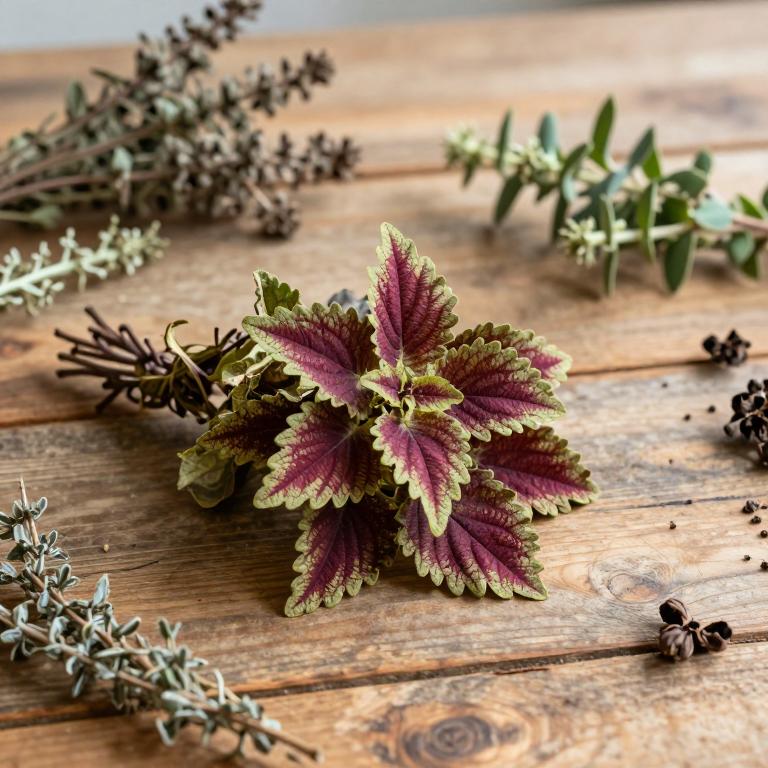
- Synonyms
- Coleus Adolfi-Friderici · Coleus Coerulescens · 10 more
- Common names
- Not available
- Family
- Lamiaceae
- Distribution
- Not available
- Plant Parts
- Root · Leaf
Classification
Common Names
Coleus barbatus var. barbatus is a versatile plant recognized by several distinct common names. It is frequently referred to as Abessiniese Coleus, a name that highlights its botanical lineage. Some gardeners also know this species as Bearded Hullwort due to its unique structural characteristics. Additionally, it is often identified as Woolly Plectranthus, reflecting its soft and textured appearance. Regardless of the name used, this plant remains a fascinating subject for collectors and enthusiasts alike.
Sources: Catalogue of Life (COL)
Synonyms
Coleus barbatus var. barbatus is a plant species that is recognized by several different botanical names within the scientific community. Due to various taxonomic classifications, it is frequently associated with the synonym Coleus adolfi-friderici. Researchers also refer to this variety under the name Coleus coerulescens or as the distinct Coleus forskalaei var. adoensis. Furthermore, its botanical history includes connections to the names Coleus penzigii and Coleus speciosus. Understanding these overlapping relationships is essential for accurate identification and study.
Sources: The World Checklist of Vascular Plants (WCVP)
Taxonomy
Coleus barbatus var. barbatus belongs to the diverse kingdom Plantae, representing a unique branch of the botanical world. Within this kingdom, the plant is classified under the class Equisetopsida. It is further categorized into the order Lamiales, showcasing its specific evolutionary lineage. As a member of the Lamiaceae family, it shares characteristics with many well-known aromatic herbs. Finally, its taxonomic identity is defined by its placement within the genus Coleus.
| Rank | Classification |
|---|---|
| Kingdom | Plantae |
| Phylum | Streptophyta |
| Class | Equisetopsida |
| Subclass | Magnoliidae |
| Order | Lamiales |
| Family | Lamiaceae |
| Genus | Coleus |
Sources: The World Checklist of Vascular Plants (WCVP)
Distribution
Geographic Regions
Coleus barbatus var. barbatus exhibits a diverse geographical range that spans several key regions across the African continent. Within East Tropical Africa, this variety is commonly found growing in Kenya, Tanzania, and Uganda. Its reach extends beyond the mainland into the Atlantic, specifically inhabiting the island of St. Helena in the Middle Atlantic Ocean. Additionally, the plant can be found in the Macaronesia region, particularly on the island of Madeira. This broad distribution highlights the remarkable adaptability of the species across varied tropical and oceanic environments.
Sources: The World Checklist of Vascular Plants (WCVP)
Identification
Biological Activities
Coleus barbatus var. barbatus serves as a significant source of the natural diterpene known as forskolin. This compound has gained considerable attention in oncology research due to its potent anticancer properties. By directly activating the adenylate cyclase enzyme, forskolin effectively raises intracellular cAMP levels within cells. This biochemical process can inhibit tumor cell growth and migration while potentially enhancing the efficacy of conventional drugs. Consequently, this plant remains a highly promising subject for the development of new therapeutic strategies in the fight against cancer.
Compounds
Coleus barbatus var. barbatus serves as a significant source of various bioactive phytochemicals, most notably the therapeutic diterpenoid forskolin. Beyond this primary compound, the plant's chemical profile includes essential sterols and triterpenoids such as beta-sitosterol and oleanolic acid. Detailed phytochemical analyses have also identified the presence of demethylcryptojaponol within its various parts. Furthermore, research has highlighted the isolation of the rare compound 13-epi-sclareol, which has demonstrated notable antiproliferative activity against certain cancer cell lines. Together, these diverse constituents underscore the complex medicinal potential of this botanical species.
Conditions
Coleus barbatus var. barbatus, also known as Coleus forskohlii, contains the bioactive compound forskolin which is used to treat asthma and various other respiratory disorders. This medicinal plant is also utilized in the treatment of glaucoma, specifically through the use of forskolin as a topical agent to lower intraocular pressure. Furthermore, the plant's extracts are traditionally employed to manage obesity and related metabolic conditions. Beyond these uses, forskolin from the plant shows significant potential in cancer therapy by modulating cAMP signaling to inhibit tumor cell growth and migration.
Preparations
Coleus barbatus var. barbatus is prepared as an essential oil extracted from its tubers to exhibit anti-microbial properties. This plant is also prepared as an ethanol extract of the whole plant to isolate specific diterpene glycosides and sesquiterpenes. Researchers have further processed the plant as an ethyl acetate extract fraction to identify various compounds with antitumor activity. Additionally, the plant is prepared as a general extract, including leaf and root versions, for treating ailments like asthma and abdominal disorders. Finally, Coleus barbatus var. barbatus is prepared as forskolin, a major metabolite used commercially to treat glaucoma and heart ailments.
Parts used
Coleus barbatus var. barbatus, often studied through the lens of its close relative Coleus forskohlii, possesses several distinct morphological components. Scientific investigations into its vegetative structure reveal that the plant is composed of roots, stems, and leaves. Beyond these standard parts, the plant also features an enlarged rhizome which serves as a key anatomical characteristic. Researchers utilize these various parts, such as leaf explants or root extracts, to study bioactive compounds and regeneration methods. Understanding the relationship between these specific plant parts is essential for establishing quality standards and optimizing commercial cultivation.