Cuban-oregano
Coleus amboinicus · Accepted scientific name
Scientific literature: Very Extensive (410 studies) · ★★★★★
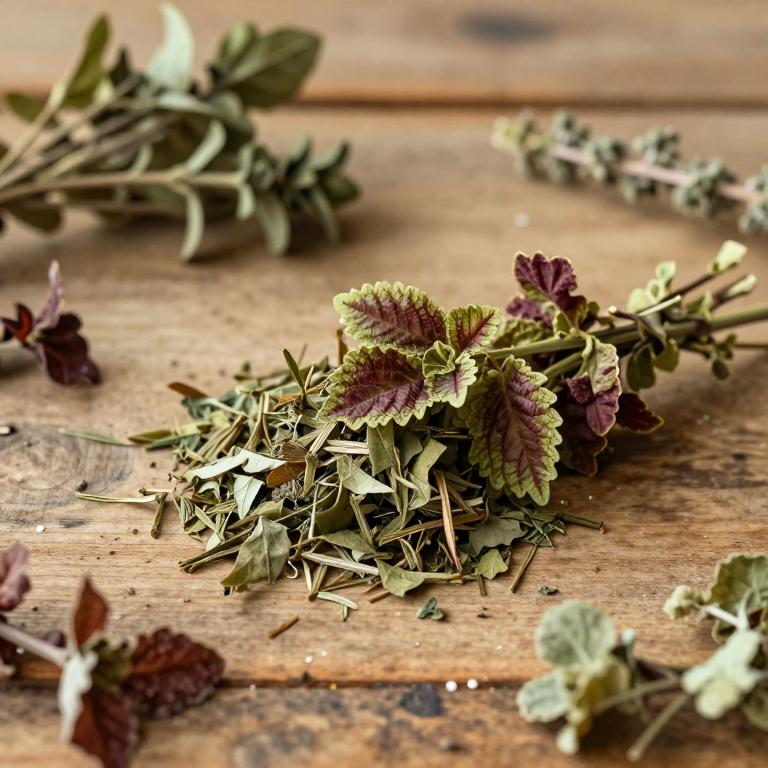
Cuban-oregano, scientifically known as Coleus amboinicus, is a succulent perennial prized for its thick, aromatic leaves. Often used in traditional medicine to treat respiratory ailments, coughs, and digestive issues, this versatile plant serves as both a flavorful culinary herb and a potent natural remedy rich in essential oils.
Names and Synonyms
Common Names
- Cuban-oregano
- French-thyme
- Indian-borage
- Indian-mint
- Mexican-mint
- Spanish-thyme
- country-borage
- soup-mint
- Cuban oregano
- Indian Borage
- Mexican mint
Scientific Names
Accepted name
Coleus amboinicusSynonyms
- Majana suganda
- Ocimum vaalae
- Plectranthus amboinicus
- Coleus subfrutectosus
- Coleus amboinicus var. violaceus
- Coleus suborbicularis
- Majana amboinica
- Coleus suganda
- Majana carnosa
- Coleus vaalae
- Coleus aromaticus
- Coleus carnosus
- Coleus crassifolius
Regional and Traditional Names
Spanish:
- orégano
- orégano de Cartagena
- toronjil de limón
- Orégano francés
- Orégano poleo
- orégano brujo
German:
- Jamaika-Thymian
French:
- oreille
- Origan cubain
Sources: Wikidata, Catalogue of Life
Taxonomical Classification
This plant belongs to the kingdom Plantae and is classified under the phylum Streptophyta and class Equisetopsida. Within the subclass Magnoliidae, it is organized under the order Lamiales and the family Lamiaceae. Finally, it is identified by the genus Coleus.
| Rank | Classification |
|---|---|
| Kingdom | Plantae |
| Phylum | Streptophyta |
| Class | Equisetopsida |
| Subclass | Magnoliidae |
| Order | Lamiales |
| Family | Lamiaceae |
| Genus | Coleus |
Sources: The World Checklist of Vascular Plants (WCVP)
Distribution
This plant exhibits a broad presence across several regions of the African continent. In West-Central Tropical Africa, its distribution includes the country of Burundi. Moving toward East Tropical Africa, the species can be found in both Kenya and Tanzania. The plant also extends into South Tropical Africa, where it inhabits Angola. Finally, its geographical reach continues through the nation of Mozambique in the southern tropical zone.
| Region | Area |
|---|---|
| West-Central Tropical Africa | Burundi |
| East Tropical Africa | Kenya |
| East Tropical Africa | Tanzania |
| South Tropical Africa | Angola |
| South Tropical Africa | Mozambique |
| Southern Africa | KwaZulu-Natal |
| Southern Africa | Eswatini |
| Western Indian Ocean | Comoros |
| Western Indian Ocean | Madagascar |
| Western Indian Ocean | Seychelles |
Sources: The World Checklist of Vascular Plants (WCVP)
Botanical Identification
Ecology
The ecology of Coleus amboinicus is characterized by its ability to inhabit a wide altitudinal gradient, ranging from sea level up to an elevation of 1700 m AMSL. It thrives in diverse tropical and subtropical environments, often occupying moist, well-drained habitats such as forest edges, secondary thickets, and disturbed areas where sunlight availability is moderate to high. The plant is well-adapted to humid climates, frequently appearing in locations with consistent moisture levels, though it exhibits significant resilience in various soil types. Its distribution across such a broad elevational range suggests a high degree of ecological plasticity, allowing it to compete effectively in both lowland coastal regions and higher montane ecosystems.
- Elevational range max:
- 1700 m AMSL
- Elevational range min:
- 0 m AMSL
Life history
The life history of Coleus amboinicus is characterized by its status as a perennial plant, allowing it to persist through multiple growing seasons. It exhibits a chamaemphyte life form, a classification indicating that its perennially produced buds are located close to the ground surface, typically protected by a layer of litter or soil. Furthermore, the plant maintains an evergreen deciduousness, ensuring that its foliage remains functional and lush throughout its life cycle rather than shedding seasonally. This combination of a long-lived perennial cycle, a low-growing chamaemphyte structure, and constant evergreen foliage defines its continuous presence in its natural habitat.
- Deciduousness :
- evergreen
- Life form :
- chamaephyte
- Lifecycle :
- perennial
Morphology
The morphology of Coleus amboinicus is characterized by a growth form that primarily functions as a shrub or a robust herb, exhibiting a non-woody structure. It is a self-supporting plant that does not require climbing mechanisms, such as lianas or vines, to maintain its stature. As a terrestrial species, it is neither aquatic nor an epiphyte, maintaining an independent existence without being a parasite. The plant reaches a mean height of approximately 1 m, though it can achieve a maximum height of up to 1.5 m.
- Aquatic :
- terrestrial
- Climber :
- self-supporting
- Epiphyte :
- terrestrial
- Growth form :
- herb
- Growth form :
- shrub
- Parasite :
- independent
- Plant height max:
- 1.5 m
- Plant height mean:
- 1 m
- Woodiness :
- non-woody
Physiology
The physiology of Coleus amboinicus is characterized by specific morphological dimensions and metabolic processes that define its vegetative growth. The leaves exhibit a variable size range, with lengths spanning from a minimum of 3 cm to a maximum of 7 cm, and widths ranging from 2.5 cm to 6 cm. Despite the fleshy appearance often associated with its genus, this species does not exhibit true succulence. Furthermore, its metabolic profile indicates that it does not function as a nitrogen fixer, relying instead on the assimilation of available nitrogen from the surrounding soil substrate to support its physiological development and structural integrity.
- Leaf length max:
- 7 cm
- Leaf length min:
- 3 cm
- Leaf width max:
- 6 cm
- Leaf width min:
- 2.5 cm
- Nitrogen fixer :
- no
- Succulence :
- no
Reproduction
Reproduction in Coleus amboinicus involves the production of extremely minute seeds, which exhibit a highly specific mass range. The seed mass fluctuates within a narrow margin, with a minimum value of 0.00011 g, a maximum value of 0.00017 g, and an average (mean) mass of 0.00014 g. Regarding its dispersal mechanisms, the plant utilizes a diverse array of dispersal syndromes to ensure its spread across different environments. These modes of dispersal include anemochorous (wind-dispersed), anthropochorous (human-mediated), autochorous (self-dispersed), endozoochorous (internal animal dispersal), epizoochorous (external animal dispersal), hydrochorous (water-dispersed), myrmecocorous (ant-dispersed), unspecialized, and zoochorous (animal-dispersed) strategies.
- Dispersal syndrome :
- anthropochorous
- Seed mass max:
- 0.00017 g
- Seed mass mean:
- 0.00014 g
- Seed mass min:
- 0.00011 g
Sources: Global Inventory of Floras and Traits (GIFT)
Plant Parts
Coleus amboinicus has 3 reported plant parts identified across 9 scientific publications and several other databases that are studied for medicinal purposes. The most consistently reported plant part include leaf, root, stem.
| Plant part | Supporting sources | Consensus |
|---|---|---|
| Leaf | 7 supporting sources | ★★★★☆ |
| Root | 1 supporting sources | ★☆☆☆☆ |
| Stem | 1 supporting sources | ★☆☆☆☆ |
Leaf
- Journal of food biochemistry
- F1000Research
- Toxicology mechanisms and methods
- Biomedical and environmental sciences : BES
- Asian Pacific journal of cancer prevention : APJCP
View 2 additional sources
- Environmental science and pollution research international
- Bioorganic chemistry
Root
- Environmental science and pollution research international
Stem
- Environmental science and pollution research international
Chemicals
Coleus amboinicus has 54 reported phytochemicals identified across 9 scientific publications and several other databases. The most consistently reported chemicals include CARVACROL, Flavonoids, rosmarinic acid, THYMOL, ALPHA-THUJENE.
| Chemical | Supporting sources | Consensus |
|---|---|---|
| CARVACROL | 4 supporting sources | ★★☆☆☆ |
| Flavonoids | 3 supporting sources | ★★☆☆☆ |
| rosmarinic acid | 3 supporting sources | ★★☆☆☆ |
| THYMOL | 2 supporting sources | ★☆☆☆☆ |
| ALPHA-THUJENE | 1 supporting sources | ★☆☆☆☆ |
| Alcohols | 1 supporting sources | ★☆☆☆☆ |
| Ash | 1 supporting sources | ★☆☆☆☆ |
| CALCIUM | 1 supporting sources | ★☆☆☆☆ |
| CHLOROGENIC ACID | 1 supporting sources | ★☆☆☆☆ |
| Carene | 1 supporting sources | ★☆☆☆☆ |
CARVACROL
- Dr. Duke
- Journal of food biochemistry
- Chemistry & biodiversity
- Antibiotics (Basel, Switzerland)
Flavonoids
- Molecules (Basel, Switzerland)
- Journal of animal science
- Bioorganic chemistry
rosmarinic acid
- Molecules (Basel, Switzerland)
- Journal of food biochemistry
- Journal of animal science
THYMOL
- Journal of food biochemistry
- Chemistry & biodiversity
ALPHA-THUJENE
- Dr. Duke
Alcohols
- Molecules (Basel, Switzerland)
Ash
- Dr. Duke
CALCIUM
- Dr. Duke
CHLOROGENIC ACID
- Journal of food biochemistry
Carene
- Chemistry & biodiversity
Activities
Coleus amboinicus has 303 reported activities identified across 9 scientific publications and several other databases. The most consistently reported activities include Antioxidant, Antimicrobial, Antitumor, Analgesic, Antiaging.
| Activity | Supporting sources | Consensus |
|---|---|---|
| Antioxidant | 7 supporting sources | ★★★★☆ |
| Antimicrobial | 4 supporting sources | ★★☆☆☆ |
| Antitumor | 3 supporting sources | ★★☆☆☆ |
| Analgesic | 2 supporting sources | ★☆☆☆☆ |
| Antiaging | 2 supporting sources | ★☆☆☆☆ |
| Antibacterial | 2 supporting sources | ★☆☆☆☆ |
| Anticancer | 2 supporting sources | ★☆☆☆☆ |
| Antidiabetic | 2 supporting sources | ★☆☆☆☆ |
| Antiinflammatory | 2 supporting sources | ★☆☆☆☆ |
| Antiproliferative | 2 supporting sources | ★☆☆☆☆ |
Antioxidant
- Dr. Duke
- Mutagenesis
- F1000Research
- Toxicology mechanisms and methods
- Molecules (Basel, Switzerland)
View 2 additional sources
- Bioorganic chemistry
- Scientific reports
Antimicrobial
- Molecules (Basel, Switzerland)
- F1000Research
- Bioorganic chemistry
- Antibiotics (Basel, Switzerland)
Antitumor
- Dr. Duke
- Molecules (Basel, Switzerland)
- Journal of ethnopharmacology
Analgesic
- Dr. Duke
- Molecules (Basel, Switzerland)
Antiaging
- Dr. Duke
- Molecules (Basel, Switzerland)
Antibacterial
- Dr. Duke
- Bioprocess and biosystems engineering
Anticancer
- Dr. Duke
- Scientific reports
Antidiabetic
- Dr. Duke
- Scientific reports
Antiinflammatory
- Dr. Duke
- Molecules (Basel, Switzerland)
Antiproliferative
- Dr. Duke
- Molecules (Basel, Switzerland)
Conditions
Coleus amboinicus has 6 reported investigations on conditions identified across 9 scientific publications and several other databases. The most consistently reported conditions include cancer, cough, diarrhea, fever, immunosuppression.
| Condition | Supporting sources | Consensus |
|---|---|---|
| Cancer | 1 supporting sources | ★☆☆☆☆ |
| Cough | 1 supporting sources | ★☆☆☆☆ |
| Diarrhea | 1 supporting sources | ★☆☆☆☆ |
| Fever | 1 supporting sources | ★☆☆☆☆ |
| Immunosuppression | 1 supporting sources | ★☆☆☆☆ |
| Neurodegenerative disorders | 1 supporting sources | ★☆☆☆☆ |
Cancer
- Experimental gerontology
Cough
- Advanced pharmaceutical bulletin
Diarrhea
- Advanced pharmaceutical bulletin
Fever
- Advanced pharmaceutical bulletin
Immunosuppression
- Experimental gerontology
Neurodegenerative disorders
- Experimental gerontology
Preparations
Coleus amboinicus has 15 reported preparations identified across 9 scientific publications and several other databases. The most consistently reported preparations include essential oils, leaf extract, CAE, Ethanolic extracts of leaves, Plectranthus amboinicus-Phyllanthus niruri modified TiO2 nano herbal particles.
| Preparation | Supporting sources | Consensus |
|---|---|---|
| Essential oils | 2 supporting sources | ★☆☆☆☆ |
| Leaf extract | 2 supporting sources | ★☆☆☆☆ |
| Cae | 1 supporting sources | ★☆☆☆☆ |
| Ethanolic extracts of leaves | 1 supporting sources | ★☆☆☆☆ |
| Plectranthus amboinicus-phyllanthus niruri modified tio2 nano herbal particles | 1 supporting sources | ★☆☆☆☆ |
| Plectranthus amboinicus-phyllanthus niruri modified tio2 nanoparticles | 1 supporting sources | ★☆☆☆☆ |
| Aqueous extracts | 1 supporting sources | ★☆☆☆☆ |
| Culinary preparations | 1 supporting sources | ★☆☆☆☆ |
| Essential oil | 1 supporting sources | ★☆☆☆☆ |
| Ethanol extract | 1 supporting sources | ★☆☆☆☆ |
Essential oils
- Molecules (Basel, Switzerland)
- Scientific reports
Leaf extract
- Biomedical and environmental sciences : BES
- Bioorganic chemistry
Cae
- Mutagenesis
Ethanolic extracts of leaves
- Asian Pacific journal of cancer prevention : APJCP
Plectranthus amboinicus-phyllanthus niruri modified tio2 nano herbal particles
- Bioprocess and biosystems engineering
Plectranthus amboinicus-phyllanthus niruri modified tio2 nanoparticles
- Bioprocess and biosystems engineering
Aqueous extracts
- Journal of Cancer
Culinary preparations
- Journal of food biochemistry
Essential oil
- Antibiotics (Basel, Switzerland)
Ethanol extract
- Toxicology mechanisms and methods