Kentani Hullwort
Coleus aliciae · Accepted scientific name
Scientific literature: Very Sparse (2 studies) · ★☆☆☆☆
Kentani Hullwort, scientifically known as Coleus aliciae, is a rare medicinal plant valued for its unique phytochemical properties. Found in specific tropical habitats, this species is traditionally utilized in herbal remedies to support holistic wellness. Understanding its botanical characteristics is essential for exploring its potential therapeutic applications in modern medicine.
- Family
- Lamiaceae
- Native range
- Africa
- Parts used
- Not available
- Common names
- Kentani Hullwort · Kentani Spurflower
- Scientific synonyms
- Plectranthus Aliciae · Plectranthus Madagascariensis Var. Aliciae
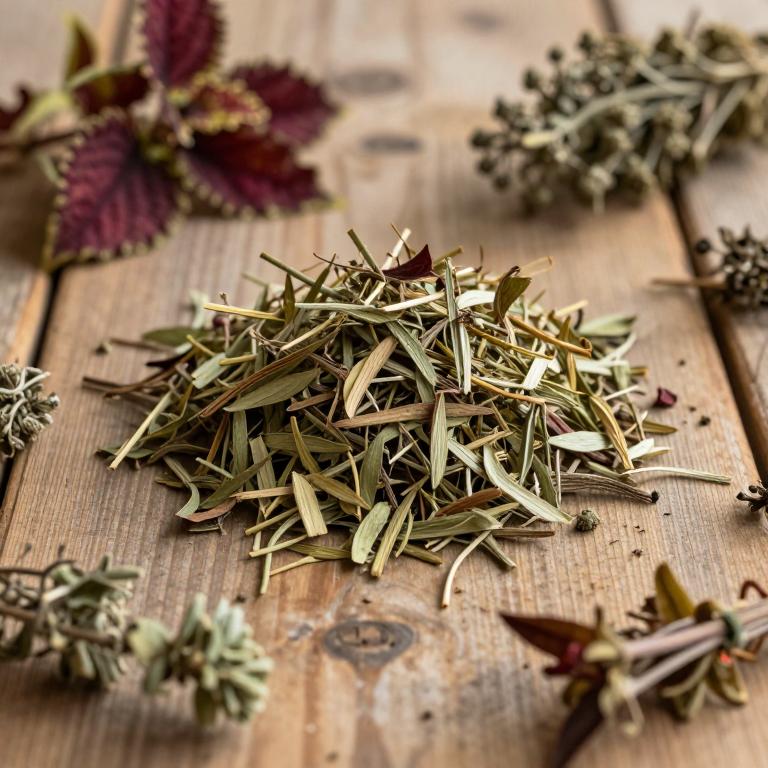
Names and Synonyms
Common Names
- Kentani Hullwort
- Kentani Spurflower
Scientific Names
Accepted name
Coleus aliciaeSynonyms
- Plectranthus aliciae
- Plectranthus madagascariensis var. aliciae
Sources: Wikidata, Catalogue of Life
Taxonomical Classification
This plant belongs to the kingdom Plantae within the phylum Streptophyta and the class Equisetopsida. It is further classified under the subclass Magnoliidae in the order Lamiales and the family Lamiaceae. Finally, it is categorized under the genus Coleus as the species Coleus aliciae.
| Rank | Classification |
|---|---|
| Kingdom | Plantae |
| Phylum | Streptophyta |
| Class | Equisetopsida |
| Subclass | Magnoliidae |
| Order | Lamiales |
| Family | Lamiaceae |
| Genus | Coleus |
Sources: The World Checklist of Vascular Plants (WCVP)
Distribution
This plant is native to specific regions within the southern portion of the African continent. Its primary distribution is located within the Cape Provinces of Southern Africa. Additionally, it can be found growing in the KwaZulu-Natal region. These two areas represent the known geographical range for this particular species. Therefore, its habitat is concentrated in these distinct southern African provinces.
| Region | Area |
|---|---|
| Southern Africa | Cape Provinces |
| Southern Africa | KwaZulu-Natal |
Sources: The World Checklist of Vascular Plants (WCVP)
Botanical Identification
Ecology
The ecology of Coleus aliciae is characterized by its specific distribution within lower-altitude terrestrial environments, primarily occupying habitats that do not exceed a maximum elevation of 400 m AMSL. This restriction to low-lying areas suggests an adaptation to warmer, more stable climatic conditions typical of lowland ecosystems. Within these specific altitudinal bounds, the plant likely interacts with specialized soil compositions and moisture regimes that support its growth cycle. Its ecological niche is defined by this narrow elevational range, which dictates the availability of light, temperature gradients, and local precipitation patterns necessary for its survival and medicinal potency within its native landscape.
- Elevational range max:
- 400 m AMSL
Life history
The life history of Coleus aliciae is characterized by its classification as a perennial plant, allowing it to persist through multiple growing seasons. In terms of its structural development and growth habit, it is identified as a chamaephyte, a life form where the permanent buds are located close to the ground level, typically just above the soil surface. This specific physiological arrangement ensures its survival and ability to regenerate across various environmental conditions throughout its long-term life cycle.
- Life form :
- chamaephyte
- Lifecycle :
- perennial
Morphology
The morphology of Coleus aliciae is characterized by its growth form as a non-woody herb, specifically categorized as a forb. This plant exhibits a self-supporting growth habit and does not function as a climber, parasite, or epiphyte, maintaining an independent life cycle in terrestrial environments. Although its habitat range can encompass aquatic and semiaquatic conditions, its primary ecological classification is terrestrial. In terms of stature, it is a relatively small plant, with a height that typically ranges from a minimum of 0.4 m to a maximum of 0.5 m.
- Aquatic :
- terrestrial
- Climber :
- self-supporting
- Epiphyte :
- terrestrial
- Growth form :
- herb
- Parasite :
- independent
- Plant height max:
- 0.5 m
- Plant height min:
- 0.4 m
- Woodiness :
- non-woody
Sources: Global Inventory of Floras and Traits (GIFT)
Activities
Coleus aliciae has 2 reported activities identified across 0 scientific publications and several other databases. The most consistently reported activities include Antibacterial, Anticancer.
| Activity | Supporting sources | Consensus |
|---|---|---|
| Antibacterial | 1 supporting sources | ★☆☆☆☆ |
| Anticancer | 1 supporting sources | ★☆☆☆☆ |
Antibacterial
- Biomolecules
Anticancer
- Biomolecules