breath of heaven
Coleonema pulchellum · Accepted scientific name
Scientific literature: Very Sparse (6 studies) · ★☆☆☆☆
Breath of heaven, scientifically known as Coleonema pulchellum, is a captivating medicinal plant native to specific tropical regions. Renowned for its striking floral displays and potent aromatic properties, it is traditionally utilized in various herbal remedies to support holistic wellness and treat diverse ailments through its unique bioactive compounds.
- Family
- Rutaceae
- Native range
- Africa
- Parts used
- Leaf
- Common names
- Diosma · Pink Breath Of Heaven · 2 more
- Scientific synonyms
- Not available
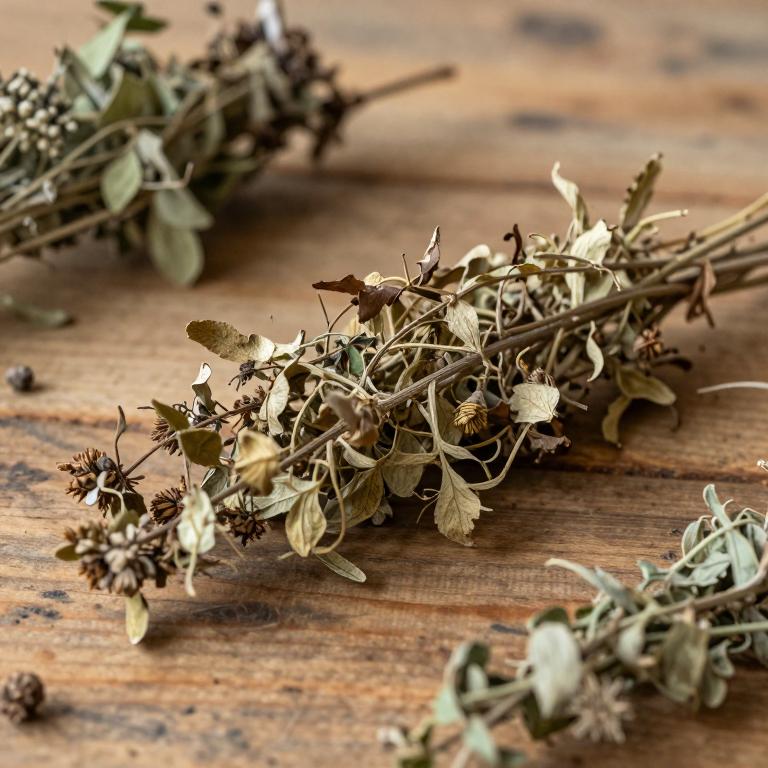
Names and Synonyms
Common Names
- Diosma
- Pink Breath of Heaven
- Sweet Capemay
- confetti bush
Scientific Names
Accepted name
Coleonema pulchellumRegional and Traditional Names
French:
- buisson confetti
Sources: Wikidata, Catalogue of Life
Taxonomical Classification
This plant belongs to the kingdom Plantae and is classified within the phylum Streptophyta and class Equisetopsida. Under the subclass Magnoliidae, it falls into the order Sapindaales and the family Rutaceae. Finally, it is identified by its specific genus, Coleonema, and species name, Coleonema pulchellum.
| Rank | Classification |
|---|---|
| Kingdom | Plantae |
| Phylum | Streptophyta |
| Class | Equisetopsida |
| Subclass | Magnoliidae |
| Order | Sapindales |
| Family | Rutaceae |
| Genus | Coleonema |
Sources: The World Checklist of Vascular Plants (WCVP)
Distribution
This plant exhibits a wide-reaching geographical distribution across several distinct regions. In the Southern Hemisphere, it is primarily found within the Cape Provinces of Southern Africa. Its presence extends significantly to Australia, specifically within the island state of Tasmania. Furthermore, the species has established itself in the North Island of New Zealand. These varied locations demonstrate the plant's ability to inhabit diverse environments across different continents.
| Region | Area |
|---|---|
| Southern Africa | Cape Provinces |
| Australia | Tasmania |
| New Zealand | New Zealand North |
Sources: The World Checklist of Vascular Plants (WCVP)
Botanical Identification
Ecology
The ecology of Coleonema pulchellum is characterized by its distribution across low-lying landscapes, as the species is specifically adapted to environments found within a defined altitudinal gradient. This plant thrives at elevations ranging from a minimum of 0 m AMSL to a maximum elevation of 200 m AMSL. This narrow elevational range suggests that the species is specialized for coastal or lowland ecological niches, where it occupies stable, low-altitude habitats. The ecological niche of Coleonema pulchellum is therefore constrained to these specific low-altitude zones, which likely dictate the particular soil compositions, humidity levels, and temperature regimes to which the plant is biologically tuned.
- Elevational range max:
- 200 m AMSL
- Elevational range min:
- 0 m AMSL
Life history
The life history of Coleonema pulchellum is characterized by its status as a perennial plant, allowing it to persist through multiple growing seasons. As a perennial species, it avoids the complete die-back seen in annuals, instead maintaining a continuous presence in its natural habitat through established root systems or specialized structures that support regrowth. This long-lived growth habit enables the plant to invest resources into more robust reproductive efforts over time, contributing to its stability within its ecological niche.
- Lifecycle :
- perennial
Morphology
The morphology of Coleonema pulchellum is characterized by its growth form as a woody shrub, which can reach a plant height ranging from a minimum of 0.69 m to a maximum of 1.5 m. It functions as a self-supporting plant rather than a climber and grows as an independent organism, showing no parasitic tendencies. Regarding its habitat and ecological positioning, the species is terrestrial in nature, lacking aquatic or epiphytic characteristics.
- Aquatic :
- terrestrial
- Climber :
- self-supporting
- Epiphyte :
- terrestrial
- Growth form :
- shrub
- Parasite :
- independent
- Plant height max:
- 1.5 m
- Plant height min:
- 0.69 m
- Woodiness :
- woody
Physiology
The physiology of Coleonema pulchellum is primarily characterized by its metabolic processes, most notably its utilization of the C3 photosynthetic pathway. In this C3 pathway, carbon fixation occurs directly through the Calvin cycle, where the enzyme RuBisCO incorporates atmospheric carbon dioxide into a three-carbon molecule, ribulose-1,5-bisphosphate. This metabolic strategy dictates the plant's water-use efficiency and gas exchange patterns, influencing how it regulates transpiration and maintains turgor pressure within its tissues. Furthermore, its physiological framework supports the biosynthesis of specific secondary metabolites, which are integral to its medicinal properties, as the plant manages its energy budget through this fundamental C3 carbon assimilation process.
- Photosynthetic pathway :
- C3
Reproduction
The reproduction of Coleonema pulchellum is characterized by the production of specialized seeds that exhibit a highly uniform morphology and weight. Data regarding its seed production reveals a remarkably consistent seed mass, with a recorded mean value of 0.0018 g. This consistency is reflected in the extreme lack of variance within the population, as both the maximum and minimum recorded seed masses are identical at 0.0018 g. Such precise uniformity in seed mass suggests a highly stabilized reproductive strategy, ensuring that each individual seed carries a standardized amount of resources for germination and early seedling development.
- Seed mass mean:
- 0.0018 g
Sources: Global Inventory of Floras and Traits (GIFT)
Plant Parts
Coleonema pulchellum has 1 reported plant parts identified across 1 scientific publications and several other databases that are studied for medicinal purposes. The most consistently reported plant part include leaf.
| Plant part | Supporting sources | Consensus |
|---|---|---|
| Leaf | 1 supporting sources | ★☆☆☆☆ |
Leaf
- Pharmaceutical biology
Chemicals
Coleonema pulchellum has 1 reported phytochemicals identified across 1 scientific publications and several other databases. The most consistently reported chemicals include Terpenes.
| Chemical | Supporting sources | Consensus |
|---|---|---|
| Terpenes | 1 supporting sources | ★☆☆☆☆ |
Terpenes
- Pharmaceutical biology
Activities
Coleonema pulchellum has 2 reported activities identified across 1 scientific publications and several other databases. The most consistently reported activities include Antifungal, Antioxidant.
| Activity | Supporting sources | Consensus |
|---|---|---|
| Antifungal | 1 supporting sources | ★☆☆☆☆ |
| Antioxidant | 1 supporting sources | ★☆☆☆☆ |
Antifungal
- Pharmaceutical biology
Antioxidant
- Pharmaceutical biology
Conditions
Coleonema pulchellum has 1 reported investigations on conditions identified across 1 scientific publications and several other databases. The most consistently reported conditions include skin diseases.
| Condition | Supporting sources | Consensus |
|---|---|---|
| Skin diseases | 1 supporting sources | ★☆☆☆☆ |
Skin diseases
- Pharmaceutical biology