Colchicum palaestinum
Colchicum palaestinum · Accepted scientific name
Scientific literature: Very Sparse (3 studies) · ★☆☆☆☆
Colchicum palaestinum, scientifically known as Colchicum palaestinum, is a distinctive medicinal perennial native to the Levant region. Renowned for its bioactive alkaloids, particularly colchicine, this plant has long been studied for its potent anti-inflammatory and anti-gout properties, serving as a vital subject in ethnobotanical and pharmacological research.
- Family
- Colchicaceae
- Native range
- Africa
- Parts used
- Leaf
- Common names
- Not available
- Scientific synonyms
- Colchicum Jordanicola · Erythrostictus Palestinus · 3 more
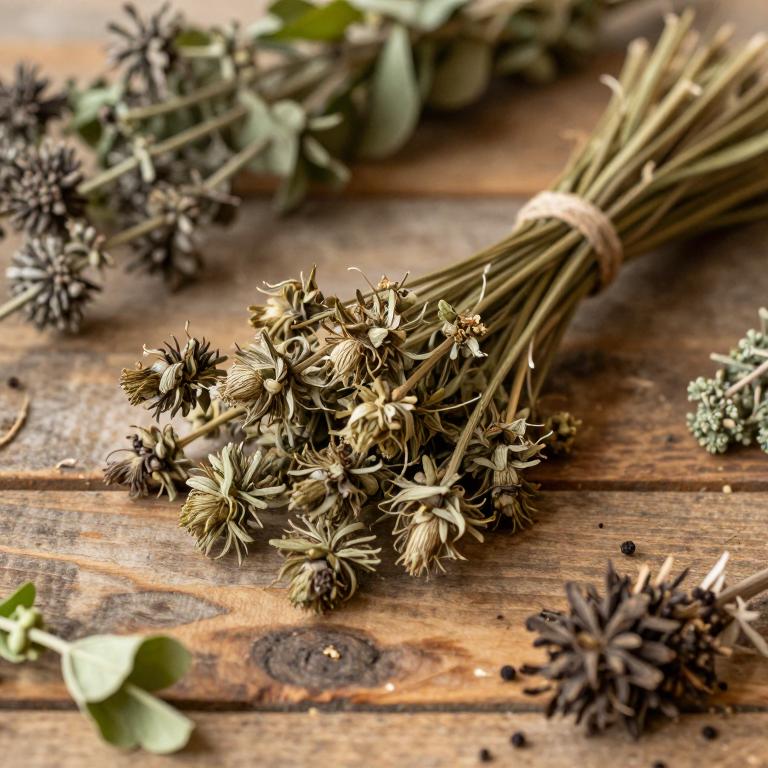
Names and Synonyms
Scientific Names
Accepted name
Colchicum palaestinumSynonyms
- Colchicum jordanicola
- Erythrostictus palestinus
- Merendera jordanicola
- Androcymbium gramineum var. palaestinum
- Androcymbium palaestinum
Sources: Wikidata
Taxonomical Classification
This plant belongs to the kingdom Plantae and the phylum Streptophyta, falling under the class Equisetopsida and subclass Magnoliidae. Within the order Liliales, it is classified under the family Colchicaceae. Finally, its taxonomic identity is defined by the genus Colchicum.
| Rank | Classification |
|---|---|
| Kingdom | Plantae |
| Phylum | Streptophyta |
| Class | Equisetopsida |
| Subclass | Magnoliidae |
| Order | Liliales |
| Family | Colchicaceae |
| Genus | Colchicum |
Sources: The World Checklist of Vascular Plants (WCVP)
Distribution
This plant exhibits a specific geographical range across parts of Northern Africa and Western Asia. In the North African region, its presence is documented within the territories of Egypt and Libya. Moving toward Western Asia, the species can be found spanning the area from Lebanon to Syria. It is also native to the region of Palestine. Finally, its distribution extends into the Sinai Peninsula, completing its localized habitat range.
| Region | Area |
|---|---|
| Northern Africa | Egypt |
| Northern Africa | Libya |
| Western Asia | Lebanon-Syria |
| Western Asia | Palestine |
| Western Asia | Sinai |
Sources: The World Checklist of Vascular Plants (WCVP)
Botanical Identification
Life history
The life history of Colchicum palaestinum is characterized by its specialized survival strategy as a cryptophyte, specifically functioning as a geophyte. This means that the plant survives unfavorable environmental periods, such as intense summer droughts or cold seasons, by retreating into underground storage organs. As a geophyte, its vital physiological processes are concentrated within a subterranean bulb, which serves as a nutrient and water reservoir, allowing the plant to remain dormant while the above-ground structures perish. This life cycle enables the plant to emerge rapidly during the appropriate growing season, utilizing its stored energy to produce foliage and flowers before returning to its protected underground state.
- Life form :
- geophyte
- Life form :
- cryptophyte
Morphology
The morphology of Colchicum palaestinum is characterized by its growth habit as a self-supporting, non-climbing herb that lacks any climbing structures. It functions as an independent organism, showing no parasitic tendencies toward host plants. In terms of its ecological niche and substrate preference, the plant is strictly terrestrial, distinguishing itself from aquatic or semiaquatic species, and it does not exhibit epiphytic behavior, instead establishing itself firmly within soil environments.
- Aquatic :
- terrestrial
- Climber :
- self-supporting
- Epiphyte :
- terrestrial
- Parasite :
- independent
Sources: Global Inventory of Floras and Traits (GIFT)
Plant Parts
Colchicum palaestinum has 1 reported plant parts identified across 1 scientific publications and several other databases that are studied for medicinal purposes. The most consistently reported plant part include leaf.
| Plant part | Supporting sources | Consensus |
|---|---|---|
| Leaf | 1 supporting sources | ★☆☆☆☆ |
Leaf
- Fitoterapia
Chemicals
Colchicum palaestinum has 2 reported phytochemicals identified across 1 scientific publications and several other databases. The most consistently reported chemicals include (-)-3-demethyldemecolcine, (-)-colchicine.
| Chemical | Supporting sources | Consensus |
|---|---|---|
| (-)-3-demethyldemecolcine | 1 supporting sources | ★☆☆☆☆ |
| (-)-colchicine | 1 supporting sources | ★☆☆☆☆ |
(-)-3-demethyldemecolcine
- Fitoterapia
(-)-colchicine
- Fitoterapia