bellflower
Codonopsis pilosula subsp. tangshen · Accepted scientific name
Scientific literature: Very Sparse (13 studies) · ★☆☆☆☆
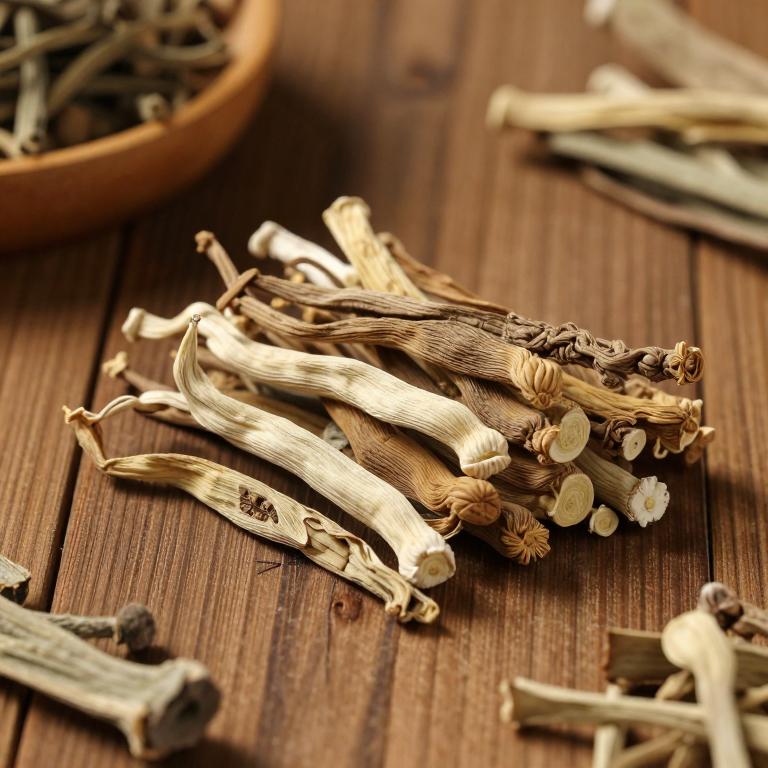
Bellflower, scientifically known as Codonoopsis pilosula subsp. tangshen, is a prized medicinal herb in traditional Eastern practices. Renowned for its restorative properties, this subtle plant is frequently utilized to nourish the blood, calm the spirit, and enhance cognitive function, offering a natural approach to vitality and holistic wellness.
- Family
- Campanulaceae
- Native range
- Asia-Temperate
- Parts used
- Not available
- Common names
- Bellflower
- Scientific synonyms
- Codonopsis Tangshen
Names and Synonyms
Common Names
- bellflower
Scientific Names
Accepted name
Codonopsis pilosula subsp. tangshenSynonyms
- Codonopsis tangshen
Sources: Wikidata, Catalogue of Life
Taxonomical Classification
This plant belongs to the kingdom Plantae and is classified under the phylum Streptophyta and class Equisetopsida. Within the subclass Magnoliidae, it is ordered under Asterales and falls into the family Campanulaceae. Finally, it is identified by the genus Codonopsis as the subspecies tangshen.
| Rank | Classification |
|---|---|
| Kingdom | Plantae |
| Phylum | Streptophyta |
| Class | Equisetopsida |
| Subclass | Magnoliidae |
| Order | Asterales |
| Family | Campanulaceae |
| Genus | Codonopsis |
Sources: The World Checklist of Vascular Plants (WCVP)
Distribution
This plant exhibits a specific distribution pattern across various regions within China. It can be found growing in the landscapes of China South-Central. Additionally, its presence extends into the territories of China North-Central. The species is also documented throughout the regions of China Southeast. Together, these locations define the primary geographical range of this medicinal subspecies.
| Region | Area |
|---|---|
| China | China South-Central |
| China | China North-Central |
| China | China Southeast |
Sources: The World Checklist of Vascular Plants (WCVP)
Chemicals
Codonopsis pilosula subsp. tangshen has 12 reported phytochemicals identified across 0 scientific publications and several other databases. The most consistently reported chemicals include As, CD, CHLOROPHYLL, CR, CU.
| Chemical | Supporting sources | Consensus |
|---|---|---|
| As | 1 supporting sources | ★☆☆☆☆ |
| CD | 1 supporting sources | ★☆☆☆☆ |
| CHLOROPHYLL | 1 supporting sources | ★☆☆☆☆ |
| CR | 1 supporting sources | ★☆☆☆☆ |
| CU | 1 supporting sources | ★☆☆☆☆ |
| Flavonoids | 1 supporting sources | ★☆☆☆☆ |
| MO | 1 supporting sources | ★☆☆☆☆ |
| N-formyl-L-methionine | 1 supporting sources | ★☆☆☆☆ |
| NI | 1 supporting sources | ★☆☆☆☆ |
| PB | 1 supporting sources | ★☆☆☆☆ |
As
- Biological trace element research
CD
- Biological trace element research
CHLOROPHYLL
- Life (Basel, Switzerland)
CR
- Biological trace element research
CU
- Biological trace element research
Flavonoids
- Frontiers in nutrition
MO
- Biological trace element research
N-formyl-L-methionine
- Frontiers in nutrition
NI
- Biological trace element research
PB
- Biological trace element research