Codonopsis javanica
Codonopsis javanica · Accepted scientific name
Scientific literature: Very Sparse (5 studies) · ★☆☆☆☆
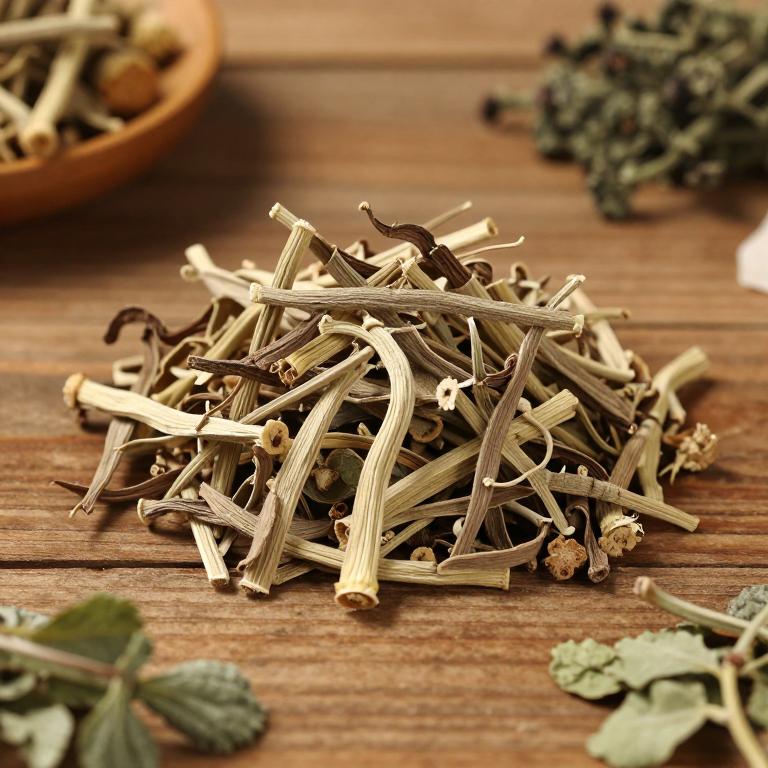
Codonoopsis javanica, scientifically known as Codonoopsis javanica, is a unique medicinal herb native to Southeast Asia. Valued in traditional practices, this plant is recognized for its diverse therapeutic properties. It is often utilized to address various ailments, offering a natural approach to wellness through its potent botanical compounds.
- Family
- Campanulaceae
- Native range
- Asia-Temperate
- Parts used
- Not available
- Common names
- Not available
- Scientific synonyms
- Campanumoea Javanica · Campanula Javanica
Names and Synonyms
Scientific Names
Accepted name
Codonopsis javanicaSynonyms
- Campanumoea javanica
- Campanula javanica
Sources: Wikidata, Catalogue of Life
Taxonomical Classification
This plant belongs to the kingdom Plantae and the phylum Streptophyta, specifically falling under the class Equisetopsida and subclass Magnoliidae. Within the order Asterales, it is classified under the family Campanulaceae and is identified by the genus Codonopsis. Consequently, its full scientific designation is Codonoopsis javanica.
| Rank | Classification |
|---|---|
| Kingdom | Plantae |
| Phylum | Streptophyta |
| Class | Equisetopsida |
| Subclass | Magnoliidae |
| Order | Asterales |
| Family | Campanulaceae |
| Genus | Codonopsis |
Sources: The World Checklist of Vascular Plants (WCVP)
Distribution
This plant exhibits a diverse range of habitats across several distinct regions of East Asia. Within China, its presence is noted in the North-Central and South-Central provinces. It is also found throughout the Southeast region of the country and on the island of Hainan. Beyond the Chinese mainland, the species extends its reach into the islands of Japan. Together, these locations define the primary geographical footprint of Codonoopsis javanica.
| Region | Area |
|---|---|
| China | China South-Central |
| China | Hainan |
| China | China North-Central |
| China | China Southeast |
| Eastern Asia | Japan |
| Eastern Asia | Nansei-shoto |
| Eastern Asia | Taiwan |
| Indian Subcontinent | Assam |
| Indian Subcontinent | Bangladesh |
| Indian Subcontinent | East Himalaya |
Sources: The World Checklist of Vascular Plants (WCVP)
Botanical Identification
Ecology
The ecology of Codonoopsis javanica is defined by its presence across a significant altitudinal gradient within its native habitats. This species thrives in diverse montane environments, occupying an elevational range that extends from a minimum of 400 m AMSL to a maximum of 2500 m AMSL. This broad vertical distribution suggests an ability to adapt to varying climatic conditions, ranging from the warmer, more humid conditions found at lower elevations to the cooler, more temperate environments characteristic of higher altitudes. Such a wide ecological niche allows the plant to inhabit various microclimates within its range, facilitating its survival across different topographical zones.
- Elevational range max:
- 2500 m AMSL
- Elevational range min:
- 400 m AMSL
Life history
The life history of Codonoopsis javanica is characterized by its classification as a cryptophyte, specifically functioning as a geophyte. This indicates that the plant survives unfavorable environmental periods by retreating to underground storage organs, such as tubers or rhizomes, which protect its vital biological processes from external stressors like seasonal drought or temperature fluctuations. As a geophyte, its regenerative capacity is centered around these subterranean structures, allowing it to remain dormant before emerging to complete its reproductive cycle. This life strategy ensures perennial survival, enabling the plant to re-establish its above-ground presence once favorable conditions return, effectively navigating its ecological niche through specialized underground persistence.
- Life form :
- geophyte
- Life form :
- cryptophyte
Morphology
The morphology of Codonopsis javanica is characterized by its growth form as a non-woody herb. It functions as an obligatory climber, utilizing external structures for support to ascend toward light sources. As an independent organism, it does not exhibit parasitic behavior, and it maintains a terrestrial life habit rather than living as an epiphyte.
- Climber :
- obligatory
- Epiphyte :
- terrestrial
- Growth form :
- herb
- Parasite :
- independent
- Woodiness :
- non-woody
Reproduction
The reproduction of Codonoopsis javanica is characterized by the production of highly diminutive seeds, reflecting a specialized strategy for dispersal and propagation. The seed mass for this species is extremely low and remarkably consistent, with a measured mean mass of 1e-04 g. This uniformity is further evidenced by the fact that both the maximum and minimum recorded seed masses are also 1e-04 g, indicating a very narrow range of variation in individual seed weight. Such minute seed dimensions suggest that the plant may rely on subtle environmental cues or specific dispersal agents to facilitate the distribution of its progeny.
- Seed mass mean:
- 1e-04 g
Sources: Global Inventory of Floras and Traits (GIFT)
Chemicals
Codonopsis javanica has 4 reported phytochemicals identified across 0 scientific publications and several other databases. The most consistently reported chemicals include CJP, galactose, glucose, mannose.
| Chemical | Supporting sources | Consensus |
|---|---|---|
| CJP | 1 supporting sources | ★☆☆☆☆ |
| galactose | 1 supporting sources | ★☆☆☆☆ |
| glucose | 1 supporting sources | ★☆☆☆☆ |
| mannose | 1 supporting sources | ★☆☆☆☆ |
CJP
- Natural product research
galactose
- Natural product research
glucose
- Natural product research
mannose
- Natural product research
Activities
Codonopsis javanica has 1 reported activities identified across 0 scientific publications and several other databases. The most consistently reported activities include Immunomodulator.
| Activity | Supporting sources | Consensus |
|---|---|---|
| Immunomodulator | 1 supporting sources | ★☆☆☆☆ |
Immunomodulator
- Natural product research