Buttercup Tree
Cochlospermum vitifolium · Accepted scientific name
Scientific literature: Very Sparse (45 studies) · ★☆☆☆☆
Buttercup Tree, scientifically known as Cochlospermum vitifolium, is a striking deciduous species celebrated for its vibrant yellow blossoms. Beyond its ornamental appeal, this plant holds significant ethnobotanical value. Various parts, including its bark and leaves, are utilized in traditional medicine to treat ailments ranging from skin infections to inflammation.
- Family
- Bixaceae
- Native range
- Pacific
- Parts used
- Not available
- Common names
- Buttercup Tree · Silk Cottontree
- Scientific synonyms
- Cochlospermum Triphyllum · Maximilianea Vitifolia · 12 more
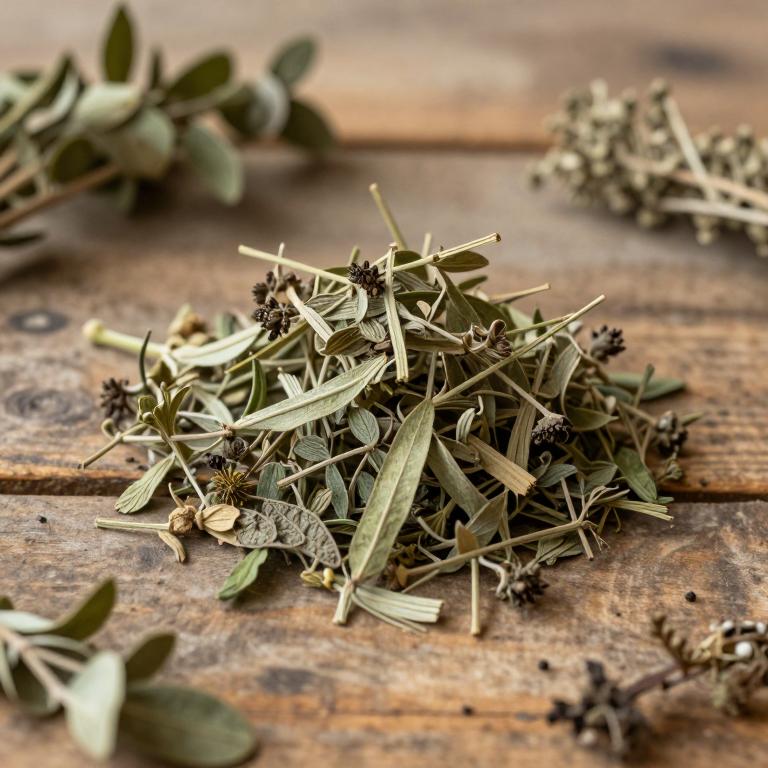
Names and Synonyms
Common Names
- Buttercup Tree
- silk cottontree
Scientific Names
Accepted name
Cochlospermum vitifoliumSynonyms
- Cochlospermum triphyllum
- Maximilianea vitifolia
- Bombax hibiscifolium
- Maximilianea triphylla
- Bombax vitifolium
- Cochlospermum serratifolium
- Cochlospermum hibiscoides var. dasycarpum
- Cochlospermum hibiscoides var. gymnocarpum
- Cochlospermum codinae
- Maximilianea codinae
- Cochlospermum hibiscoides
- Maximilianea hibiscodes
- Cochlospermum luetzeiburgii
- Wittelsbachia vitifolia
Regional and Traditional Names
Spanish:
- comasuche
- huevos del burro
- pumpumjuche
- pumpunjuche
- rosa amarilla
- tecomasuche
- tecomasúchil
- Chunanco
- Palo Barril
- Papayote
- Poro Poro
- algodón silvestre
- carne de perro
- madera de pasta
German:
- Butterblumenbaum
- Hahnenfussbaum
- Wilde Baumwolle
- Butterblumenbaum
French:
- Rose du Pérou
Sources: Wikidata, Catalogue of Life
Taxonomical Classification
This plant belongs to the kingdom Plantae and the phylum Streptophyta, falling under the class Equisetopsida and subclass Magnoliidae. Within the order Malvales, it is classified under the family Bixaceae. Finally, it is identified by the genus Cochlospermum.
| Rank | Classification |
|---|---|
| Kingdom | Plantae |
| Phylum | Streptophyta |
| Class | Equisetopsida |
| Subclass | Magnoliidae |
| Order | Malvales |
| Family | Bixaceae |
| Genus | Cochlospermum |
Sources: The World Checklist of Vascular Plants (WCVP)
Distribution
This plant exhibits a broad geographical distribution spanning both the Pacific islands and several regions of Mexico. In the South-Central Pacific, its presence is specifically noted within the Society Islands. Within Mexico, the species can be found across a diverse range of territories including the Central and Northeast regions. Furthermore, it extends its reach into the Mexico Gulf area. Finally, the plant is also documented throughout the Mexico Northwest.
| Region | Area |
|---|---|
| South-Central Pacific | Society Is. |
| Mexico | Mexico Central |
| Mexico | Mexico Northeast |
| Mexico | Mexico Gulf |
| Mexico | Mexico Northwest |
| Mexico | Mexico Southwest |
| Mexico | Mexico Southeast |
| Central America | Belize |
| Central America | Costa Rica |
| Central America | El Salvador |
Sources: The World Checklist of Vascular Plants (WCVP)
Botanical Identification
Ecology
The ecology of Cochlospermum vitiifolium is characterized by its presence across diverse biomes, including the Caatinga (strictu sensu), Cerrado (lato sensu), Floresta Estacional Decidual, and the Savana Amazônica. This species exhibits a broad altitudinal distribution, ranging from sea level up to a maximum elevation of 1490 m AMSL. On average, the plant thrives at a mean elevation of 375 m AMSL, demonstrating a high degree of adaptability to varying topographical gradients within its native habitats.
- Elevational range max:
- 1490 m AMSL
- Elevational range mean:
- 375 m AMSL
- Elevational range min:
- 0 m AMSL
- Habitat :
- Caatinga (stricto sensu), Cerrado (lato sensu), Floresta Estacional Decidual, Savana Amazônica
Life history
The life history of Cochlospermum vitifolium is characterized by its status as a perennial plant, allowing it to persist in its environment over many growing seasons. As a phanerophyte, its regenerative buds are located high above the ground on woody stems, a life form that supports its structural development into a substantial tree or large shrub. The plant exhibits a deciduous nature, shedding its foliage seasonally, which often coincides with its flowering period to maximize visibility and reproductive efficiency. This combination of a long-lived perennial lifecycle, a phanerophyte growth habit, and deciduous phenology defines its adaptive strategy within its native ecological niches.
- Deciduousness :
- deciduous
- Life form :
- phanerophyte
- Lifecycle :
- perennial
Morphology
The morphology of Cochlospermum vitiifolium is characterized by its stature as a large, woody tree that reaches a mean height of approximately 15 m, with a maximum potential height of up to 17 m. As a self-supporting organism, it does not function as a climber, liana, or vine, nor does it exhibit epiphytic or parasitic tendencies, maintaining an independent and terrestrial life habit. Its growth form is strictly defined as a tree, possessing a robust woody structure that distinguishes it from herbaceous or shrubby species. This terrestrial plant thrives in land-based environments rather than aquatic or semiaquatic habitats, relying on its independent physiological processes for development.
- Aquatic :
- terrestrial
- Climber :
- self-supporting
- Epiphyte :
- terrestrial
- Growth form :
- tree
- Parasite :
- independent
- Plant height max:
- 17 m
- Plant height mean:
- 15 m
- Woodiness :
- woody
Physiology
The physiology of Cochlospermum vitiifolium is characterized by a C3 photosynthetic pathway, which dictates its carbon fixation processes and metabolic efficiency. The plant exhibits specific leaf morphological and structural traits, including a mean Leaf Dry Matter Content (LDMC) of 270.7 mg/g, with values ranging from a minimum of 265.9 mg/g to a maximum of 275.5 mg/g. These metrics indicate the density of biomass within its leaf tissues. Furthermore, the plant possesses a mean Specific Leaf Area (SLA) of 175.297 cm²/g, reflecting its leaf area per unit of dry mass. In terms of nutrient cycling and symbiotic relationships, Cochlospermum vitiifolium does not function as a nitrogen fixer.
- Leaf dry matter content (LDMC) max:
- 275.5 mg/g
- Leaf dry matter content (LDMC) mean:
- 270.7 mg/g
- Leaf dry matter content (LDMC) min:
- 265.9 mg/g
- Nitrogen fixer :
- no
- Photosynthetic pathway :
- C3
- Specific Leaf Area (SLA) mean:
- 175.297 cm²/g
Reproduction
The reproduction of Cochlospermum vitiifolium is characterized by a biotic pollination syndrome, primarily facilitated by insects, with bees playing a significant role in the transfer of pollen. Following successful fertilization, the plant produces dry fruits that contain relatively small seeds. These seeds exhibit a mean length of 2.874 mm, ranging from a minimum of 2.22 mm to a maximum of 3.528 mm, with a consistent seed volume of 27 mm³. In terms of weight, the seed mass varies from a minimum of 0.0202 g to a maximum of 0.03342 g, maintaining a mean mass of approximately 0.02724 g. Once mature, the seeds are dispersed via an anemochorous syndrome, utilizing wind as the primary mechanism for movement and colonization.
- Dispersal syndrome :
- anemochorous
- Fruit dryness :
- dry
- Pollination syndrome :
- insect
- Pollination syndrome :
- bee
- Pollination syndrome :
- biotic
- Seed length max:
- 3.528 mm
- Seed length mean:
- 2.874 mm
- Seed length min:
- 2.22 mm
- Seed mass max:
- 0.03342 g
- Seed mass mean:
- 0.02724 g
- Seed mass min:
- 0.0202 g
- Seed volume max:
- 27 mm³
Sources: Global Inventory of Floras and Traits (GIFT)
Chemicals
Cochlospermum vitifolium has 16 reported phytochemicals identified across 0 scientific publications and several other databases. The most consistently reported chemicals include naringenin, (+/-)-Naringenin, Antiarol, CONIFERYL ALCOHOL, Epoxyconiferyl Alcohol.
| Chemical | Supporting sources | Consensus |
|---|---|---|
| naringenin | 2 supporting sources | ★☆☆☆☆ |
| (+/-)-Naringenin | 1 supporting sources | ★☆☆☆☆ |
| Antiarol | 1 supporting sources | ★☆☆☆☆ |
| CONIFERYL ALCOHOL | 1 supporting sources | ★☆☆☆☆ |
| Epoxyconiferyl Alcohol | 1 supporting sources | ★☆☆☆☆ |
| Pinoresinol | 1 supporting sources | ★☆☆☆☆ |
| Populnin | 1 supporting sources | ★☆☆☆☆ |
| Prunin | 1 supporting sources | ★☆☆☆☆ |
| STIGMASTEROL | 1 supporting sources | ★☆☆☆☆ |
| TAXIFOLIN | 1 supporting sources | ★☆☆☆☆ |
naringenin
- Molecules (Basel, Switzerland)
- Journal of ethnopharmacology
(+/-)-Naringenin
- Journal of ethnopharmacology
Antiarol
- Molecules (Basel, Switzerland)
CONIFERYL ALCOHOL
- Molecules (Basel, Switzerland)
Epoxyconiferyl Alcohol
- Molecules (Basel, Switzerland)
Pinoresinol
- Molecules (Basel, Switzerland)
Populnin
- Molecules (Basel, Switzerland)
Prunin
- Molecules (Basel, Switzerland)
STIGMASTEROL
- Molecules (Basel, Switzerland)
TAXIFOLIN
- Molecules (Basel, Switzerland)
Activities
Cochlospermum vitifolium has 7 reported activities identified across 0 scientific publications and several other databases. The most consistently reported activities include Hypoglycemic, Antidiabetic, Antihypertensive, Antioxidant, Genoprotective.
| Activity | Supporting sources | Consensus |
|---|---|---|
| Hypoglycemic | 2 supporting sources | ★☆☆☆☆ |
| Antidiabetic | 1 supporting sources | ★☆☆☆☆ |
| Antihypertensive | 1 supporting sources | ★☆☆☆☆ |
| Antioxidant | 1 supporting sources | ★☆☆☆☆ |
| Genoprotective | 1 supporting sources | ★☆☆☆☆ |
| Hepatoprotective | 1 supporting sources | ★☆☆☆☆ |
| Vasorelaxant | 1 supporting sources | ★☆☆☆☆ |
Hypoglycemic
- Biomedicine & pharmacotherapy = Biomedecine & pharmacotherapie
- Journal of ethnopharmacology
Antidiabetic
- Biomedicine & pharmacotherapy = Biomedecine & pharmacotherapie
Antihypertensive
- Journal of ethnopharmacology
Antioxidant
- Biomedicine & pharmacotherapy = Biomedecine & pharmacotherapie
Genoprotective
- Biomedicine & pharmacotherapy = Biomedecine & pharmacotherapie
Hepatoprotective
- Journal of ethnopharmacology
Vasorelaxant
- Journal of ethnopharmacology
Conditions
Cochlospermum vitifolium has 13 reported investigations on conditions identified across 0 scientific publications and several other databases. The most consistently reported conditions include hepatitis C, hypertension, jaundice, metabolic syndrome, asthma.
| Condition | Supporting sources | Consensus |
|---|---|---|
| Hepatitis c | 2 supporting sources | ★☆☆☆☆ |
| Hypertension | 2 supporting sources | ★☆☆☆☆ |
| Jaundice | 2 supporting sources | ★☆☆☆☆ |
| Metabolic syndrome | 2 supporting sources | ★☆☆☆☆ |
| Asthma | 1 supporting sources | ★☆☆☆☆ |
| Cancer | 1 supporting sources | ★☆☆☆☆ |
| Dyslipidemia | 1 supporting sources | ★☆☆☆☆ |
| Feeding disorders | 1 supporting sources | ★☆☆☆☆ |
| Hepatitis | 1 supporting sources | ★☆☆☆☆ |
| Hypercholesterolemia | 1 supporting sources | ★☆☆☆☆ |
Hepatitis c
- Biomedicine & pharmacotherapy = Biomedecine & pharmacotherapie
- Molecules (Basel, Switzerland)
Hypertension
- Phytomedicine : international journal of phytotherapy and phytopharmacology
- Journal of ethnopharmacology
Jaundice
- Biomedicine & pharmacotherapy = Biomedecine & pharmacotherapie
- Molecules (Basel, Switzerland)
Metabolic syndrome
- Biomedicine & pharmacotherapy = Biomedecine & pharmacotherapie
- Journal of ethnopharmacology
Asthma
- Asian Pacific journal of tropical medicine
Cancer
- Molecules (Basel, Switzerland)
Dyslipidemia
- Journal of ethnopharmacology
Feeding disorders
- Phytomedicine : international journal of phytotherapy and phytopharmacology
Hepatitis
- Journal of ethnopharmacology
Hypercholesterolemia
- Cardiovascular & hematological agents in medicinal chemistry
Preparations
Cochlospermum vitifolium has 3 reported preparations identified across 0 scientific publications and several other databases. The most consistently reported preparations include dried bark, methanol extract, stem bark.
| Preparation | Supporting sources | Consensus |
|---|---|---|
| Dried bark | 1 supporting sources | ★☆☆☆☆ |
| Methanol extract | 1 supporting sources | ★☆☆☆☆ |
| Stem bark | 1 supporting sources | ★☆☆☆☆ |
Dried bark
- Molecules (Basel, Switzerland)
Methanol extract
- Journal of ethnopharmacology
Stem bark
- Phytomedicine : international journal of phytotherapy and phytopharmacology