Cnidoscolus quercifolius
Cnidoscolus quercifolius · Accepted scientific name
Scientific literature: Very Sparse (21 studies) · ★☆☆☆☆
Cnidoscolus quercifolius, scientifically known as Cnidoscolus quercifolius, is a versatile medicinal shrub native to tropical regions. Often referred to as chaya, this nutrient-dense plant is prized in traditional medicine for its antioxidant properties and ability to support digestive health, offering significant therapeutic potential for holistic wellness and nutrition.
- Family
- Euphorbiaceae
- Native range
- Southern America
- Parts used
- Leaf
- Common names
- Not available
- Scientific synonyms
- Jatropha Phyllacantha · Janipha Phyllacantha · 6 more
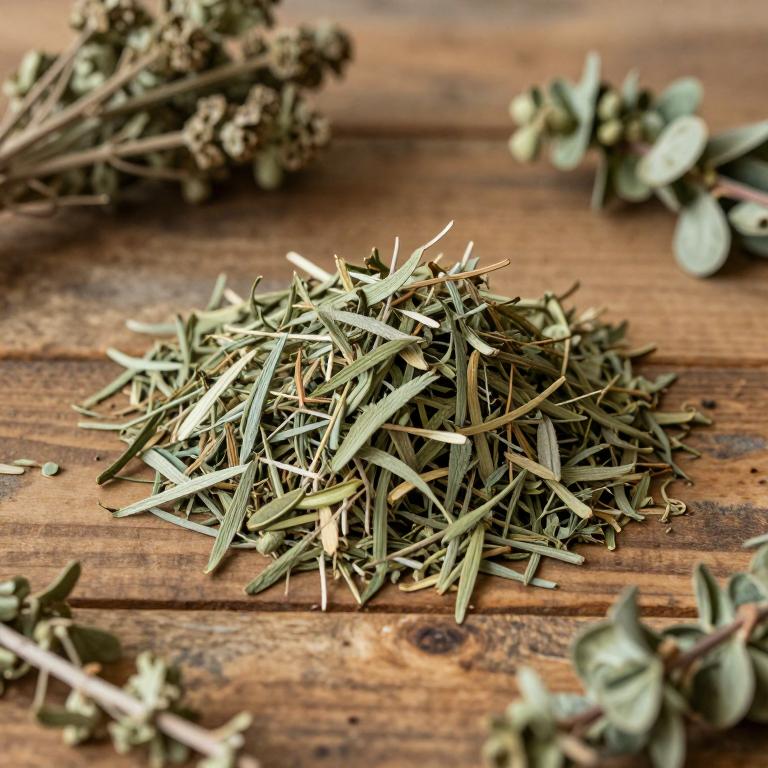
Names and Synonyms
Scientific Names
Accepted name
Cnidoscolus quercifoliusSynonyms
- Jatropha phyllacantha
- Janipha phyllacantha
- Jatropha phyllacantha var. lobata
- Jatropha phyllacantha var. quercifolia
- Jatropha phyllacantha var. repanda
- Cnidoscolus phyllacanthus
- Cnidoscolus lobatus
- Cnidoscolus repandus
Regional and Traditional Names
Spanish:
- Cnidoscolus phyllacanthus
- Jatropha phyllacantha
Sources: Wikidata, Catalogue of Life
Taxonomical Classification
This plant belongs to the kingdom Plantae within the phylum Streptophyta and the class Equisetopsida. As a member of the subclass Magnoliidae and the order Malpighiales, it is classified under the family Euphorbiaceae. Finally, its specific taxonomic placement is within the genus Cnidoscolus.
| Rank | Classification |
|---|---|
| Kingdom | Plantae |
| Phylum | Streptophyta |
| Class | Equisetopsida |
| Subclass | Magnoliidae |
| Order | Malpighiales |
| Family | Euphorbiaceae |
| Genus | Cnidoscolus |
Sources: The World Checklist of Vascular Plants (WCVP)
Distribution
This plant is characterized by a specific and localized geographical presence. Within the vast landscape of South America, its occurrence is primarily documented in Brazil. More specifically, it is found inhabiting the distinct environmental zones of the Brazilian Northeast. This region provides the particular climatic conditions necessary for the species to thrive. Consequently, its distribution remains concentrated within this specific corner of the country.
| Region | Area |
|---|---|
| Brazil | Brazil Northeast |
Sources: The World Checklist of Vascular Plants (WCVP)
Botanical Identification
Ecology
The ecology of Cnidoscolus quercifolius is characterized by its ability to thrive in diverse and often challenging environments, showing significant adaptability across various landscapes. It is commonly found within anthropogenic areas, where it integrates into human-disturbed habitats, as well as in the semi-arid Caatinga (strictu sensu), where it must withstand seasonal water scarcity. Furthermore, the species inhabits Seasonal Deciduous Forests, adapting to the rhythmic fluctuations of leaf shedding and moisture availability typical of these ecosystems. Its ecological niche also extends to specialized vegetation found over rocky outcrops, where it colonizes thin soils and rugged terrains, demonstrating a robust capacity to survive in microhabitats with high solar exposure and limited substrate availability.
- Habitat :
- Área Antrópica, Caatinga (stricto sensu), Floresta Estacional Decidual, Vegetação Sobre Afloramentos Rochosos
Life history
The life history of Cnidoscolus quercifolius is characterized by a perennial lifecycle, allowing the plant to persist through multiple growing seasons. As a phanerophyte, its perennially existing buds are elevated above the ground on woody stems, a trait that can be further categorized by its structural growth as a phanerophyte. The plant exhibits a deciduous nature, shedding its foliage seasonally in response to environmental cues or moisture availability.
- Deciduousness :
- deciduous
- Life form :
- phanerophyte
- Lifecycle :
- perennial
Morphology
The morphology of Cnidoscolus quercifolius is characterized by its growth form as a woody tree, which typically reaches a mean height of 6 m, although it can attain a maximum height of up to 12 m. As a terrestrial plant, it does not exhibit aquatic or semiaquatic tendencies, nor does it function as an epiphyte, remaining firmly grounded in its environment. The species is a self-supporting structure rather than a climber, vine, or liana, and it operates as an independent organism without parasitic behavior. Its structural integrity is defined by its woody nature, supporting its development into a substantial tree-like form.
- Aquatic :
- terrestrial
- Climber :
- self-supporting
- Epiphyte :
- terrestrial
- Growth form :
- tree
- Parasite :
- independent
- Plant height max:
- 12 m
- Plant height mean:
- 6 m
- Woodiness :
- woody
Physiology
The physiology of Cnidoscolus quercifolius is characterized by a C3 photosynthetic pathway, which involves the direct fixation of carbon dioxide through the Calvin cycle within the mesophyll cells. Unlike plants utilizing C4 or CAM mechanisms, it relies on the enzyme RuBisCO for initial carbon assimilation, a process that is typically most efficient in environments with moderate temperatures and sufficient water availability. Furthermore, this species is not a nitrogen fixer, meaning it lacks the symbiotic relationship with nitrogen-fixing bacteria (such as Rhizobium or Frankia) required to convert atmospheric nitrogen into a bioavailable form; consequently, it depends on the uptake of nitrates and ammonium from the soil to meet its nutritional requirements for growth and metabolic processes.
- Nitrogen fixer :
- no
- Photosynthetic pathway :
- C3
Reproduction
The reproduction of Cnidoscolus quercifolius is characterized by a biotic pollination syndrome, primarily relying on insects to facilitate the transfer of pollen. Upon successful fertilization, the plant develops a capsule-type fruit, which maintains a consistent length with a mean, minimum, and maximum measurement of 2.5 cm. This fruit is dehiscent, meaning it possesses the mechanism to split open at maturity to release its seeds. The subsequent dispersal of the plant's progeny follows a zoochorous syndrome, utilizing animals as the primary agents for transporting seeds to new locations.
- Dehiscence :
- dehiscent
- Dispersal syndrome :
- zoochorous
- Fruit length max:
- 2.5 cm
- Fruit type :
- capsule
- Pollination syndrome :
- insect
- Pollination syndrome :
- biotic
Sources: Global Inventory of Floras and Traits (GIFT)
Plant Parts
Cnidoscolus quercifolius has 1 reported plant parts identified across 2 scientific publications and several other databases that are studied for medicinal purposes. The most consistently reported plant part include leaf.
| Plant part | Supporting sources | Consensus |
|---|---|---|
| Leaf | 2 supporting sources | ★☆☆☆☆ |
Leaf
- Natural product research
- Pharmacognosy research
Chemicals
Cnidoscolus quercifolius has 9 reported phytochemicals identified across 2 scientific publications and several other databases. The most consistently reported chemicals include Terpenoids, CINNAMIC ACID, Coumarins, Favelanone, Flavonoids.
| Chemical | Supporting sources | Consensus |
|---|---|---|
| Terpenoids | 2 supporting sources | ★☆☆☆☆ |
| CINNAMIC ACID | 1 supporting sources | ★☆☆☆☆ |
| Coumarins | 1 supporting sources | ★☆☆☆☆ |
| Favelanone | 1 supporting sources | ★☆☆☆☆ |
| Flavonoids | 1 supporting sources | ★☆☆☆☆ |
| LINAMARIN | 1 supporting sources | ★☆☆☆☆ |
| Lignans | 1 supporting sources | ★☆☆☆☆ |
| Naphthoquinones | 1 supporting sources | ★☆☆☆☆ |
| Steroids | 1 supporting sources | ★☆☆☆☆ |
Terpenoids
- Natural product research
- Chemico-biological interactions
CINNAMIC ACID
- Natural product research
Coumarins
- Pharmacognosy research
Favelanone
- Chemico-biological interactions
Flavonoids
- Pharmacognosy research
LINAMARIN
- Natural product research
Lignans
- Pharmacognosy research
Naphthoquinones
- Pharmacognosy research
Steroids
- Natural product research
Activities
Cnidoscolus quercifolius has 2 reported activities identified across 2 scientific publications and several other databases. The most consistently reported activities include Analgesic, Antibiotic.
| Activity | Supporting sources | Consensus |
|---|---|---|
| Analgesic | 1 supporting sources | ★☆☆☆☆ |
| Antibiotic | 1 supporting sources | ★☆☆☆☆ |
Analgesic
- Natural product research
Antibiotic
- Natural product research
Conditions
Cnidoscolus quercifolius has 4 reported investigations on conditions identified across 2 scientific publications and several other databases. The most consistently reported conditions include analgesic, antibiotic, inflammation, melanoma.
| Condition | Supporting sources | Consensus |
|---|---|---|
| Analgesic | 1 supporting sources | ★☆☆☆☆ |
| Antibiotic | 1 supporting sources | ★☆☆☆☆ |
| Inflammation | 1 supporting sources | ★☆☆☆☆ |
| Melanoma | 1 supporting sources | ★☆☆☆☆ |
Analgesic
- Natural product research
Antibiotic
- Natural product research
Inflammation
- Pharmacognosy research
Melanoma
- Chemico-biological interactions
Preparations
Cnidoscolus quercifolius has 5 reported preparations identified across 2 scientific publications and several other databases. The most consistently reported preparations include C. quercifolius extracts, cytotoxic extract, ethanolic extract, ethanolic extract from barks, ethanolic extract from leaves.
| Preparation | Supporting sources | Consensus |
|---|---|---|
| C. quercifolius extracts | 1 supporting sources | ★☆☆☆☆ |
| Cytotoxic extract | 1 supporting sources | ★☆☆☆☆ |
| Ethanolic extract | 1 supporting sources | ★☆☆☆☆ |
| Ethanolic extract from barks | 1 supporting sources | ★☆☆☆☆ |
| Ethanolic extract from leaves | 1 supporting sources | ★☆☆☆☆ |
C. quercifolius extracts
- The journal of contemporary dental practice
Cytotoxic extract
- Chemico-biological interactions
Ethanolic extract
- Natural product research
Ethanolic extract from barks
- Pharmacognosy research
Ethanolic extract from leaves
- Pharmacognosy research