snow-parsley
Cnidium · Accepted scientific name
Scientific literature: Very Sparse (28 studies) · ★☆☆☆☆
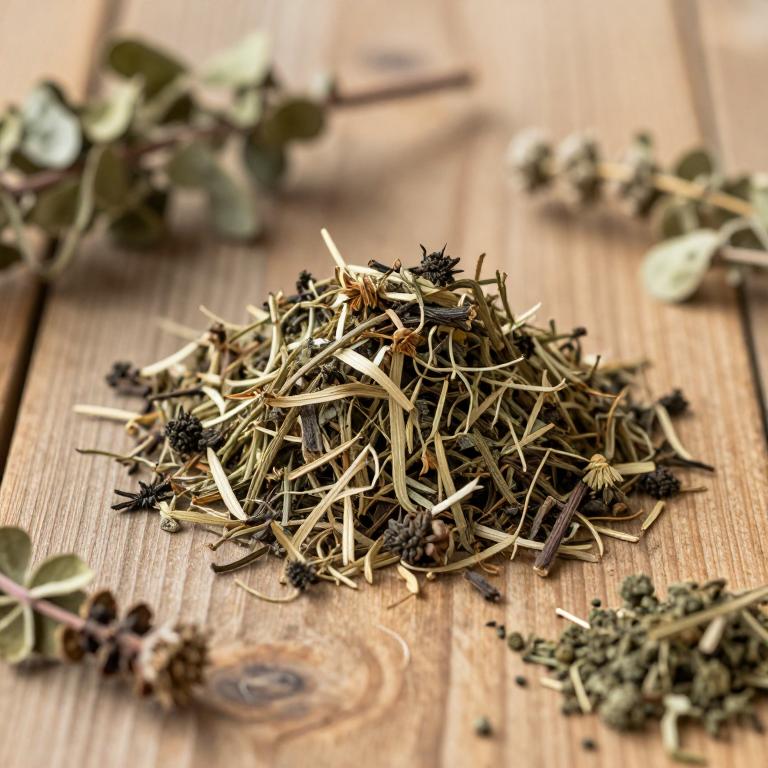
snow-parsley, scientifically known as Cnidium, is a versatile medicinal herb celebrated in traditional practices. Renowned for its potent therapeutic properties, this plant is frequently utilized to support circulatory health and alleviate inflammation. Its aromatic seeds and delicate foliage offer a natural approach to wellness through various holistic remedies.
- Family
- Apiaceae
- Native range
- Europe
- Parts used
- Fruit · Rhizome
- Common names
- Snow-Parsley · Snowparsleys
- Scientific synonyms
- Katapsuxis · Pinasgelon
Names and Synonyms
Common Names
- snow-parsley
- snowparsleys
Scientific Names
Accepted name
CnidiumSynonyms
- Katapsuxis
- Pinasgelon
Regional and Traditional Names
German:
- Brenndolden
- Brenndolde
Sources: Wikidata, Catalogue of Life
Taxonomical Classification
This plant belongs to the kingdom Plantae and the phylum Streptophyta, falling under the class Equisetopsida and subclass Magnoliidae. Within the order Apiales, it is classified under the family Apiaceae. It is specifically identified by the genus Cnidium.
| Rank | Classification |
|---|---|
| Kingdom | Plantae |
| Phylum | Streptophyta |
| Class | Equisetopsida |
| Subclass | Magnoliidae |
| Order | Apiales |
| Family | Apiaceae |
| Genus | Cnidium |
Sources: The World Checklist of Vascular Plants (WCVP)
Distribution
This plant exhibits a diverse presence across various regions of the European continent. In Middle Europe, it can be found growing within the territories of Austria and Germany. Its distribution also extends through the mountainous and temperate landscapes of Switzerland. Furthermore, the species is documented across the Czechia-Slovakia region. Finally, its range reaches into Southwestern Europe, specifically within France.
| Region | Area |
|---|---|
| Middle Europe | Austria |
| Middle Europe | Czechia-Slovakia |
| Middle Europe | Germany |
| Middle Europe | Switzerland |
| Southwestern Europe | France |
| Southeastern Europe | Albania |
| Southeastern Europe | Bulgaria |
| Southeastern Europe | Greece |
| Southeastern Europe | Italy |
| Southeastern Europe | Kriti |
Sources: The World Checklist of Vascular Plants (WCVP)
Plant Parts
Cnidium has 4 reported plant parts identified across 4 scientific publications and several other databases that are studied for medicinal purposes. The most consistently reported plant part include fruit, rhizome, root, seed.
| Plant part | Supporting sources | Consensus |
|---|---|---|
| Fruit | 1 supporting sources | ★☆☆☆☆ |
| Rhizome | 1 supporting sources | ★☆☆☆☆ |
| Root | 1 supporting sources | ★☆☆☆☆ |
| Seed | 1 supporting sources | ★☆☆☆☆ |
Fruit
- Journal of natural medicines
Rhizome
- Behavioural brain research
Root
- Journal of natural medicines
Seed
- Journal of natural medicines
Chemicals
Cnidium has 7 reported phytochemicals identified across 4 scientific publications and several other databases. The most consistently reported chemicals include Bergapten, Byakangelicin, Isobergapten, Neobyakangelicin, Phellopterin.
| Chemical | Supporting sources | Consensus |
|---|---|---|
| Bergapten | 1 supporting sources | ★☆☆☆☆ |
| Byakangelicin | 1 supporting sources | ★☆☆☆☆ |
| Isobergapten | 1 supporting sources | ★☆☆☆☆ |
| Neobyakangelicin | 1 supporting sources | ★☆☆☆☆ |
| Phellopterin | 1 supporting sources | ★☆☆☆☆ |
| Sphondin | 1 supporting sources | ★☆☆☆☆ |
| XANTHOTOXIN | 1 supporting sources | ★☆☆☆☆ |
Bergapten
- Journal of natural medicines
Byakangelicin
- Journal of natural medicines
Isobergapten
- Journal of natural medicines
Neobyakangelicin
- Journal of natural medicines
Phellopterin
- Journal of natural medicines
Sphondin
- Journal of natural medicines
XANTHOTOXIN
- Journal of natural medicines
Activities
Cnidium has 1 reported activities identified across 4 scientific publications and several other databases. The most consistently reported activities include Antiinflammatory.
| Activity | Supporting sources | Consensus |
|---|---|---|
| Antiinflammatory | 1 supporting sources | ★☆☆☆☆ |
Antiinflammatory
- Zhongguo Zhong yao za zhi = Zhongguo zhongyao zazhi = China journal of Chinese materia medica
Conditions
Cnidium has 2 reported investigations on conditions identified across 4 scientific publications and several other databases. The most consistently reported conditions include edema, inflammation.
| Condition | Supporting sources | Consensus |
|---|---|---|
| Edema | 1 supporting sources | ★☆☆☆☆ |
| Inflammation | 1 supporting sources | ★☆☆☆☆ |
Edema
- Zhongguo Zhong yao za zhi = Zhongguo zhongyao zazhi = China journal of Chinese materia medica
Inflammation
- Zhongguo Zhong yao za zhi = Zhongguo zhongyao zazhi = China journal of Chinese materia medica