Cnidium japonicum
Cnidium japonicum · Accepted scientific name
Scientific literature: Very Sparse (3 studies) · ★☆☆☆☆
Cnidium japonicum, scientifically known as Cnidium japonicum, is a versatile perennial herb highly valued in traditional East Asian medicine. Renowned for its potent anti-inflammatory and analgesic properties, it is frequently used to treat skin conditions, joint pain, and circulatory issues, offering significant therapeutic potential in modern pharmacological research.
- Family
- Apiaceae
- Native range
- Asia-Temperate
- Parts used
- Not available
- Common names
- Not available
- Scientific synonyms
- Selinum Japonicum
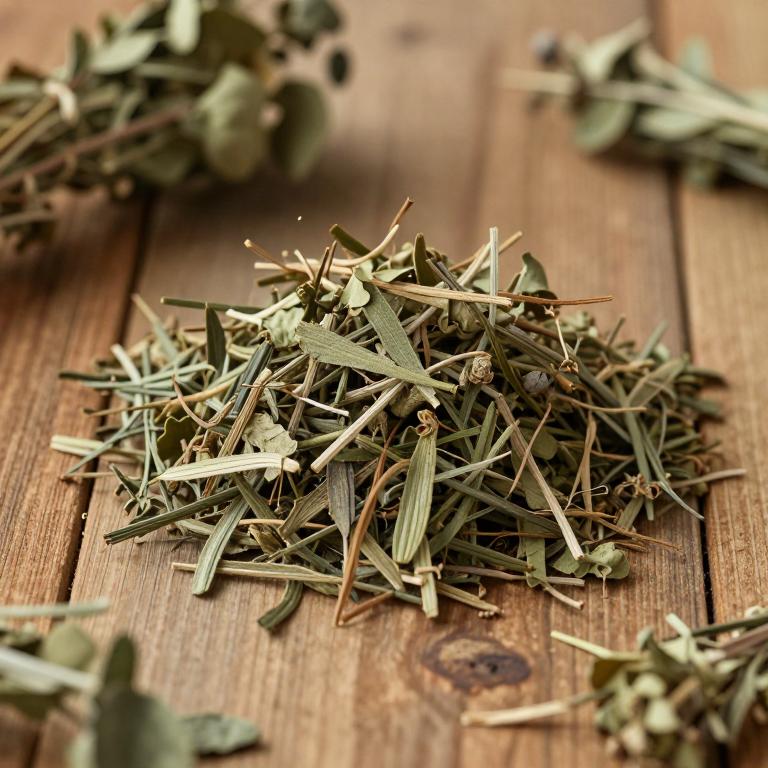
Names and Synonyms
Scientific Names
Accepted name
Cnidium japonicumSynonyms
- Selinum japonicum
Sources: Wikidata, Catalogue of Life
Taxonomical Classification
This plant belongs to the kingdom Plantae within the phylum Streptophyta and the class Equisetopsida. It is further classified under the subclass Magnoliidae and the order Apiales. Finally, it is a member of the family Apiaceae and is identified by the genus Cnidium.
| Rank | Classification |
|---|---|
| Kingdom | Plantae |
| Phylum | Streptophyta |
| Class | Equisetopsida |
| Subclass | Magnoliidae |
| Order | Apiales |
| Family | Apiaceae |
| Genus | Cnidium |
Sources: The World Checklist of Vascular Plants (WCVP)
Distribution
This plant exhibits a specific distribution pattern across several regions of Eastern Asia. Within China, it is primarily found growing in the Manchuria region. Its range extends through the Korean Peninsula, where it is also commonly documented. In the maritime areas of Eastern Asia, the species can be located in Japan. Furthermore, its geographical presence includes the remote Ogasawara-shoto islands.
| Region | Area |
|---|---|
| China | Manchuria |
| Eastern Asia | Japan |
| Eastern Asia | Korea |
| Eastern Asia | Ogasawara-shoto |
Sources: The World Checklist of Vascular Plants (WCVP)
Botanical Identification
Life history
The life history of Cnidium japonicum is characterized by a biennial lifecycle, typically progressing through distinct stages of vegetative growth and reproductive maturity over two years. During its first year, the plant focuses on establishing a robust root system and developing a basal rosette of leaves, accumulating the necessary energy reserves required for its subsequent flowering phase. In the second year, the plant undergoes a transition to its reproductive stage, producing elongated flowering stalks that bear umbels of small flowers. Following successful pollination and seed maturation, the plant completes its life cycle, often resulting in the senescence of the individual plant after its reproductive effort is concluded.
- Lifecycle :
- biennial
Morphology
The morphology of Cnidium japonicum is characterized by its growth form as a herb, exhibiting a non-woody structure. This herbaceous plant typically maintains a low profile, with a plant height that ranges from a minimum of 0.1 m to a maximum of 0.2 m, resulting in an average plant height of approximately 0.15 m.
- Growth form :
- herb
- Plant height max:
- 0.2 m
- Plant height mean:
- 0.15 m
- Plant height min:
- 0.1 m
- Woodiness :
- non-woody
Physiology
The physiological morphology of the foliage in Cnidium japonicum is characterized by highly specific dimensions regarding its leaf structure. The leaf length typically exhibits a mean value of 0.65 cm, with individual measurements ranging from a minimum of 0.5 cm to a maximum of 0.8 cm. Correspondingly, the leaf width demonstrates a narrower profile, maintaining a mean width of 0.275 cm. The variation in width is documented from a minimum of 0.15 cm to a maximum of 0.4 cm, indicating a slender and compact foliar development characteristic of the species' vegetative growth patterns.
- Leaf length max:
- 0.8 cm
- Leaf length mean:
- 0.65 cm
- Leaf length min:
- 0.5 cm
- Leaf width max:
- 0.4 cm
- Leaf width mean:
- 0.275 cm
- Leaf width min:
- 0.15 cm
Reproduction
The reproduction of Cnidium japonicum is characterized by the development of small, specialized fruits that serve as the primary mechanism for seed dispersal. The morphological dimensions of these fruits are highly consistent, exhibiting no significant variance across different specimens. Specifically, the fruit length maintains a uniform measurement, with a minimum, mean, and maximum value all recorded at exactly 0.3 cm. This precise fruit size is a defining characteristic of its reproductive structure, ensuring that the seeds are contained within a compact vessel designed for the plant's life cycle.
- Fruit length max:
- 0.3 cm
Sources: Global Inventory of Floras and Traits (GIFT)
Chemicals
Cnidium japonicum has 1 reported phytochemicals identified across 0 scientific publications and several other databases. The most consistently reported chemicals include Cnidimoside A.
| Chemical | Supporting sources | Consensus |
|---|---|---|
| Cnidimoside A | 1 supporting sources | ★☆☆☆☆ |
Cnidimoside A
- Journal of natural medicines
Activities
Cnidium japonicum has 1 reported activities identified across 0 scientific publications and several other databases. The most consistently reported activities include Antitumor.
| Activity | Supporting sources | Consensus |
|---|---|---|
| Antitumor | 1 supporting sources | ★☆☆☆☆ |
Antitumor
- Journal of natural medicines
Preparations
Cnidium japonicum has 1 reported preparations identified across 0 scientific publications and several other databases. The most consistently reported preparations include whole plants.
| Preparation | Supporting sources | Consensus |
|---|---|---|
| Whole plants | 1 supporting sources | ★☆☆☆☆ |
Whole plants
- Journal of natural medicines