Clusia alata
Clusia alata · Accepted scientific name
Scientific literature: Very Sparse (2 studies) · ★☆☆☆☆
Clusia alata, scientifically known as Clusia alata, is a remarkable medicinal plant native to tropical regions. Renowned for its diverse therapeutic properties, this species is frequently utilized in traditional medicine to treat various ailments. Its unique phytochemical profile offers significant potential for pharmacological research and holistic wellness applications.
- Family
- Clusiaceae
- Native range
- Southern America
- Parts used
- Not available
- Common names
- Not available
- Scientific synonyms
- Not available
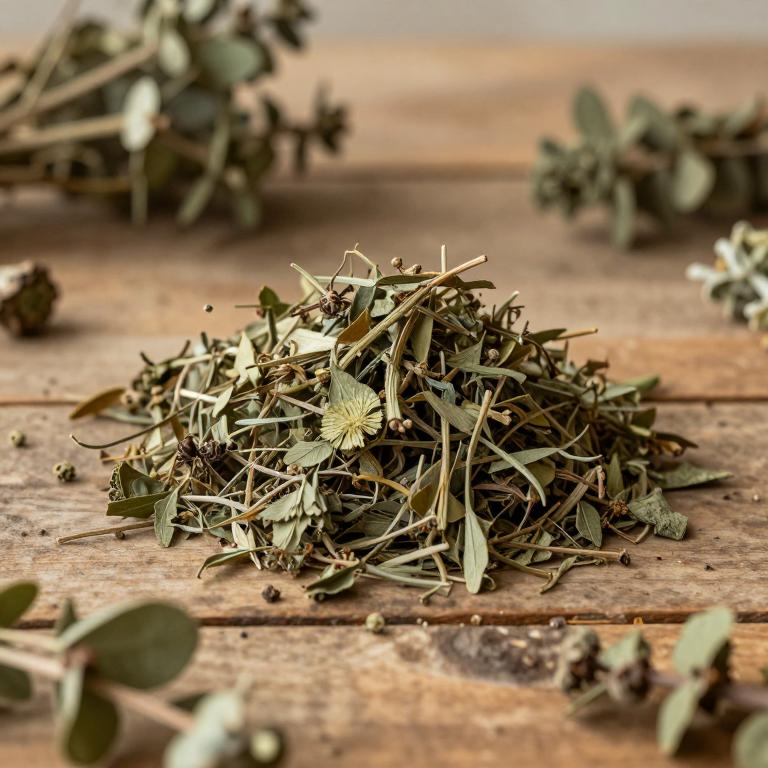
Names and Synonyms
Scientific Names
Accepted name
Clusia alataRegional and Traditional Names
Spanish:
- Chagula
Sources: Wikidata, Catalogue of Life
Taxonomical Classification
This plant, Clusia alata, belongs to the kingdom Plantae and the phylum Streptophyta. It is classified within the class Equisetopsida and the subclass Magnoliidae, falling under the order Malpighiales. Finally, it is a member of the family Clusiaceae and the genus Clusia.
| Rank | Classification |
|---|---|
| Kingdom | Plantae |
| Phylum | Streptophyta |
| Class | Equisetopsida |
| Subclass | Magnoliidae |
| Order | Malpighiales |
| Family | Clusiaceae |
| Genus | Clusia |
Sources: The World Checklist of Vascular Plants (WCVP)
Distribution
This plant, Clusia alata, exhibits a specific distribution pattern across the South American continent. It is found within the northern regions of the continent, specifically throughout Venezuela. Moving toward the western side of South America, the species also inhabits the territory of Colombia. Additionally, its range extends further south into the western country of Ecuador. Collectively, these locations define the primary natural habitats for this medicinal species.
| Region | Area |
|---|---|
| Northern South America | Venezuela |
| Western South America | Colombia |
| Western South America | Ecuador |
Sources: The World Checklist of Vascular Plants (WCVP)
Botanical Identification
Ecology
The ecology of Clusia alata is defined by its specialized adaptation to montane environments, where it occupies a distinct vertical niche within mountain ecosystems. This species thrives across a significant altitudinal gradient, maintaining a presence in high-elevation habitats that typically feature cooler temperatures and increased moisture levels compared to lowland tropical forests. Its distribution is specifically constrained to an elevational range that begins at 1100 m AMSL and extends to a maximum of 3500 m AMSL. This broad vertical span allows the plant to inhabit various ecological zones, ranging from lower montane cloud forests to higher, more temperate paramo-adjacent environments, where it must contend with varying levels of solar radiation, mist frequency, and soil composition characteristic of high-altitude terrains.
- Elevational range max:
- 3500 m AMSL
- Elevational range min:
- 1100 m AMSL
Morphology
The morphology of Clusia alata is characterized by its growth form as a woody tree, which reaches a significant height ranging from a minimum of 5 meters to a maximum of 18 meters. As a self-supporting organism, it does not function as a climber, liana, or vine, and it operates as an independent plant rather than a parasite. In terms of its ecological niche and habit, the species is primarily terrestrial, though it exhibits hemiepiphyte tendencies during certain stages of its life cycle. Its structural composition is distinctly woody, providing the necessary stability for its substantial stature.
- Aquatic :
- terrestrial
- Climber :
- self-supporting
- Epiphyte :
- hemiepiphyte
- Epiphyte :
- terrestrial
- Growth form :
- tree
- Parasite :
- independent
- Plant height max:
- 18 m
- Plant height min:
- 5 m
- Woodiness :
- woody
Physiology
The physiology of Clusia alata is characterized by a specialized metabolic adaptation known as Crassulacean Acid Metabolism (CAM). This photosynthetic pathway allows the plant to function with high water-use efficiency by temporally separating carbon fixation from the Calvin cycle. Unlike standard C3 plants, Clusia alata performs nocturnal carbon assimilation, opening its stomata during the cooler night hours to collect carbon dioxide and store it in the form of organic acids (primarily malate) within the vacuoles of its mesophyll cells. During the daylight hours, the stomata remain tightly closed to prevent transpirational water loss, while the stored malate is decarboxylated to release CO2 internally for fixation by the enzyme RuBisCO. This physiological mechanism is a critical adaptation for survival in environments where water availability may be inconsistent or where minimizing transpiration is essential for maintaining cellular turgor.
- Photosynthetic pathway :
- CAM
Reproduction
The reproduction of Clusia alatata is characterized by a complex dispersal mechanism that primarily follows a zoochorous syndrome, where animals play a critical role in the movement of its seeds. While the species exhibits a degree of unspecialized dispersal tendencies, its primary evolutionary strategy relies on biotic agents to transport reproductive units to new habitats. This zoochorous approach ensures that seeds are distributed away from the parent plant, reducing competition and promoting genetic diversity. Although other potential modes of dispersal such as anemochory (wind), hydrochory (water), or autochory (self-dispersal) exist within the broader spectrum of plant reproductive strategies, the specific ecological niche of Clusia alatata is most effectively serviced by animal-mediated dispersal.
- Dispersal syndrome :
- zoochorous
Sources: Global Inventory of Floras and Traits (GIFT)
Activities
Clusia alata has 2 reported activities identified across 0 scientific publications and several other databases. The most consistently reported activities include Genotoxic, Mutagenic.
| Activity | Supporting sources | Consensus |
|---|---|---|
| Genotoxic | 1 supporting sources | ★☆☆☆☆ |
| Mutagenic | 1 supporting sources | ★☆☆☆☆ |
Genotoxic
- Genetics and molecular research : GMR
Mutagenic
- Genetics and molecular research : GMR
Preparations
Clusia alata has 1 reported preparations identified across 0 scientific publications and several other databases. The most consistently reported preparations include crude extract.
| Preparation | Supporting sources | Consensus |
|---|---|---|
| Crude extract | 1 supporting sources | ★☆☆☆☆ |
Crude extract
- Genetics and molecular research : GMR