calamint
Clinopodium · Accepted scientific name
Scientific literature: Very Sparse (3 studies) · ★☆☆☆☆
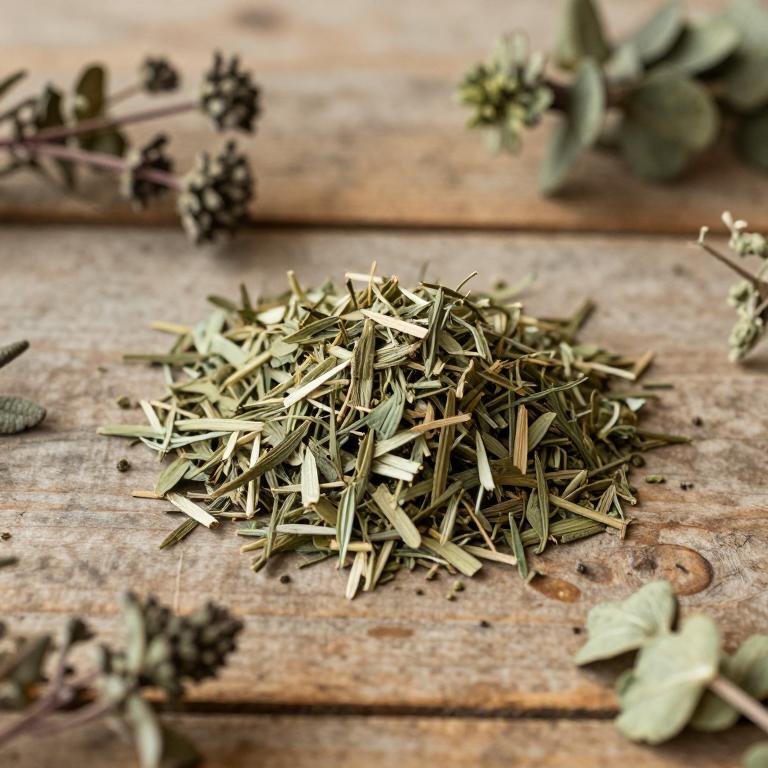
Calamint, scientifically known as Clinopodium, is a versatile genus of aromatic herbs within the Lamiaceae family. Renowned for its distinctive minty fragrance, these plants offer significant therapeutic potential. Often used in traditional medicine, Clinopodium species possess antimicrobial and antioxidant properties, making them valuable subjects for both herbalism and pharmacology.
Names and Synonyms
Common Names
- calamint
- Calamint Cultivar
- Calamints
- Wild Basils
Scientific Names
Accepted name
ClinopodiumSynonyms
- Xenopoma
- Antonina
- Acinos
- Gardoquia
- Oreosphacus
- Stellante
- Faucibarba
- Drymosiphon
- Rizoa
- Diodeilis
- Nostelis
- Calamintha
- × Calapodium
- Ceratominthe
Regional and Traditional Names
Spanish:
- Faucibarba
- Diodeilis
- Calapodium
- Nostelis
- Oreosphacus
- Rafinesquia
- Ceratominthe
- Gardoquia
- Bancroftia
- Rizoa
- Clinopodio
- Antonina
- Calamintas
German:
- Bergminze
- Bergminzen
French:
- Calaments et Clinopodes
Sources: Wikidata, Catalogue of Life
Taxonomical Classification
This plant belongs to the kingdom Plantae and is classified under the phylum Streptophyta within the class Equisetopsida. It falls under the subclass Magnoliidae and the order Lamiales, specifically within the family Lamiaceae. Finally, it is identified by the genus Clinopodium.
| Rank | Classification |
|---|---|
| Kingdom | Plantae |
| Phylum | Streptophyta |
| Class | Equisetopsida |
| Subclass | Magnoliidae |
| Order | Lamiales |
| Family | Lamiaceae |
| Genus | Clinopodium |
Sources: The World Checklist of Vascular Plants (WCVP)
Distribution
This plant exhibits a specific geographical distribution concentrated within the regions of Northern Europe. It can be found growing naturally across the landscapes of Denmark and Finland. Its presence is also well-documented throughout the island of Ireland. Furthermore, the species is distributed across the territory of Great Britain. Finally, the plant extends its reach into the northern reaches of Norway.
| Region | Area |
|---|---|
| Northern Europe | Denmark |
| Northern Europe | Finland |
| Northern Europe | Great Britain |
| Northern Europe | Ireland |
| Northern Europe | Norway |
| Northern Europe | Sweden |
| Middle Europe | Austria |
| Middle Europe | Belgium |
| Middle Europe | Czechia-Slovakia |
| Middle Europe | Germany |
Sources: The World Checklist of Vascular Plants (WCVP)
Chemicals
Clinopodium has 3 reported phytochemicals identified across 0 scientific publications and several other databases. The most consistently reported chemicals include Buddlejasaponin IV, Flavonoids, Terpenoids.
| Chemical | Supporting sources | Consensus |
|---|---|---|
| Buddlejasaponin IV | 1 supporting sources | ★☆☆☆☆ |
| Flavonoids | 1 supporting sources | ★☆☆☆☆ |
| Terpenoids | 1 supporting sources | ★☆☆☆☆ |
Buddlejasaponin IV
- Zhongguo Zhong yao za zhi = Zhongguo zhongyao zazhi = China journal of Chinese materia medica
Flavonoids
- Zhongguo Zhong yao za zhi = Zhongguo zhongyao zazhi = China journal of Chinese materia medica
Terpenoids
- Zhongguo Zhong yao za zhi = Zhongguo zhongyao zazhi = China journal of Chinese materia medica