wild basil
Clinopodium vulgare · Accepted scientific name
Scientific literature: Very Sparse (31 studies) · ★☆☆☆☆
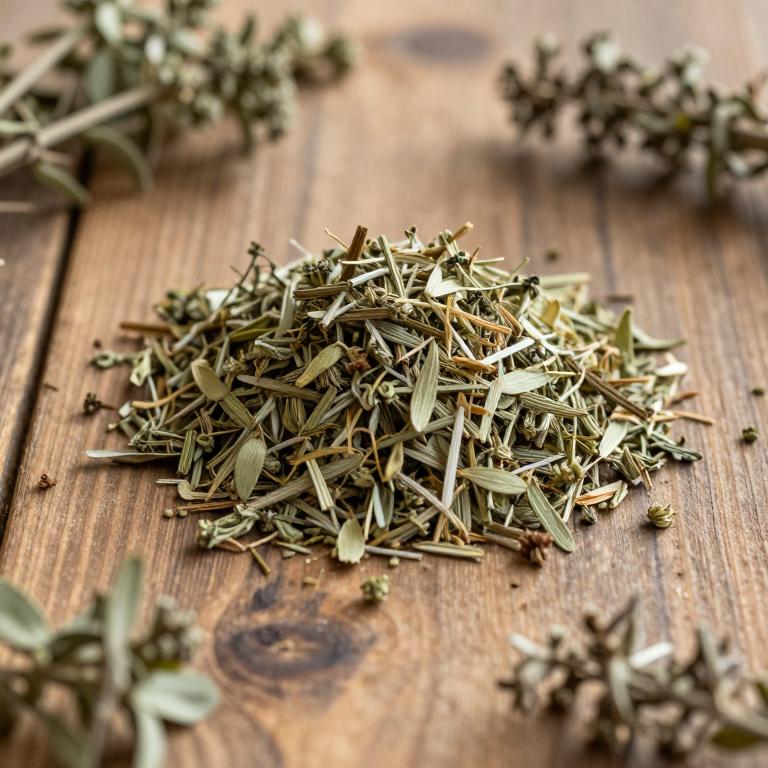
Wild basil, scientifically known as Clinopodium vulgare, is a perennial herb celebrated for its aromatic properties. Native to Europe and Asia, this plant belongs to the mint family. It is traditionally used in herbal medicine for its antiseptic, digestive, and anti-inflammatory qualities, offering a fragrant addition to natural remedies.
Names and Synonyms
Common Names
- cushion calamint
- dogmint
- field basil
- wild basil
- wild basil savory
- American wild basil
Scientific Names
Accepted name
Clinopodium vulgareSynonyms
- Acinos vulgaris
- Thymus clinopodium
- Satureja clinopodium
- Melissa vulgaris
- Melissa clinopodium
- Calamintha clinopodium
- Faucibarba clinopodium
Regional and Traditional Names
Spanish:
- Hierba capuchina
- Cuatro-hermanas castellanas
- Cuatro hermanas castellanas
- Nébida
- Angelotes
- Pie de cama
- Albahaca silvestre mayor
- Oregano falso
- Albahaca silvestre
- Oriegano
- Nebida
- Perilla de cama
- Orégano falso
- Albahaca de monte
- Albahaca Morada
German:
- Gemeiner Wirbeldost
- Satureja vulgaris
- Borstige Bergminze
- Gewöhnlicher Wirbeldost
- clinopode
- gewöhnlicher Wirbeldost
- Wirbeldost
- Gemeiner Wirbeldost
French:
- Clinopode
- Clinopode commun
- Calament clinopode
- sarriette vulgaire
- Sarriette clinopode
- Calament commun
- Grand Basilic
- Sariette commune
Sources: Wikidata, Catalogue of Life
Taxonomical Classification
This plant belongs to the kingdom Plantae and is classified under the phylum Streptophyta within the class Equisetopsida. It falls under the subclass Magnoliidae and the order Lamiales, specifically residing in the family Lamiaceae. Finally, its taxonomic designation is completed within the genus Clinopodium.
| Rank | Classification |
|---|---|
| Kingdom | Plantae |
| Phylum | Streptophyta |
| Class | Equisetopsida |
| Subclass | Magnoliidae |
| Order | Lamiales |
| Family | Lamiaceae |
| Genus | Clinopodium |
Sources: The World Checklist of Vascular Plants (WCVP)
Distribution
This plant exhibits a specific distribution pattern concentrated within the northern regions of the European continent. In Northern Europe, it can be found growing across the landscapes of Denmark and Finland. Its presence extends westward to include the islands of Great Britain and Ireland. Additionally, the species is documented to inhabit the territories of Norway. Together, these locations define its primary geographical range across the northern latitudes.
| Region | Area |
|---|---|
| Northern Europe | Denmark |
| Northern Europe | Finland |
| Northern Europe | Great Britain |
| Northern Europe | Ireland |
| Northern Europe | Norway |
| Northern Europe | Sweden |
| Middle Europe | Austria |
| Middle Europe | Belgium |
| Middle Europe | Czechia-Slovakia |
| Middle Europe | Germany |
Sources: The World Checklist of Vascular Plants (WCVP)
Botanical Identification
Ecology
The ecology of Clinopodium vulgare is characterized by its broad adaptability to diverse vertical gradients and specific vegetative environments. This species exhibits a vast elevational range, thriving at altitudes starting from sea level (0 m AMSL) and extending up to a maximum of 3500 m AMSL. Within these altitudinal limits, its distribution is primarily dictated by the presence of specific vegetation structures, as it is commonly found inhabiting forest ecosystems and shrubberies.
- Elevational range max:
- 3500 m AMSL
- Elevational range min:
- 0 m AMSL
- Habitat :
- forest, shrubberies
Life history
The life history of Clinopodium vulgare is characterized by its classification as a perennial species, allowing it to persist through multiple growing seasons. As a hemicryptophyte, its perennable buds are located at or just below the soil surface, a structural adaptation that helps protect the plant during unfavorable conditions. Furthermore, the plant exhibits a deciduous nature, shedding its foliage during its dormant period to conserve resources.
- Deciduousness :
- deciduous
- Life form :
- hemicryptophyte
- Lifecycle :
- perennial
Morphology
The morphology of Clinopodium vulgare is characterized by its growth form as a non-woody herb and forb. This self-supporting plant typically maintains a relatively modest stature, with a plant height ranging from a minimum of 0.3 m to a maximum of 0.8 m, resulting in an average height of approximately 0.375 m. It functions as an independent organism, lacking any parasitic tendencies, and is classified as a terrestrial species rather than an aquatic or epiphytic one. As a non-climbing, self-supporting herb, it maintains its structure without the need for lianas or vines to ascend.
- Aquatic :
- terrestrial
- Climber :
- self-supporting
- Epiphyte :
- terrestrial
- Growth form :
- herb
- Growth form :
- forb
- Parasite :
- independent
- Plant height max:
- 0.8 m
- Plant height mean:
- 0.375 m
- Plant height min:
- 0.3 m
- Woodiness :
- non-woody
Physiology
The physiology of Clinopodium vulgare is characterized by a C3 photosynthetic pathway, which dictates its carbon fixation processes and metabolic efficiency. As a non-carnivorous species, it relies entirely on soil-based nutrient uptake rather than trapping prey, and it does not function as a nitrogen fixer, meaning it depends on available nitrogen in the substrate. The plant's leaf morphology plays a significant role in its resource management, with an average leaf size of 10.55 cm² and a mean leaf width of 1.6 cm. The leaves reach a maximum length of 2.3 cm, and the specific leaf area (SLA) is measured at a mean of 236 cm²/g, a value that reflects the plant's strategy regarding leaf thickness and its capacity for light interception relative to its biomass.
- Carnivory :
- non-carnivorous
- Leaf length max:
- 2.3 cm
- Leaf size mean:
- 10.55 cm²
- Leaf width mean:
- 1.6 cm
- Nitrogen fixer :
- no
- Photosynthetic pathway :
- C3
- Specific Leaf Area (SLA) mean:
- 236 cm²/g
Reproduction
The reproduction of Clinopodium vulgare is characterized by a bisexual sexual reproductive system, with asexual reproduction being absent and self-fertilization also noted as absent. The flowering period typically begins in July and continues through September. The plant relies on biotic pollination, specifically employing an insect-based pollination syndrome where bees play a key role in the process. Once fertilization occurs, the plant produces dry fruits with an average length of 1 cm. Each fruit contains a significant number of seeds, ranging from 11 to 100 per fruit. The seeds are quite uniform in dimension, with a mean length, width, and minimum/maximum width all recorded at 10 mm, and a consistent seed volume of 0.35 mm³. In terms of mass, the seeds are very lightweight, with a mean seed mass of approximately 0.00037672225 g, ranging from a minimum of 0.0003 g to a maximum of 0.00053 g. The dispersal of these seeds is achieved through an autochorous syndrome, meaning the plant utilizes autochory for seed dispersal.
- Dispersal syndrome :
- autochorous
- Flowering time :
- Jul
- Flowering time :
- Sep
- Fruit dryness :
- dry
- Fruit length mean:
- 1 cm
- Pollination syndrome :
- insect
- Pollination syndrome :
- bee
- Pollination syndrome :
- biotic
- Reproduction asexual :
- absent
- Reproduction sexual :
- bisexual
- Seed length mean:
- 10 mm
- Seed mass max:
- 0.00053 g
- Seed mass mean:
- 0.00037672225 g
- Seed mass min:
- 3e-04 g
- Seed volume max:
- 0.35 mm³
- Seed width mean:
- 10 mm
- Seeds_per_fruit :
- 11-100
- Self fertilization :
- absent
Sources: Global Inventory of Floras and Traits (GIFT)
Chemicals
Clinopodium vulgare has 4 reported phytochemicals identified across 0 scientific publications and several other databases. The most consistently reported chemicals include Betulin, CATECHIN, Neochlorogenic acid, rosmarinic acid.
| Chemical | Supporting sources | Consensus |
|---|---|---|
| Betulin | 1 supporting sources | ★☆☆☆☆ |
| CATECHIN | 1 supporting sources | ★☆☆☆☆ |
| Neochlorogenic acid | 1 supporting sources | ★☆☆☆☆ |
| rosmarinic acid | 1 supporting sources | ★☆☆☆☆ |
Betulin
- Dr. Duke
CATECHIN
- Plants (Basel, Switzerland)
Neochlorogenic acid
- Plants (Basel, Switzerland)
rosmarinic acid
- Plants (Basel, Switzerland)
Activities
Clinopodium vulgare has 16 reported activities identified across 0 scientific publications and several other databases. The most consistently reported activities include Antibacterial, Anticancer, Antioxidant, Antitumor, Antiviral.
| Activity | Supporting sources | Consensus |
|---|---|---|
| Antibacterial | 2 supporting sources | ★☆☆☆☆ |
| Anticancer | 2 supporting sources | ★☆☆☆☆ |
| Antioxidant | 2 supporting sources | ★☆☆☆☆ |
| Antitumor | 2 supporting sources | ★☆☆☆☆ |
| Antiviral | 2 supporting sources | ★☆☆☆☆ |
| AntiHIV | 1 supporting sources | ★☆☆☆☆ |
| Anticarcinomic | 1 supporting sources | ★☆☆☆☆ |
| Antifeedant | 1 supporting sources | ★☆☆☆☆ |
| Antiflu | 1 supporting sources | ★☆☆☆☆ |
| Antihypertensive | 1 supporting sources | ★☆☆☆☆ |
Antibacterial
- Heliyon
- Plants (Basel, Switzerland)
Anticancer
- Heliyon
- Plants (Basel, Switzerland)
Antioxidant
- Heliyon
- Plants (Basel, Switzerland)
Antitumor
- Dr. Duke
- Plants (Basel, Switzerland)
Antiviral
- Dr. Duke
- Heliyon
AntiHIV
- Dr. Duke
Anticarcinomic
- Dr. Duke
Antifeedant
- Dr. Duke
Antiflu
- Dr. Duke
Antihypertensive
- Heliyon
Conditions
Clinopodium vulgare has 5 reported investigations on conditions identified across 0 scientific publications and several other databases. The most consistently reported conditions include breast cancer, gastric ulcers, inflammation, wound-healing, wounds.
| Condition | Supporting sources | Consensus |
|---|---|---|
| Breast cancer | 1 supporting sources | ★☆☆☆☆ |
| Gastric ulcers | 1 supporting sources | ★☆☆☆☆ |
| Inflammation | 1 supporting sources | ★☆☆☆☆ |
| Wound-healing | 1 supporting sources | ★☆☆☆☆ |
| Wounds | 1 supporting sources | ★☆☆☆☆ |
Breast cancer
- Plants (Basel, Switzerland)
Gastric ulcers
- Heliyon
Inflammation
- Heliyon
Wound-healing
- Plants (Basel, Switzerland)
Wounds
- Drug development and industrial pharmacy
Preparations
Clinopodium vulgare has 1 reported preparations identified across 0 scientific publications and several other databases. The most consistently reported preparations include hydroethanolic extracts.
| Preparation | Supporting sources | Consensus |
|---|---|---|
| Hydroethanolic extracts | 1 supporting sources | ★☆☆☆☆ |
Hydroethanolic extracts
- Molecules (Basel, Switzerland)