Clinopodium odorum
Clinopodium odorum · Accepted scientific name
Scientific literature: Very Extensive (210 studies) · ★★★★★
Clinopodium odorum, scientifically known as Clinopodium odorum, is a fragrant perennial herb belonging to the Lamiaceae family. Commonly referred to as wild basil, this aromatic plant is valued for its essential oils. It is widely utilized in traditional medicine for its potent antimicrobial, digestive, and anti-inflammatory therapeutic properties.
- Family
- Not available
- Native range
- Southern America
- Parts used
- Not available
- Common names
- Not available
- Scientific synonyms
- Not available
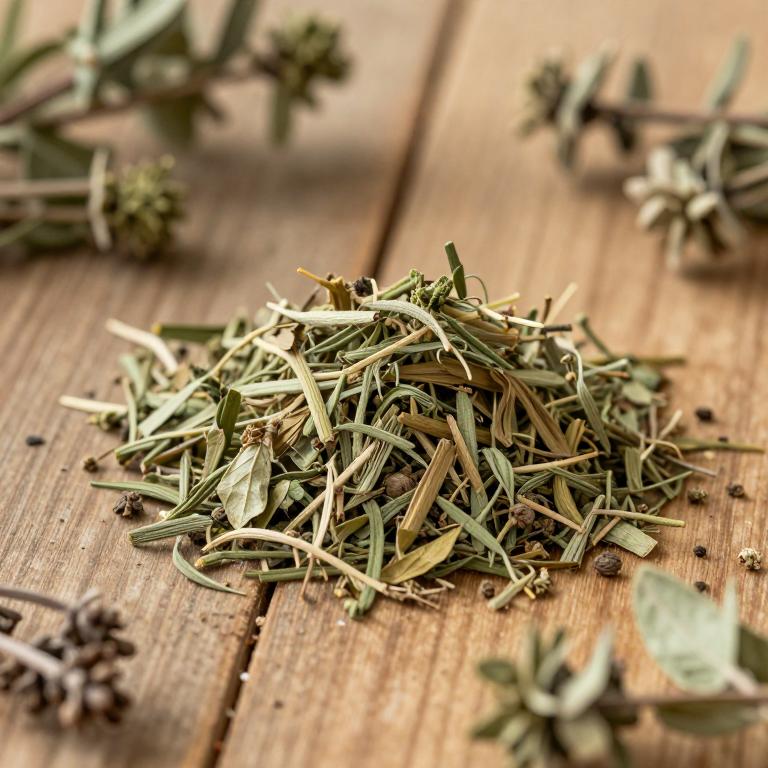
Names and Synonyms
Scientific Names
Accepted name
Clinopodium odorumDistribution
This plant exhibits a specific range across the South American continent. In Western South America, its presence is documented within the borders of Bolivia. Moving toward the southern part of the continent, it can be found in Northeast Argentina. Additionally, the species extends into the Northwest region of Argentina. Together, these locations define its primary geographical distribution.
| Region | Area |
|---|---|
| Western South America | Bolivia |
| Southern South America | Argentina Northeast |
| Southern South America | Argentina Northwest |
Sources: The World Checklist of Vascular Plants (WCVP)
Botanical Identification
Ecology
The ecology of Clinopodium odorum is defined by its preference for high-altitude environments, specifically occupying montane and subalpine zones. This species thrives within a distinct elevational range, typically found at altitudes starting from a minimum of 1500 m AMSL and extending up to a maximum of 3000 m AMSL. Within these altitudinal gradients, the plant adapts to the specific climatic pressures of mountainous terrain, including cooler temperatures and varying levels of solar radiation characteristic of these elevations. Its distribution is closely tied to these vertical limits, which dictate the soil moisture, atmospheric pressure, and seasonal temperature fluctuations essential for its growth and survival in its native habitat.
- Elevational range max:
- 3000 m AMSL
- Elevational range min:
- 1500 m AMSL
Life history
The life history of Clinopodium odorum is characterized by its nature as a perennial plant, ensuring its persistence across multiple growing seasons. In terms of its structural growth strategy, the species is classified as a chamaephyte, a life form where the perennating buds are located close to the soil surface, often just above it, which allows it to withstand varying environmental conditions. This chamamyphyte classification is consistently applied to describe its growth habit, defining how it maintains its physiological presence and regenerative capacity within its ecological niche.
- Life form :
- chamaephyte
- Lifecycle :
- perennial
Morphology
The morphology of Clinopodium odorum is characterized by a self-supporting growth habit, functioning as an independent organism without any parasitic tendencies. It presents as a woody shrub, exhibiting a sturdy, woodiness that distinguishes its structural integrity. Rather than being an epiphyte or a climber such as a liana or vine, this plant is strictly terrestrial in its ecological positioning, showing no preference for aquatic or semiaquatic environments. Its development is characterized by a stable, non-climbing form that remains firmly rooted in soil, maintaining a self-supporting architecture throughout its life cycle.
- Aquatic :
- terrestrial
- Climber :
- self-supporting
- Epiphyte :
- terrestrial
- Growth form :
- shrub
- Parasite :
- independent
- Woodiness :
- woody
Physiology
The physiology of Clinopodium odorum is characterized by a metabolic framework governed by the C3 photosynthetic pathway, a process where carbon dioxide is fixed directly into a three-carbon compound through the enzyme RuBisCO during the Calvin cycle. This metabolic strategy dictates the plant's water-use efficiency and gas exchange patterns, as it relies on keeping stomata open for CO2 uptake, which inherently leads to higher transpiration rates compared to C4 or CAM species. The plant's energy assimilation is closely linked to its specialized glandular trichomes, which serve as physiological hubs for the biosynthesis and storage of volatile organic compounds. These secondary metabolites are integrated into the plant's physiological defense mechanisms, helping to regulate osmotic potential and protect cellular structures against environmental stressors and herbivory. Through this C3-driven carbon fixation, the plant maintains the energetic requirements necessary for both primary growth and the complex metabolic synthesis of its characteristic aromatic constituents.
- Photosynthetic pathway :
- C3
Sources: Global Inventory of Floras and Traits (GIFT)
Chemicals
Clinopodium odorum has 24 reported phytochemicals identified across 0 scientific publications and several other databases. The most consistently reported chemicals include 1,8-Cineole, 1-NONENE, ALPHA-PINENE, BETA-PINENE, CAMPHENE.
| Chemical | Supporting sources | Consensus |
|---|---|---|
| 1,8-Cineole | 1 supporting sources | ★☆☆☆☆ |
| 1-NONENE | 1 supporting sources | ★☆☆☆☆ |
| ALPHA-PINENE | 1 supporting sources | ★☆☆☆☆ |
| BETA-PINENE | 1 supporting sources | ★☆☆☆☆ |
| CAMPHENE | 1 supporting sources | ★☆☆☆☆ |
| CITRONELLAL | 1 supporting sources | ★☆☆☆☆ |
| Cedrol | 1 supporting sources | ★☆☆☆☆ |
| Citronellol | 1 supporting sources | ★☆☆☆☆ |
| DODECANAL | 1 supporting sources | ★☆☆☆☆ |
| Decanoic acid | 1 supporting sources | ★☆☆☆☆ |
1,8-Cineole
- Dr. Duke
1-NONENE
- Dr. Duke
ALPHA-PINENE
- Dr. Duke
BETA-PINENE
- Dr. Duke
CAMPHENE
- Dr. Duke
CITRONELLAL
- Dr. Duke
Cedrol
- Dr. Duke
Citronellol
- Dr. Duke
DODECANAL
- Dr. Duke
Decanoic acid
- Dr. Duke
Activities
Clinopodium odorum has 186 reported activities identified across 0 scientific publications and several other databases. The most consistently reported activities include (-)-Chronotropic, (-)-Inotropic, ACE-Inhibitor, AChE-Inhibitor, Acaricide.
| Activity | Supporting sources | Consensus |
|---|---|---|
| (-)-Chronotropic | 1 supporting sources | ★☆☆☆☆ |
| (-)-Inotropic | 1 supporting sources | ★☆☆☆☆ |
| ACE-Inhibitor | 1 supporting sources | ★☆☆☆☆ |
| AChE-Inhibitor | 1 supporting sources | ★☆☆☆☆ |
| Acaricide | 1 supporting sources | ★☆☆☆☆ |
| Aldose-Reductase-Inhibitor | 1 supporting sources | ★☆☆☆☆ |
| Allelochemic | 1 supporting sources | ★☆☆☆☆ |
| Allelopathic | 1 supporting sources | ★☆☆☆☆ |
| Allergenic | 1 supporting sources | ★☆☆☆☆ |
| Analgesic | 1 supporting sources | ★☆☆☆☆ |
(-)-Chronotropic
- Dr. Duke
(-)-Inotropic
- Dr. Duke
ACE-Inhibitor
- Dr. Duke
AChE-Inhibitor
- Dr. Duke
Acaricide
- Dr. Duke
Aldose-Reductase-Inhibitor
- Dr. Duke
Allelochemic
- Dr. Duke
Allelopathic
- Dr. Duke
Allergenic
- Dr. Duke
Analgesic
- Dr. Duke