lesser calamint
Clinopodium nepeta · Accepted scientific name
Scientific literature: Very Sparse (9 studies) · ★☆☆☆☆
Lesser calamint, scientifically known as Clinopodium nepeta, is a fragrant perennial herb prized for its aromatic foliage and delicate lavender flowers. Traditionally utilized in herbal medicine, this resilient plant offers various therapeutic properties, including antimicrobial and digestive benefits, making it a valuable addition to both gardens and apothecary traditions.
- Family
- Lamiaceae
- Native range
- Europe
- Parts used
- Not available
- Common names
- Lesser Calamint · Calamint
- Scientific synonyms
- Melissa Nepeta · Satureja Nepeta · 4 more
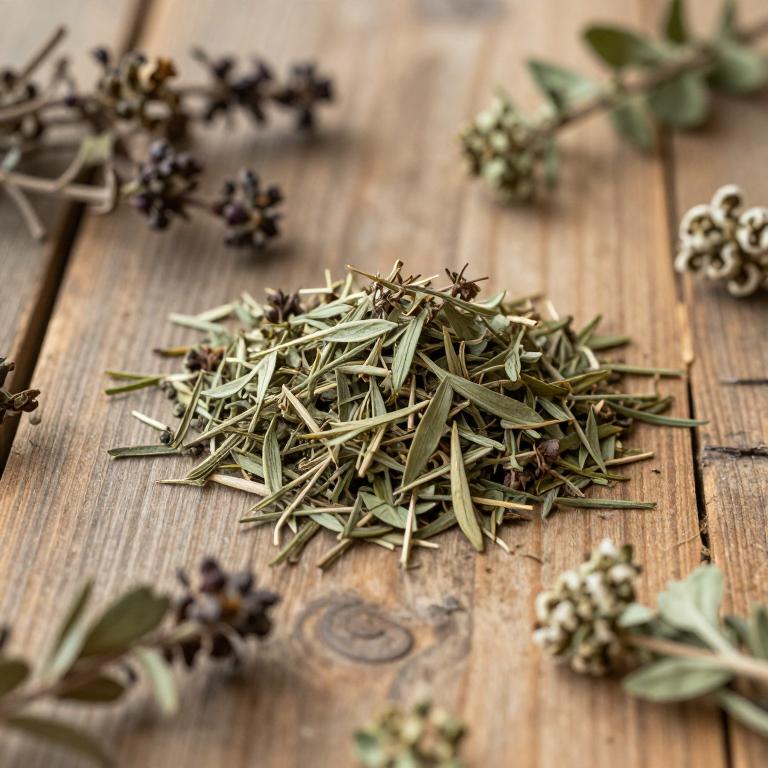
Names and Synonyms
Common Names
- lesser calamint
- Calamint
Scientific Names
Accepted name
Clinopodium nepetaSynonyms
- Melissa nepeta
- Satureja nepeta
- Calamintha officinalis var. nepeta
- Satureja calamintha var. nepeta
- Thymus nepeta
- Satureja calamintha subsp. nepeta
Regional and Traditional Names
Spanish:
- Calaminta
- Santo Domingo
German:
- Katzen-Bergthymian
- echte Bergminze
- kleinblütige Bergminze
- Einseles Bergminze
- Kleinblütige Bergminze (Unterart)
French:
- calament
- menthe de montagne
- Calament faux népéta
- Calament glanduleux
- Calament népéta
- Clinopode népéta
- Petit calament
- Sarriette népéta
Sources: Wikidata, Catalogue of Life
Taxonomical Classification
This plant belongs to the kingdom Plantae and is classified under the phylum Streptophyta within the class Equisetopsida. Its taxonomic lineage continues through the subclass Magnoliidae and the order Lamiales, placing it in the family Lamiaceae. Finally, it is identified under the specific genus Clinopodium.
| Rank | Classification |
|---|---|
| Kingdom | Plantae |
| Phylum | Streptophyta |
| Class | Equisetopsida |
| Subclass | Magnoliidae |
| Order | Lamiales |
| Family | Lamiaceae |
| Genus | Clinopodium |
Sources: The World Checklist of Vascular Plants (WCVP)
Distribution
This plant exhibits a specific distribution pattern across several regions of the European continent. In Northern Europe, its presence can be documented within Great Britain. Moving into Middle Europe, it is found growing in the landscapes of Austria. The species also inhabits the territories of both Czechia and Slovakia. Finally, its geographical range extends through Germany and Hungary.
| Region | Area |
|---|---|
| Northern Europe | Great Britain |
| Middle Europe | Austria |
| Middle Europe | Czechia-Slovakia |
| Middle Europe | Germany |
| Middle Europe | Hungary |
| Middle Europe | Switzerland |
| Southwestern Europe | Baleares |
| Southwestern Europe | Corse |
| Southwestern Europe | France |
| Southwestern Europe | Portugal |
Sources: The World Checklist of Vascular Plants (WCVP)
Botanical Identification
Ecology
The ecology of Clinopodium nepeta is characterized by its adaptability to diverse terrestrial ecosystems, primarily thriving within the transitional zones of forest edges, dense shrubberies, and open steppe environments. It occupies niches where light availability varies, often finding stability in the understory of woody vegetation or in the more exposed, sun-drenched landscapes of grassland steppes. This ability to inhabit both sheltered, moisture-retaining shrublands and more arid, wind-swept steppe regions suggests a high level of environmental plasticity, allowing it to navigate different soil structures and microclimates associated with these distinct habitats.
- Habitat :
- forest, shrubberies, steppe
Life history
The life history of Clinopodium nepeta is characterized by its status as a perennial plant, allowing it to persist through multiple growing seasons. As a hemicryptophyte, it maintains its perennuating buds at the soil surface, protected by leaf litter or other organic matter during unfavorable conditions. This species exhibits a deciduous nature, shedding its foliage annually as it transitions through its seasonal cycles.
- Deciduousness :
- deciduous
- Life form :
- hemicryptophyte
- Lifecycle :
- perennial
Morphology
The morphology of Clinopodium nepeta is characterized by its growth form as a non-woody herb and forb. This terrestrial, independent plant does not function as a parasite or an epiphyte, growing instead in soil environments. It is a self-supporting species rather than a climber, liana, or vine, exhibiting an ascending shoot orientation. In terms of stature, the plant typically reaches a mean height of 0.125 m, though its size can vary significantly, with minimum heights recorded at 0.2 m and maximum heights reaching up to 0.8 m.
- Aquatic :
- terrestrial
- Climber :
- self-supporting
- Epiphyte :
- terrestrial
- Growth form :
- herb
- Growth form :
- forb
- Parasite :
- independent
- Plant height max:
- 0.8 m
- Plant height mean:
- 0.125 m
- Plant height min:
- 0.2 m
- Shoot orientation :
- ascending
- Woodiness :
- non-woody
Physiology
The physiology of Clinopodium nepeta is characterized by a C3 photosynthetic pathway, which dictates its metabolic processes and carbon fixation strategies. The plant is strictly non-carnivorous, relying on traditional soil-based nutrient uptake rather than the capture of prey. Morphologically, its leaf structure displays specific dimensions, with a mean leaf width of 0.9 cm, a minimum width of 0.9 cm, and a maximum width of 0.9 cm, indicating a highly uniform leaf breadth. Furthermore, the leaf length reaches a maximum value of 1.3 cm, defining the overall scale of its vegetative photosynthetic organs.
- Carnivory :
- non-carnivorous
- Leaf length max:
- 1.3 cm
- Leaf width mean:
- 0.9 cm
- Photosynthetic pathway :
- C3
Reproduction
The reproduction of Clinopodium nepeta involves both sexual and asexual processes, as asexual reproduction is known to be present in this species. The flowering period typically begins in July and continues through September. Following pollination, the plant produces small fruits with a mean length of approximately 0.1 cm. The seeds produced are extremely lightweight, characterized by a mean mass of approximately 0.000272333333333333 g, with recorded values ranging from a minimum of 0.00029 g to a maximum of 0.0003 g (3e-04 g). Regarding the dispersal of its progeny, the plant exhibits an unspecialized dispersal syndrome, though it is also noted to undergo anthropochorous dispersal, meaning its seeds can be moved by human activity.
- Dispersal syndrome :
- unspecialized
- Dispersal syndrome :
- anthropochorous
- Flowering time :
- Jul
- Flowering time :
- Sep
- Fruit length mean:
- 0.1 cm
- Reproduction asexual :
- present
- Seed mass max:
- 3e-04 g
- Seed mass mean:
- 0.000272333333333333 g
- Seed mass min:
- 0.00029 g
Sources: Global Inventory of Floras and Traits (GIFT)
Chemicals
Clinopodium nepeta has 7 reported phytochemicals identified across 0 scientific publications and several other databases. The most consistently reported chemicals include Apigenin 7-O-glucuronide, Dihydrocarvone, Narirutin, Neoisomenthol, Pulegone.
| Chemical | Supporting sources | Consensus |
|---|---|---|
| Apigenin 7-O-glucuronide | 1 supporting sources | ★☆☆☆☆ |
| Dihydrocarvone | 1 supporting sources | ★☆☆☆☆ |
| Narirutin | 1 supporting sources | ★☆☆☆☆ |
| Neoisomenthol | 1 supporting sources | ★☆☆☆☆ |
| Pulegone | 1 supporting sources | ★☆☆☆☆ |
| Saponins | 1 supporting sources | ★☆☆☆☆ |
| hesperidin | 1 supporting sources | ★☆☆☆☆ |
Apigenin 7-O-glucuronide
- Biomedical chromatography : BMC
Dihydrocarvone
- Chemistry & biodiversity
Narirutin
- Biomedical chromatography : BMC
Neoisomenthol
- Chemistry & biodiversity
Pulegone
- Chemistry & biodiversity
Saponins
- Zhong yao cai = Zhongyaocai = Journal of Chinese medicinal materials
hesperidin
- Biomedical chromatography : BMC
Conditions
Clinopodium nepeta has 1 reported investigations on conditions identified across 0 scientific publications and several other databases. The most consistently reported conditions include hemorrhagic disorders.
| Condition | Supporting sources | Consensus |
|---|---|---|
| Hemorrhagic disorders | 1 supporting sources | ★☆☆☆☆ |
Hemorrhagic disorders
- Molecules (Basel, Switzerland)
Preparations
Clinopodium nepeta has 1 reported preparations identified across 0 scientific publications and several other databases. The most consistently reported preparations include essential oil.
| Preparation | Supporting sources | Consensus |
|---|---|---|
| Essential oil | 1 supporting sources | ★☆☆☆☆ |
Essential oil
- Chemistry & biodiversity