Clinopodium mexicanum
Clinopodium mexicanum · Accepted scientific name
Scientific literature: Very Sparse (11 studies) · ★☆☆☆☆
Clinopodium mexicanum, scientifically known as Clinopodium mexicanum, is a versatile medicinal herb native to Mexico. Renowned for its aromatic qualities, this plant is traditionally used in folk medicine to treat digestive ailments and respiratory issues. Its potent bioactive compounds offer significant therapeutic potential for holistic health and natural healing.
- Family
- Lamiaceae
- Native range
- Northern America
- Parts used
- Leaf
- Common names
- Not available
- Scientific synonyms
- Satureja Oaxacana · Calamintha Oaxacana · 4 more
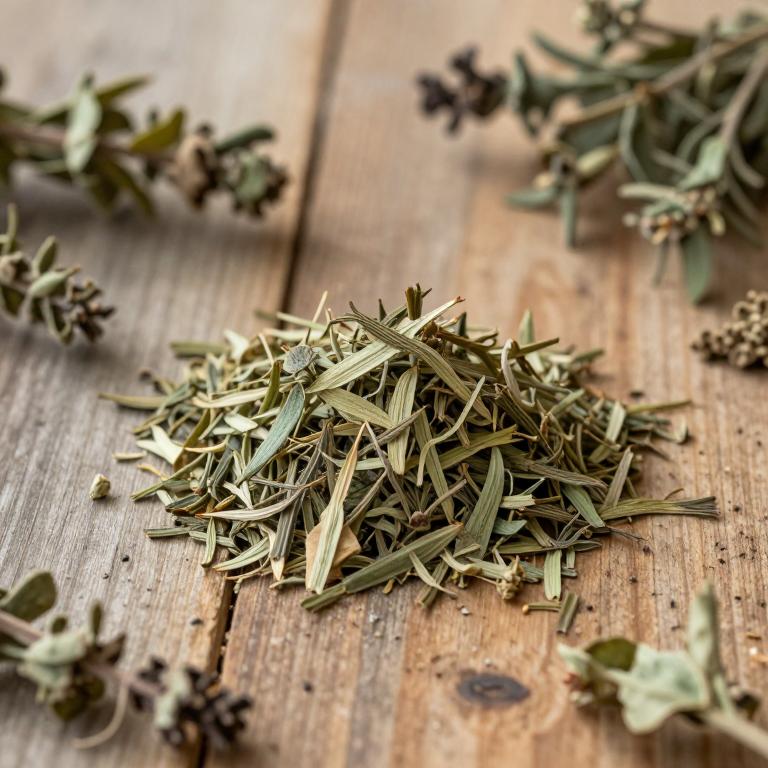
Names and Synonyms
Scientific Names
Accepted name
Clinopodium mexicanumSynonyms
- Satureja oaxacana
- Calamintha oaxacana
- Clinopodium oaxacanum
- Gardoquia helleri
- Gardoquia mexicana
- Satureja mexicana
Regional and Traditional Names
Spanish:
- toronjil de monte
- Chepito
- Chipite
- Hierba del borracho
- poleo
Sources: Wikidata, Catalogue of Life
Taxonomical Classification
This plant belongs to the kingdom Plantae and the phylum Streptophyta, falling under the class Equisetopsida and subclass Magnoliidae. Within the order Lamiales and the family Lamiaceae, it is classified under the genus Clinopodium.
| Rank | Classification |
|---|---|
| Kingdom | Plantae |
| Phylum | Streptophyta |
| Class | Equisetopsida |
| Subclass | Magnoliidae |
| Order | Lamiales |
| Family | Lamiaceae |
| Genus | Clinopodium |
Sources: The World Checklist of Vascular Plants (WCVP)
Distribution
This plant is widely distributed across several diverse regions throughout the country of Mexico. It can be found growing within the central territories of Mexico Central. Its presence extends into the various landscapes of Mexico Northeast as well. Furthermore, the species is documented inhabiting the coastal and inland areas of Mexico Gulf. Finally, its range reaches into the expansive southern territories of Mexico Southwest and Mexico Southeast.
| Region | Area |
|---|---|
| Mexico | Mexico Central |
| Mexico | Mexico Northeast |
| Mexico | Mexico Gulf |
| Mexico | Mexico Southwest |
| Mexico | Mexico Southeast |
Sources: The World Checklist of Vascular Plants (WCVP)
Botanical Identification
Life history
The life history of Clinopodium mexicanum is characterized by its specific growth habit and survival strategy, classified under the life form category as a chamaephyte. Within the botanical framework of life forms, it is specifically identified as a chamaephyte, meaning its perennating buds are located close to the soil surface, protected by a small amount of organic matter or low-lying vegetation. This life strategy allows the plant to persist through unfavorable seasons by keeping its vital reproductive and vegetative structures near the ground level, ensuring resilience against environmental fluctuations. Whether categorized broadly or specifically within the various life form systems, its classification as a chamaephyte dictates its structural development and its ability to maintain a perennial presence in its natural habitat.
- Life form :
- chamaephyte
Morphology
The morphology of Clinopodium mexicanum is characterized by its growth habit as a self-supporting climber, meaning it does not rely on external structures for stability but possesses the structural integrity to ascend or spread through its own mechanical strength. As an independent organism, it functions as a non-parasitic species, maintaining its own metabolic processes without deriving nutrients from a host plant. Furthermore, its ecological positioning is strictly terrestrial, as it grows in soil rather than inhabiting other plants as an epiphyte.
- Climber :
- self-supporting
- Epiphyte :
- terrestrial
- Parasite :
- independent
Sources: Global Inventory of Floras and Traits (GIFT)
Plant Parts
Clinopodium mexicanum has 1 reported plant parts identified across 1 scientific publications and several other databases that are studied for medicinal purposes. The most consistently reported plant part include leaf.
| Plant part | Supporting sources | Consensus |
|---|---|---|
| Leaf | 1 supporting sources | ★☆☆☆☆ |
Leaf
- Journal of ethnopharmacology
Chemicals
Clinopodium mexicanum has 3 reported phytochemicals identified across 1 scientific publications and several other databases. The most consistently reported chemicals include Isonaringenin, Neoponcirin, Poncirin.
| Chemical | Supporting sources | Consensus |
|---|---|---|
| Isonaringenin | 1 supporting sources | ★☆☆☆☆ |
| Neoponcirin | 1 supporting sources | ★☆☆☆☆ |
| Poncirin | 1 supporting sources | ★☆☆☆☆ |
Isonaringenin
- Journal of ethnopharmacology
Neoponcirin
- Journal of ethnopharmacology
Poncirin
- Journal of ethnopharmacology
Activities
Clinopodium mexicanum has 2 reported activities identified across 1 scientific publications and several other databases. The most consistently reported activities include Analgesic, Sedative.
| Activity | Supporting sources | Consensus |
|---|---|---|
| Analgesic | 1 supporting sources | ★☆☆☆☆ |
| Sedative | 1 supporting sources | ★☆☆☆☆ |
Analgesic
- Journal of ethnopharmacology
Sedative
- Journal of ethnopharmacology
Conditions
Clinopodium mexicanum has 5 reported investigations on conditions identified across 1 scientific publications and several other databases. The most consistently reported conditions include analgesic, convulsions, sedative, seizures, sleep.
| Condition | Supporting sources | Consensus |
|---|---|---|
| Analgesic | 1 supporting sources | ★☆☆☆☆ |
| Convulsions | 1 supporting sources | ★☆☆☆☆ |
| Sedative | 1 supporting sources | ★☆☆☆☆ |
| Seizures | 1 supporting sources | ★☆☆☆☆ |
| Sleep | 1 supporting sources | ★☆☆☆☆ |
Analgesic
- Journal of ethnopharmacology
Convulsions
- Journal of ethnopharmacology
Sedative
- Journal of ethnopharmacology
Seizures
- Journal of ethnopharmacology
Sleep
- Journal of ethnopharmacology
Preparations
Clinopodium mexicanum has 1 reported preparations identified across 1 scientific publications and several other databases. The most consistently reported preparations include aqueous extract.
| Preparation | Supporting sources | Consensus |
|---|---|---|
| Aqueous extract | 1 supporting sources | ★☆☆☆☆ |
Aqueous extract
- Journal of ethnopharmacology