Wood calamint
Clinopodium menthifolium · Accepted scientific name
Scientific literature: Very Sparse (3 studies) · ★☆☆☆☆
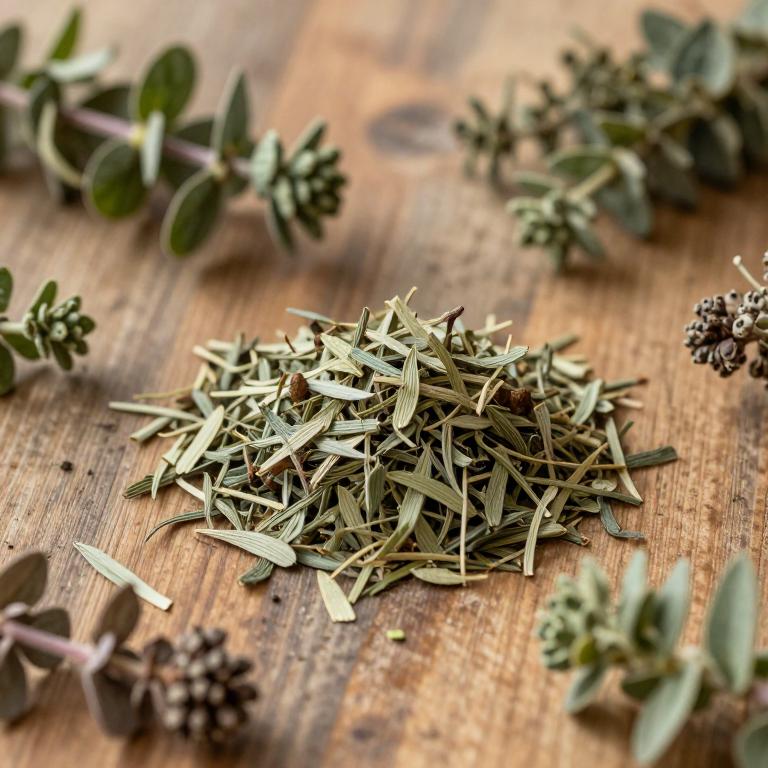
Wood calamint, scientifically known as Clinopodium menthifolium, is a resilient perennial herb belonging to the Lamiaceae family. Characterized by its aromatic, mint-like foliage and delicate pink flowers, this plant is highly valued in traditional herbalism for its antimicrobial, digestive, and soothing properties, making it a versatile botanical treasure.
- Family
- Lamiaceae
- Native range
- Europe
- Parts used
- Not available
- Common names
- Not available
- Scientific synonyms
- Satureja Calamintha Subsp. Menthifolia · Satureja Menthifolia · 5 more
Names and Synonyms
Scientific Names
Accepted name
Clinopodium menthifoliumSynonyms
- Satureja calamintha subsp. menthifolia
- Satureja menthifolia
- Calamintha officinalis subsp. menthifolia
- Calamintha menthifolia
- Calamintha montana subsp. menthifolia
- Calamintha officinalis f. menthifolia
- Calamintha officinalis var. menthifolia
Regional and Traditional Names
Spanish:
- Clinopodium menthifolium subsp. menthifolium
- Clinopodium baeticum
- Calamintha hirta
- Satureja sylvatica var boveana
- Calamintha nepeta subsp. sylvatica
- Calamintha sylvatica f. boveana
- Te de huerta
- Hierba nieta
- Calamintha officinalis var. sylvatica
- Calamintha montana
- Calamintha menthifolia subsp. sylvatica
- Hedeota
- Té de huerta
- Satureja calamintha subsp montana
- Calamintha montana subsp. montana
- Satureja sylvatica
German:
- Wald-Bergminze
- Calamintha menthifolia
French:
- calamant
- Calament à feuilles de menthe
- sarriette des bois
Sources: Wikidata
Taxonomical Classification
This plant belongs to the kingdom Plantae and the phylum Streptophyta, falling under the class Equisetopsida and subclass Magnoliidae. Within the order Lamiales and the family Lamiaceae, it is classified under the genus Clinopodium. Specifically, the species Clinopodium menthifolium represents a distinct member of this botanical lineage.
| Rank | Classification |
|---|---|
| Kingdom | Plantae |
| Phylum | Streptophyta |
| Class | Equisetopsida |
| Subclass | Magnoliidae |
| Order | Lamiales |
| Family | Lamiaceae |
| Genus | Clinopodium |
Sources: The World Checklist of Vascular Plants (WCVP)
Distribution
This plant exhibits a specific distribution pattern across several regions of Europe. In Northern Europe, it can be found growing within Great Britain and Ireland. Moving into Middle Europe, the species is also present in Austria and Belgium. Furthermore, its range extends through the territories of Czechia and Slovakia. Together, these locations define the primary geographical footprint of Clinopodium menthifolium.
| Region | Area |
|---|---|
| Northern Europe | Great Britain |
| Northern Europe | Ireland |
| Middle Europe | Austria |
| Middle Europe | Belgium |
| Middle Europe | Czechia-Slovakia |
| Middle Europe | Germany |
| Middle Europe | Hungary |
| Middle Europe | Netherlands |
| Middle Europe | Poland |
| Middle Europe | Switzerland |
Sources: The World Checklist of Vascular Plants (WCVP)
Botanical Identification
Ecology
The ecology of Clinopodium menthifolium is characterized by its ability to thrive across a diverse vertical gradient within its natural habitat. This species exhibits a broad altitudinal distribution, successfully colonizing various landscapes from lower reaches up to significant heights. Specifically, its ecological niche spans an elevational range starting from a minimum of 200 m AMSL and extending to a maximum of 1700 m AMSL. This wide range suggests a high degree of adaptability to varying temperature regimes, atmospheric pressures, and moisture levels found throughout these different montane and sub-montane zones.
- Elevational range max:
- 1700 m AMSL
- Elevational range min:
- 200 m AMSL
Life history
The life history of Clinopodium menthifolium is characterized by a perennial lifecycle, allowing the plant to persist through multiple growing seasons. In terms of its structural growth strategy, it exhibits a dual classification of life forms, functioning as both a chamaephyte and a hemicryptophyte. As a chamaephyte, its buds are located close to the soil surface, providing a level of resilience against environmental stressors, while its hemicryptophyte nature indicates that its perennating buds are situated at or just below the soil surface, protected by leaf litter or ground cover during unfavorable periods.
- Life form :
- chamaephyte
- Life form :
- hemicryptophyte
- Lifecycle :
- perennial
Morphology
The morphology of Clinopodium menthifolium is characterized by its growth form as a non-woody herb and forb, functioning as a self-supporting plant rather than a climber, liana, or vine. It is an independent species, not acting as a parasite or an epiphyte, and primarily maintains a terrestrial habit, although it can exist in semiaquatic or aquatic environments. The plant exhibits a relatively low stature, with a height ranging from a minimum of 0.03 m to a maximum of 0.7 m.
- Aquatic :
- terrestrial
- Climber :
- self-supporting
- Epiphyte :
- terrestrial
- Growth form :
- herb
- Growth form :
- forb
- Parasite :
- independent
- Plant height max:
- 0.7 m
- Plant height min:
- 0.03 m
- Woodiness :
- non-woody
Physiology
The physiology of Clinopodium menthifolium is characterized by a C3 photosynthetic pathway, a common mechanism for plants in this family to convert light energy into chemical energy. As a non-carnivorous organism, it relies entirely on its root system and soil nutrients for sustenance rather than capturing prey. Its vegetative morphology is defined by orbicular leaf forms that vary in dimension, with leaf lengths typically ranging from a minimum of 1.7 cm to a maximum of 4 cm. Correspondingly, the leaf width fluctuates between a minimum of 1 cm and a maximum of 3 cm, facilitating the surface area necessary for its metabolic processes.
- Carnivory :
- non-carnivorous
- Leaf form :
- orbicular
- Leaf length max:
- 4 cm
- Leaf length min:
- 1.7 cm
- Leaf width max:
- 3 cm
- Leaf width min:
- 1 cm
- Photosynthetic pathway :
- C3
Reproduction
The reproduction of Clinopodium menthifolium is primarily sexual, characterized by bisexual flowers that facilitate genetic diversity. The flowering period typically begins in July and extends through September. During this time, the plant produces pink flowers that range in length from 1 cm to 1.5 cm. The pollination process is biotic, specifically utilizing an insect-based syndrome with a particular reliance on bees. Self-fertilization is noted to be absent, necessitating these insect vectors for successful fertilization. Following pollination, the plant produces fruits containing a significant quantity of seeds, typically ranging between 11 and 100 seeds per fruit. These seeds are quite small, with a mean mass of approximately 0.00036 g, though they vary from a minimum of 0.00025 g to a maximum of 0.00049 g. Seed dispersal is achieved through a combination of syndromes, including zoochorous (animal-mediated) and autochorous (self-dispersal) mechanisms. There is no evidence of asexual reproduction in this species.
- Dispersal syndrome :
- zoochorous
- Dispersal syndrome :
- autochorous
- Flower colour :
- pink
- Flower length max:
- 1.5 cm
- Flower length min:
- 1 cm
- Flowering time :
- Jul
- Flowering time :
- Sep
- Pollination syndrome :
- insect
- Pollination syndrome :
- bee
- Pollination syndrome :
- biotic
- Reproduction asexual :
- absent
- Reproduction sexual :
- bisexual
- Seed mass max:
- 0.00049 g
- Seed mass mean:
- 0.000360388833333333 g
- Seed mass min:
- 0.00025 g
- Seeds_per_fruit :
- 11-100
- Self fertilization :
- absent
Sources: Global Inventory of Floras and Traits (GIFT)
Activities
Clinopodium menthifolium has 1 reported activities identified across 0 scientific publications and several other databases. The most consistently reported activities include Gastroprotective.
| Activity | Supporting sources | Consensus |
|---|---|---|
| Gastroprotective | 1 supporting sources | ★☆☆☆☆ |
Gastroprotective
- Journal of molecular histology
Conditions
Clinopodium menthifolium has 2 reported investigations on conditions identified across 0 scientific publications and several other databases. The most consistently reported conditions include gastric ulcers, peptic ulcers.
| Condition | Supporting sources | Consensus |
|---|---|---|
| Gastric ulcers | 1 supporting sources | ★☆☆☆☆ |
| Peptic ulcers | 1 supporting sources | ★☆☆☆☆ |
Gastric ulcers
- Journal of molecular histology
Peptic ulcers
- Journal of molecular histology
Preparations
Clinopodium menthifolium has 2 reported preparations identified across 0 scientific publications and several other databases. The most consistently reported preparations include CMEE, ethanol extracts.
| Preparation | Supporting sources | Consensus |
|---|---|---|
| Cmee | 1 supporting sources | ★☆☆☆☆ |
| Ethanol extracts | 1 supporting sources | ★☆☆☆☆ |
Cmee
- Journal of molecular histology
Ethanol extracts
- Journal of molecular histology