ascending calamint
Clinopodium menthifolium subsp. ascendens · Accepted scientific name
Scientific literature: Very Sparse (4 studies) · ★☆☆☆☆
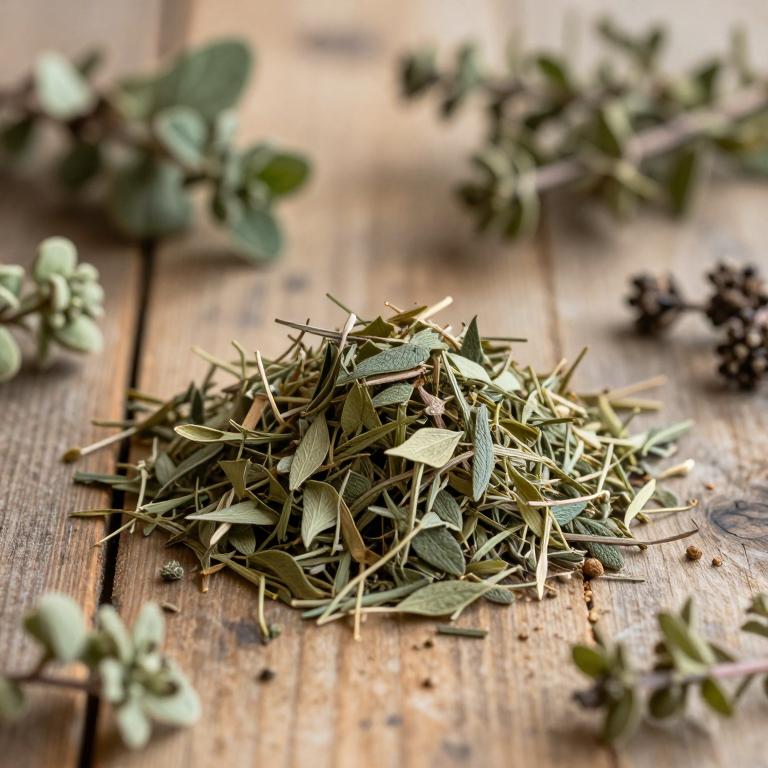
Ascending calamint, scientifically known as Clinopodium menthifolium subsp. ascendens, is a resilient perennial herb cherished for its aromatic qualities. Belonging to the Lamiaceae family, this plant features striking upright stems and delicate blossoms. Traditionally used in herbal medicine, it offers therapeutic potential for supporting digestive health and calming nerves.
- Family
- Lamiaceae
- Native range
- Europe
- Parts used
- Not available
- Common names
- Ascending Calamint · Common Calamint
- Scientific synonyms
- Satureja Vulgaris Subsp. Ascendens · Melissa Intermedia · 10 more
Names and Synonyms
Common Names
- ascending calamint
- Common Calamint
Scientific Names
Accepted name
Clinopodium menthifolium subsp. ascendensSynonyms
- Satureja vulgaris subsp. ascendens
- Melissa intermedia
- Satureja ascendens
- Calamintha menthifolia subsp. ascendens
- Satureja calamintha subsp. ascendens
- Clinopodium ascendens
- Satureja sylvatica subsp. ascendens
- Satureja calamintha var. ascendens
- Clinopodium nepeta subsp. ascendens
- Calamintha officinalis subsp. ascendens
- Calamintha sylvatica subsp. ascendens
- Calamintha ascendens
Regional and Traditional Names
French:
- Calament ascendant
Sources: Wikidata, Catalogue of Life
Taxonomical Classification
This plant belongs to the kingdom Plantae and is classified under the phylum Streptophyta and the class Equisetopsida. Within the subclass Magnoliidae, it falls under the order Lamiales and the family Lamiaceae. Finally, it is categorized under the genus Clinopodium as the subspecies ascendens.
| Rank | Classification |
|---|---|
| Kingdom | Plantae |
| Phylum | Streptophyta |
| Class | Equisetopsida |
| Subclass | Magnoliidae |
| Order | Lamiales |
| Family | Lamiaceae |
| Genus | Clinopodium |
Sources: The World Checklist of Vascular Plants (WCVP)
Distribution
This plant exhibits a specific distribution pattern across several regions of Europe. In Northern Europe, it can be found inhabiting the landscapes of Great Britain and Ireland. Moving into Middle Europe, the species is also present within the borders of Austria. Its range extends further into the central territories of Belgium. Finally, the plant is documented occurring throughout the Czechia-Slovakia region.
| Region | Area |
|---|---|
| Northern Europe | Great Britain |
| Northern Europe | Ireland |
| Middle Europe | Austria |
| Middle Europe | Belgium |
| Middle Europe | Czechia-Slovakia |
| Middle Europe | Germany |
| Middle Europe | Hungary |
| Middle Europe | Netherlands |
| Middle Europe | Poland |
| Middle Europe | Switzerland |
Sources: The World Checklist of Vascular Plants (WCVP)
Chemicals
Clinopodium menthifolium subsp. ascendens has 2 reported phytochemicals identified across 0 scientific publications and several other databases. The most consistently reported chemicals include MENTHONE, Pulegone.
| Chemical | Supporting sources | Consensus |
|---|---|---|
| MENTHONE | 1 supporting sources | ★☆☆☆☆ |
| Pulegone | 1 supporting sources | ★☆☆☆☆ |
MENTHONE
- Journal of ethnopharmacology
Pulegone
- Journal of ethnopharmacology
Activities
Clinopodium menthifolium subsp. ascendens has 1 reported activities identified across 0 scientific publications and several other databases. The most consistently reported activities include Antipyretic.
| Activity | Supporting sources | Consensus |
|---|---|---|
| Antipyretic | 1 supporting sources | ★☆☆☆☆ |
Antipyretic
- Journal of ethnopharmacology
Preparations
Clinopodium menthifolium subsp. ascendens has 1 reported preparations identified across 0 scientific publications and several other databases. The most consistently reported preparations include essential oil.
| Preparation | Supporting sources | Consensus |
|---|---|---|
| Essential oil | 1 supporting sources | ★☆☆☆☆ |
Essential oil
- Journal of ethnopharmacology