Clinopodium glabellum
Clinopodium glabellum · Accepted scientific name
Scientific literature: Moderate (112 studies) · ★★★☆☆
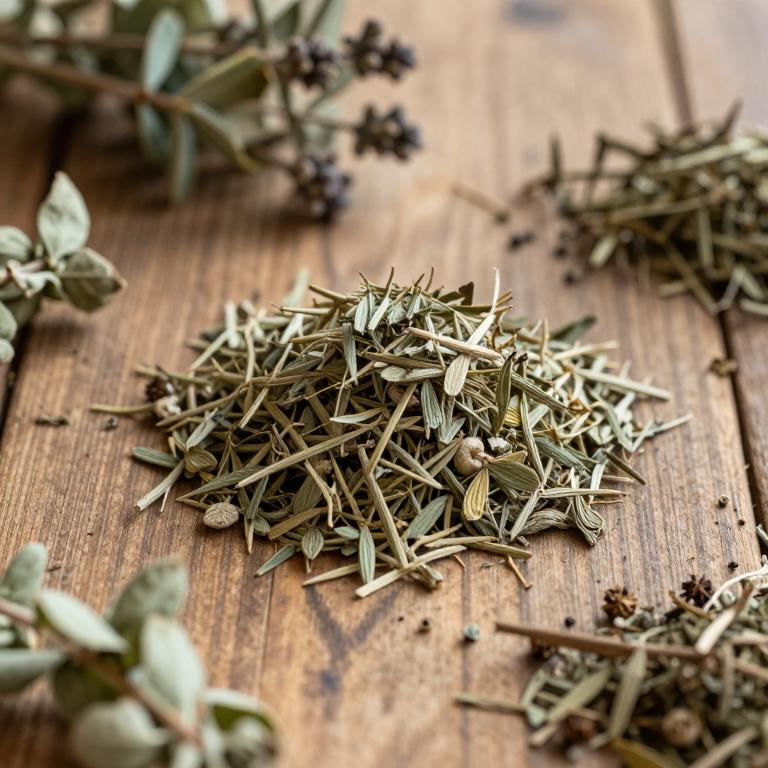
Clinopodium glabellum, scientifically known as Clinopodium glabellum, is a versatile medicinal herb valued for its potent therapeutic properties. Belonging to the Lamiaceae family, this plant is rich in essential oils and bioactive compounds, traditionally used to treat inflammation, digestive issues, and respiratory ailments through its natural healing essence.
- Family
- Not available
- Native range
- Europe
- Parts used
- Not available
- Common names
- Not available
- Scientific synonyms
- Not available
Names and Synonyms
Scientific Names
Accepted name
Clinopodium glabellumDistribution
This plant exhibits a broad geographical range that spans across several different regions of North America and Europe. In Europe, its presence is noted within the territory of Germany in Middle Europe. The species can also be found across North America, specifically in the provinces of British Columbia in Western Canada and Ontario in Eastern Canada. Within the United States, it inhabits the Northwestern state of Montana. Finally, its distribution extends to the Northeastern United States, where it is located in Indiana.
| Region | Area |
|---|---|
| Middle Europe | Germany |
| Western Canada | British Columbia |
| Eastern Canada | Ontario |
| Northwestern U.S.A. | Montana |
| Northeastern U.S.A. | Indiana |
| Northeastern U.S.A. | New York |
| South-Central U.S.A. | Texas |
| Southeastern U.S.A. | Alabama |
| Southeastern U.S.A. | Arkansas |
| Southeastern U.S.A. | Kentucky |
Sources: The World Checklist of Vascular Plants (WCVP)
Botanical Identification
Life history
The life history of Clinopodium glabellum is characterized by its status as a perennial plant, allowing it to persist through multiple growing seasons. In terms of its growth structure and survival strategy, it is classified as a chamaephyte, a life form where the majority of the plant's shoot system remains close to the ground, often protected by leaf litter or soil during unfavorable periods. This chamaephyte classification is consistent across its morphological development, defining how the species occupies its ecological niche and manages its seasonal biological cycles.
- Life form :
- chamaephyte
- Lifecycle :
- perennial
Morphology
The morphology of Clinopodium glabellum is characterized by its growth form as a non-woody herb, specifically classified as a forb. The plant exhibits a self-supporting habit, functioning as a self-supporting structure rather than a liana or vine, and it does not possess climbing mechanisms. In terms of its ecological positioning, it is a terrestrial species, lacking aquatic or semiaquatic tendencies, and it functions as an independent organism rather than a parasite. Furthermore, it is a terrestrial plant rather than an epiphyte, maintaining its structure through its non-woody, herbaceous composition.
- Aquatic :
- terrestrial
- Climber :
- self-supporting
- Epiphyte :
- terrestrial
- Growth form :
- herb
- Growth form :
- forb
- Parasite :
- independent
- Woodiness :
- non-woody
Sources: Global Inventory of Floras and Traits (GIFT)
Chemicals
Clinopodium glabellum has 12 reported phytochemicals identified across 0 scientific publications and several other databases. The most consistently reported chemicals include 3-OCTANOL, ALPHA-PINENE, BETA-PINENE, EO, Germacrene D.
| Chemical | Supporting sources | Consensus |
|---|---|---|
| 3-OCTANOL | 1 supporting sources | ★☆☆☆☆ |
| ALPHA-PINENE | 1 supporting sources | ★☆☆☆☆ |
| BETA-PINENE | 1 supporting sources | ★☆☆☆☆ |
| EO | 1 supporting sources | ★☆☆☆☆ |
| Germacrene D | 1 supporting sources | ★☆☆☆☆ |
| Isomenthol | 1 supporting sources | ★☆☆☆☆ |
| Isomenthone | 1 supporting sources | ★☆☆☆☆ |
| LIMONENE | 1 supporting sources | ★☆☆☆☆ |
| MENTHONE | 1 supporting sources | ★☆☆☆☆ |
| Neoisomenthol | 1 supporting sources | ★☆☆☆☆ |
3-OCTANOL
- Dr. Duke
ALPHA-PINENE
- Dr. Duke
BETA-PINENE
- Dr. Duke
EO
- Dr. Duke
Germacrene D
- Dr. Duke
Isomenthol
- Dr. Duke
Isomenthone
- Dr. Duke
LIMONENE
- Dr. Duke
MENTHONE
- Dr. Duke
Neoisomenthol
- Dr. Duke
Activities
Clinopodium glabellum has 100 reported activities identified across 0 scientific publications and several other databases. The most consistently reported activities include AChE-Inhibitor, Acaricide, Allelochemic, Allelopathic, Allergenic.
| Activity | Supporting sources | Consensus |
|---|---|---|
| AChE-Inhibitor | 1 supporting sources | ★☆☆☆☆ |
| Acaricide | 1 supporting sources | ★☆☆☆☆ |
| Allelochemic | 1 supporting sources | ★☆☆☆☆ |
| Allelopathic | 1 supporting sources | ★☆☆☆☆ |
| Allergenic | 1 supporting sources | ★☆☆☆☆ |
| Analgesic | 1 supporting sources | ★☆☆☆☆ |
| Antiacetylcholinesterase | 1 supporting sources | ★☆☆☆☆ |
| Antiacne | 1 supporting sources | ★☆☆☆☆ |
| Antiadenomic | 1 supporting sources | ★☆☆☆☆ |
| Antiaggregant | 1 supporting sources | ★☆☆☆☆ |
AChE-Inhibitor
- Dr. Duke
Acaricide
- Dr. Duke
Allelochemic
- Dr. Duke
Allelopathic
- Dr. Duke
Allergenic
- Dr. Duke
Analgesic
- Dr. Duke
Antiacetylcholinesterase
- Dr. Duke
Antiacne
- Dr. Duke
Antiadenomic
- Dr. Duke
Antiaggregant
- Dr. Duke