Clinopodium brownei
Clinopodium brownei · Accepted scientific name
Scientific literature: Very Sparse (10 studies) · ★☆☆☆☆
Clinopodium brownei, is a medicinal herb native to specific tropical regions, valued for its unique therapeutic properties. Belonging to the Lamiaceae family, this plant is often utilized in traditional medicine to treat various ailments. Its aromatic leaves contain bioactive compounds that offer significant antioxidant and antimicrobial potential for healing.
- Family
- Lamiaceae
- Native range
- Asia-Temperate
- Parts used
- Not available
- Common names
- Not available
- Scientific synonyms
- Micromeria Pilosiuscula · Satureja Brownei · 15 more
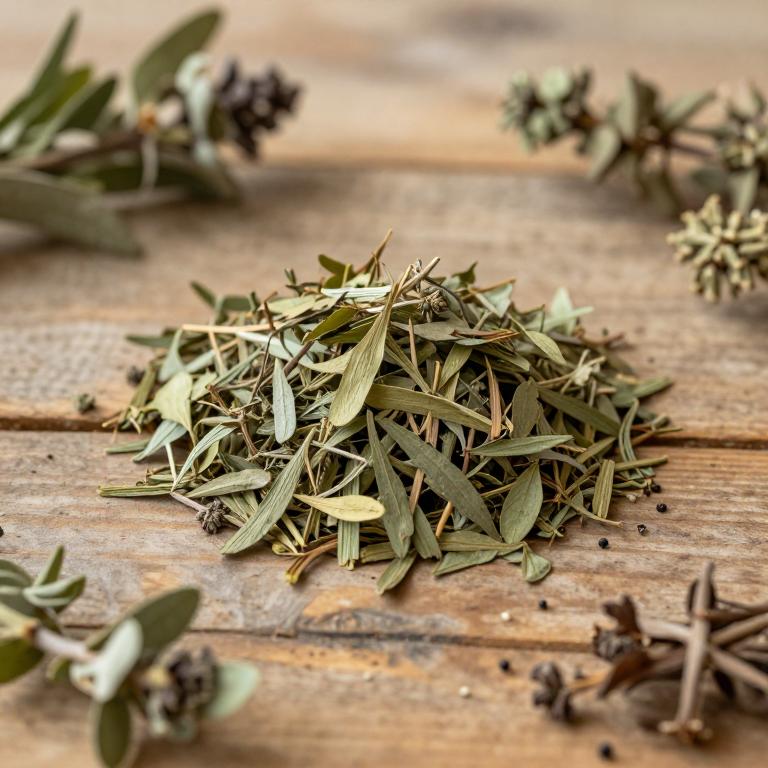
Names and Synonyms
Scientific Names
Accepted name
Clinopodium browneiSynonyms
- Micromeria pilosiuscula
- Satureja brownei
- Thymus gracilis
- Clinopodium stoloniferum
- Satureja brownei var. pilosiuscula
- Clinopodium xalapense
- Thymus xalapensis
- Hedeoma gracillima
- Satureja stolonifera
- Micromeria brownei
- Satureja xalapensis
- Micromeria brownei var. pilosiuscula
- Micromeria domingensis
- Micromeria stolonifera
- Micromeria xalapensis
- Micromeria bahamensis
- Thymus brownei
Regional and Traditional Names
Spanish:
- Hedeoma gracillima
- Clinopodium stoloniferum
- Thymus xalapensis
- Clinopodium xalapense
- Satureja brownei var. pilosiuscula
- Apozia serpyllacea
- Micromeria brownei var. pilosiuscula
- Micromeria domingensis
- Thymus brownei
- Satureja xalapensis
- Micromeria bahamensis
- Micromeria xalapensis
- Apozia chamaedryoides
- Satureja brownei
- Micromeria stolonifera
- Papamento
- Poleo
Sources: Wikidata, Catalogue of Life
Taxonomical Classification
This plant belongs to the kingdom Plantae and is classified under the phylum Streptophyta and the class Equisetopsida. Within the subclass Magnoliidae, it is organized under the order Lamiales and the family Lamiaceae. Ultimately, its taxonomic identity is defined by its placement in the genus Clinopodium.
| Rank | Classification |
|---|---|
| Kingdom | Plantae |
| Phylum | Streptophyta |
| Class | Equisetopsida |
| Subclass | Magnoliidae |
| Order | Lamiales |
| Family | Lamiaceae |
| Genus | Clinopodium |
Sources: The World Checklist of Vascular Plants (WCVP)
Distribution
This plant exhibits a diverse geographical range that spans across both Asia and North America. In Eastern Asia, its presence is specifically noted within the island of Taiwan. Moving to the North American continent, it can be found in the Southwestern United States, particularly in California. Its distribution continues through the South-Central region, where it inhabits parts of Texas. Finally, the species extends into the Southeastern United States, occurring in both Florida and Georgia.
| Region | Area |
|---|---|
| Eastern Asia | Taiwan |
| Southwestern U.S.A. | California |
| South-Central U.S.A. | Texas |
| Southeastern U.S.A. | Florida |
| Southeastern U.S.A. | Georgia |
| Southeastern U.S.A. | Louisiana |
| Southeastern U.S.A. | Mississippi |
| Mexico | Mexico Central |
| Mexico | Mexico Northeast |
| Mexico | Mexico Gulf |
Sources: The World Checklist of Vascular Plants (WCVP)
Botanical Identification
Ecology
The ecology of Clinopodium brownei is characterized by a diverse altitudinal distribution and specific niche preferences within its environment. This species can be found across a broad elevational range, spanning from sea level (0 m AMSL) up to a maximum altitude of 3000 m AMSL. Its preferred habitats include Campo de Várzea and various aquatic vegetation settings (Vegetação Aquática), suggesting an adaptability to both open grassland ecosystems and moisture-rich environments.
- Elevational range max:
- 3000 m AMSL
- Elevational range min:
- 0 m AMSL
- Habitat :
- Campo de Várzea, Vegetação Aquática
Life history
The life history of Clinopodium brownei is characterized by its status as a perennial organism, allowing it to persist through multiple growing seasons. In terms of its structural growth strategy and ecological positioning, the species is classified as a chamaephyte, a life form where the permanent buds are located close to or just above the soil surface, protecting them from environmental stressors. This chamaephyte classification is consistent across its morphological development, defining its ability to maintain a low-growing stature while ensuring long-term survival within its habitat.
- Life form :
- chamaephyte
- Lifecycle :
- perennial
Morphology
The morphology of Clinopodium brownei is characterized by its growth form as a non-woody herb, specifically classified as a forb. This species is a self-supporting plant that does not function as a climber, liana, or vine, nor does it exhibit any parasitic behavior, remaining an independent organism. It is a terrestrial species, lacking any epiphytic or aquatic tendencies. In terms of stature, it maintains a relatively low profile with a mean plant height of approximately 0.2 m.
- Aquatic :
- terrestrial
- Climber :
- self-supporting
- Epiphyte :
- terrestrial
- Growth form :
- herb
- Growth form :
- forb
- Parasite :
- independent
- Plant height mean:
- 0.2 m
- Woodiness :
- non-woody
Physiology
The physiology of Clinopodium brownei is characterized by complex metabolic pathways geared toward survival in its specific ecological niche, primarily focusing on efficient nutrient uptake and secondary metabolite production. As a member of the Lamiaceae family, its physiological processes are heavily centered on the synthesis and storage of volatile essential oils within specialized glandular trichomes on the leaf surface, which serve as a defense mechanism against herbivory and pathogens. The plant's carbon fixation follows the standard C3 photosynthetic pathway, involving the enzymatic activity of RuBisCO to convert atmospheric carbon dioxide into organic compounds. Regarding its relationship with soil nutrients, the physiological profile of Clinopodium brownei indicates that it is not a nitrogen fixer; it lacks the specialized root nodules and the symbiotic relationship with diazotrophic bacteria, such as Rhizobium, required to convert atmospheric nitrogen into bioavailable forms. Consequently, its nitrogen assimilation relies entirely on the uptake of nitrates and ammonium from the soil through its root system, necessitating a steady supply of organic matter in its habitat to support its growth and metabolic functions.
- Nitrogen fixer :
- no
Sources: Global Inventory of Floras and Traits (GIFT)
Chemicals
Clinopodium brownei has 5 reported phytochemicals identified across 0 scientific publications and several other databases. The most consistently reported chemicals include Caryophyllene, ETHYL CINNAMATE, MENTHONE, Methyl cinnamate, Pulegone.
| Chemical | Supporting sources | Consensus |
|---|---|---|
| Caryophyllene | 1 supporting sources | ★☆☆☆☆ |
| ETHYL CINNAMATE | 1 supporting sources | ★☆☆☆☆ |
| MENTHONE | 1 supporting sources | ★☆☆☆☆ |
| Methyl cinnamate | 1 supporting sources | ★☆☆☆☆ |
| Pulegone | 1 supporting sources | ★☆☆☆☆ |
Caryophyllene
- Molecules (Basel, Switzerland)
ETHYL CINNAMATE
- Molecules (Basel, Switzerland)
MENTHONE
- Molecules (Basel, Switzerland)
Methyl cinnamate
- Molecules (Basel, Switzerland)
Pulegone
- Molecules (Basel, Switzerland)
Activities
Clinopodium brownei has 1 reported activities identified across 0 scientific publications and several other databases. The most consistently reported activities include Analgesic.
| Activity | Supporting sources | Consensus |
|---|---|---|
| Analgesic | 1 supporting sources | ★☆☆☆☆ |
Analgesic
- Molecules (Basel, Switzerland)
Conditions
Clinopodium brownei has 1 reported investigations on conditions identified across 0 scientific publications and several other databases. The most consistently reported conditions include respiratory diseases.
| Condition | Supporting sources | Consensus |
|---|---|---|
| Respiratory diseases | 1 supporting sources | ★☆☆☆☆ |
Respiratory diseases
- Molecules (Basel, Switzerland)