Clinopodium acinos
Clinopodium acinos · Accepted scientific name
Scientific literature: Very Sparse (13 studies) · ★☆☆☆☆
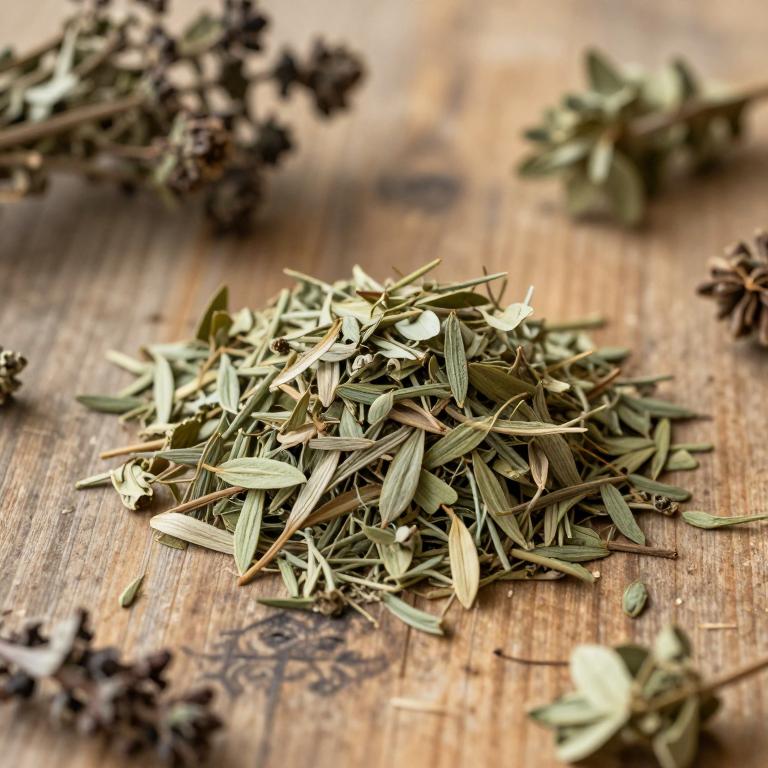
Clinopodium acinos, scientifically known as Clinopodium acinos, is a perennial herb belonging to the Lamiaceae family. Commonly called creeping thyme, this aromatic plant features tiny, fragrant leaves and delicate pink flowers. Often found in damp habitats, it is valued in traditional herbalism for its soothing antimicrobial and digestive properties.
- Family
- Not available
- Native range
- Europe
- Parts used
- Not available
- Common names
- Not available
- Scientific synonyms
- Not available
Names and Synonyms
Scientific Names
Accepted name
Clinopodium acinosDistribution
This plant exhibits a specific distribution pattern across the northern regions of the European continent. Within Northern Europe, it can be found growing in the natural landscapes of Denmark. Its presence is also documented throughout the coastal and inland areas of Norway. Furthermore, the species is widely distributed across the islands of Great Britain and Ireland. Finally, the plant completes its northern range by inhabiting the territories of Finland.
| Region | Area |
|---|---|
| Northern Europe | Denmark |
| Northern Europe | Finland |
| Northern Europe | Great Britain |
| Northern Europe | Ireland |
| Northern Europe | Norway |
| Northern Europe | Sweden |
| Middle Europe | Austria |
| Middle Europe | Belgium |
| Middle Europe | Czechia-Slovakia |
| Middle Europe | Germany |
Sources: The World Checklist of Vascular Plants (WCVP)
Botanical Identification
Ecology
The ecology of Clinopodium acinos is characterized by its ability to colonize a diverse array of environments ranging from disturbed agricultural landscapes to stable natural ecosystems. It is commonly found inhabiting crop fields, old fields, and steppes, where it thrives in open, sun-exposed settings. The species exhibits significant adaptability to varying substrate compositions, successfully establishing itself in sandy soils as well as in more rugged, stony places. Furthermore, its distribution extends into forest margins and understories, demonstrating a versatile ecological niche that allows it to persist across multiple successional stages and soil types.
- Habitat :
- crop fields, forest, old fields, sand, steppe, stony places
Life history
The life history of Clinopodium acinos is characterized by its classification as a perennial plant, ensuring its presence across multiple growing seasons. As a therophyte, it maintains a specialized survival strategy that allows it to complete its life cycle effectively within its ecological niche. Furthermore, the species exhibits evergreen characteristics, retaining its foliage to facilitate continuous biological processes.
- Deciduousness :
- evergreen
- Life form :
- therophyte
- Lifecycle :
- annual
Morphology
The morphology of Clinopodium acinos is characterized by a growth form categorized as a woody herb or forb. It is a self-supporting plant that does not function as a climber (such as a liana or vine) or a parasite, maintaining an independent lifestyle. The plant typically exhibits an erect shoot orientation and is strictly terrestrial in its habitat, rather than being aquatic, semiaquatic, or epiphytic. In terms of stature, it is a relatively low-growing species with a plant height that ranges from a minimum of 0.1 m to a maximum of 0.3 m, with a mean height of approximately 0.2 m.
- Aquatic :
- terrestrial
- Climber :
- self-supporting
- Epiphyte :
- terrestrial
- Growth form :
- herb
- Growth form :
- forb
- Parasite :
- independent
- Plant height max:
- 0.3 m
- Plant height mean:
- 0.2 m
- Plant height min:
- 0.1 m
- Shoot orientation :
- erect
- Woodiness :
- woody
Physiology
The physiology of Clinopodium acinos is characterized by a C3 photosynthetic pathway, which dictates its carbon fixation processes and metabolic efficiency. The plant is non-carnivorous and does not function as a nitrogen fixer, relying instead on soil-based nutrient uptake. Its leaf morphology exhibits significant specialization, with a mean leaf width of 0.4 cm (ranging from a minimum to a maximum of 0.4 cm) and a maximum leaf length of 1.1 cm, resulting in a mean leaf size of approximately 2.54743 cm². Furthermore, the plant maintains a mean Specific Leaf Area (SLA) of 192.38 cm²/g, reflecting its leaf density and resource allocation strategies regarding light interception and photosynthetic capacity.
- Carnivory :
- non-carnivorous
- Leaf length max:
- 1.1 cm
- Leaf size mean:
- 2.54743 cm²
- Leaf width mean:
- 0.4 cm
- Nitrogen fixer :
- no
- Photosynthetic pathway :
- C3
- Specific Leaf Area (SLA) mean:
- 192.38 cm²/g
Reproduction
The reproduction of Clinopodium acinos is characterized by a specialized sexual cycle that relies on biotic interactions and specific environmental windows. The flowering period is relatively extended, typically beginning in June and continuing through October. During this time, the plant utilizes a biotic pollination syndrome, specifically mediated by insects, to facilitate fertilization. Notably, self-fertilization is absent, indicating a reliance on cross-pollination to maintain genetic diversity. Following successful pollination, the plant develops dry fruits that contain seeds with very consistent physical dimensions; the seeds possess a mean length of 1.3 mm (with a minimum and maximum also recorded at 1.3 mm) and a constant volume of 1.2 mm³. These seeds are quite lightweight, with a mean mass of approximately 0.0005596 g, ranging from a minimum of 0.000167 g to a maximum of 0.00137 g. For the distribution of offspring, the plant employs an anemochorous dispersal syndrome, meaning the seeds are dispersed by the wind. There is no evidence of asexual reproduction in this species, as such processes are recorded as absent.
- Dispersal syndrome :
- anemochorous
- Flowering time :
- Jun
- Flowering time :
- Oct
- Fruit dryness :
- dry
- Pollination syndrome :
- insect
- Pollination syndrome :
- biotic
- Reproduction asexual :
- absent
- Seed length mean:
- 1.3 mm
- Seed mass max:
- 0.00137 g
- Seed mass mean:
- 0.0005596 g
- Seed mass min:
- 0.000167 g
- Seed volume max:
- 1.2 mm³
- Self fertilization :
- absent
Sources: Global Inventory of Floras and Traits (GIFT)
Chemicals
Clinopodium acinos has 1 reported phytochemicals identified across 0 scientific publications and several other databases. The most consistently reported chemicals include Betulin.
| Chemical | Supporting sources | Consensus |
|---|---|---|
| Betulin | 1 supporting sources | ★☆☆☆☆ |
Betulin
- Dr. Duke
Activities
Clinopodium acinos has 12 reported activities identified across 0 scientific publications and several other databases. The most consistently reported activities include AntiHIV, Anticarcinomic, Antifeedant, Antiflu, Antiinflammatory.
| Activity | Supporting sources | Consensus |
|---|---|---|
| AntiHIV | 1 supporting sources | ★☆☆☆☆ |
| Anticarcinomic | 1 supporting sources | ★☆☆☆☆ |
| Antifeedant | 1 supporting sources | ★☆☆☆☆ |
| Antiflu | 1 supporting sources | ★☆☆☆☆ |
| Antiinflammatory | 1 supporting sources | ★☆☆☆☆ |
| Antitumor | 1 supporting sources | ★☆☆☆☆ |
| Antiviral | 1 supporting sources | ★☆☆☆☆ |
| Aphidifuge | 1 supporting sources | ★☆☆☆☆ |
| Cytotoxic | 1 supporting sources | ★☆☆☆☆ |
| Hypolipemic | 1 supporting sources | ★☆☆☆☆ |
AntiHIV
- Dr. Duke
Anticarcinomic
- Dr. Duke
Antifeedant
- Dr. Duke
Antiflu
- Dr. Duke
Antiinflammatory
- Dr. Duke
Antitumor
- Dr. Duke
Antiviral
- Dr. Duke
Aphidifuge
- Dr. Duke
Cytotoxic
- Dr. Duke
Hypolipemic
- Dr. Duke