Dwarf cat's whiskers
Clerodendrum ternatum · Accepted scientific name
Scientific literature: Very Sparse (6 studies) · ★☆☆☆☆
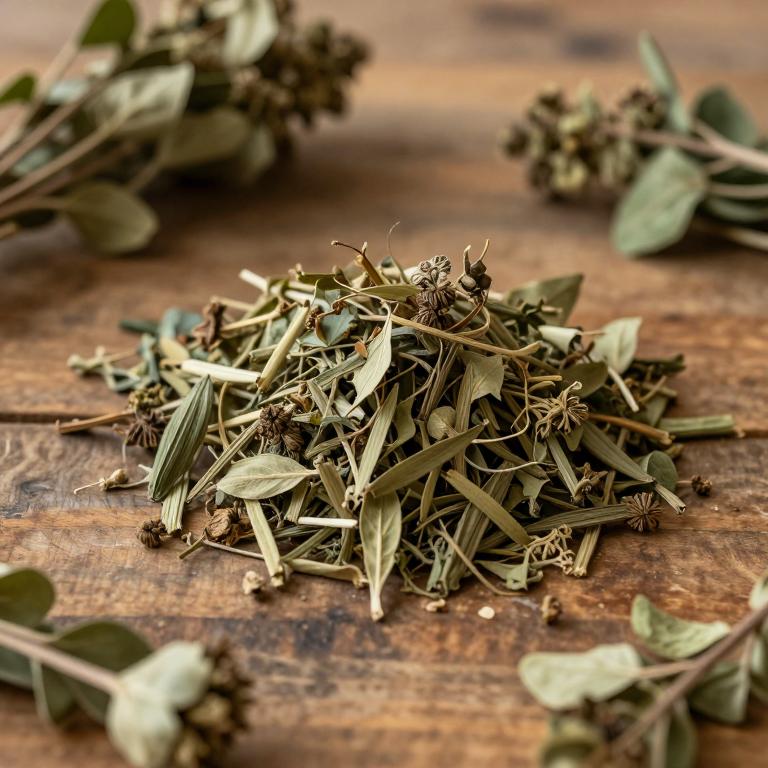
Dwarf cat's whiskers, scientifically known as Clerodendrum ternatum, is a versatile medicinal shrub celebrated in traditional Ayurvedic medicine. Featuring delicate white flowers, this plant offers potent therapeutic properties, primarily used to treat skin ailments, respiratory issues, and inflammation. It serves as a vital natural resource in holistic healing practices.
- Family
- Lamiaceae
- Native range
- Africa
- Parts used
- Not available
- Common names
- Tinderwood / Tube Flower · Tube Flower
- Scientific synonyms
- Clerodendrum Ternatum F. Villosum · Clerodendrum Ternatum F. Glabricalyx · 2 more
Names and Synonyms
Common Names
- Tinderwood / Tube Flower
- Tube Flower
Scientific Names
Accepted name
Clerodendrum ternatumSynonyms
- Clerodendrum ternatum f. villosum
- Clerodendrum ternatum f. glabricalyx
- Clerodendrum ternatum var. lanceolatum
- Clerodendrum wilmsii
Sources: Wikidata, Catalogue of Life
Taxonomical Classification
This plant belongs to the kingdom Plantae and the phylum Streptophyta, falling under the class Equisetopsida and subclass Magnoliidae. Within the order Lamiales and family Lamiaceae, it is classified under the genus Clerodendrum. Specifically, Clerodendrum ternatum represents a unique medicinal species within this botanical hierarchy.
| Rank | Classification |
|---|---|
| Kingdom | Plantae |
| Phylum | Streptophyta |
| Class | Equisetopsida |
| Subclass | Magnoliidae |
| Order | Lamiales |
| Family | Lamiaceae |
| Genus | Clerodendrum |
Sources: The World Checklist of Vascular Plants (WCVP)
Distribution
This plant exhibits a wide geographical distribution across several key regions of the African continent. In East Tropical Africa, it can be found growing within the borders of Kenya and Tanzania. Moving toward the southern part of the continent, its presence is also noted in South Tropical Africa. Specifically, the species is distributed throughout Angola and Malawi. Finally, its range extends further into the southern region to include Mozambique.
| Region | Area |
|---|---|
| East Tropical Africa | Kenya |
| East Tropical Africa | Tanzania |
| South Tropical Africa | Angola |
| South Tropical Africa | Malawi |
| South Tropical Africa | Mozambique |
| South Tropical Africa | Zambia |
| South Tropical Africa | Zimbabwe |
| Southern Africa | Botswana |
| Southern Africa | Namibia |
| Southern Africa | Eswatini |
Sources: The World Checklist of Vascular Plants (WCVP)
Botanical Identification
Ecology
The ecology of Clerodendrum ternatum is characterized by its ability to thrive across diverse landscape types, ranging from open grasslands and Brachystegia woodlands to more complex Commiphora-Terminalia and Combretum-Sterculia-Grewia bushlands. It is frequently observed inhabiting old cultivation sites and is notably adapted to growing in rocky places. This species occupies a broad altitudinal spectrum, maintaining a presence from elevations as low as 91 m AMSL up to a maximum of 1500 m AMSL.
- Elevational range max:
- 1500 m AMSL
- Elevational range min:
- 91 m AMSL
- Habitat :
- grassland, Brachystegia woodland, Commiphora-Terminalia and Combretum-Sterculia-Grewia bushland, also old cultivations, often in rocky places
Life history
The life history of Clerodendrum ternatum is characterized by its status as a perennial organism, allowing it to persist through multiple growing seasons and maintain its presence within its ecological niche. In terms of its growth architecture and survival strategy, it is classified as a chamaephyte, a life form where the renewing buds are located close to the soil surface, enabling the plant to withstand various environmental stressors while maintaining its structural integrity. This combination of a long-lived lifecycle and a low-growing, bud-protected life form dictates its ability to colonize and stabilize within its specific habitats over extended periods.
- Life form :
- chamaephyte
- Lifecycle :
- perennial
Morphology
Morphologically, Clerodendrum ternatum is characterized as a non-woody shrub or herb that typically exhibits a self-supporting growth habit. This terrestrial plant, which functions as an independent organism rather than a parasite or epiphyte, maintains a relatively modest stature with a height ranging from a minimum of 0.15 m to a maximum of 1 m, resulting in an average plant height of approximately 0.5 m.
- Aquatic :
- terrestrial
- Climber :
- self-supporting
- Epiphyte :
- terrestrial
- Growth form :
- herb
- Growth form :
- shrub
- Parasite :
- independent
- Plant height max:
- 1 m
- Plant height mean:
- 0.5 m
- Plant height min:
- 0.15 m
- Woodiness :
- non-woody
Physiology
The physiology of Clerodendrum ternatum is characterized by its metabolic processes and nutrient acquisition strategies within its tropical habitat. As a non-nitrogen-fixing plant, it lacks the specialized symbiotic relationship with rhizobia or actinomycetes required to convert atmospheric nitrogen into usable forms; therefore, its nitrogen fixation status is categorized as no. Instead, the plant relies on the uptake of nitrates and ammonium from the soil through its root system to support its physiological development and the synthesis of essential amino acids and proteins. Its metabolic activity is driven by efficient photosynthetic pathways that facilitate carbon assimilation, supporting the growth of its woody stems and the production of its characteristic white flowers and fleshy fruits. The plant's physiological regulation also involves complex secondary metabolic pathways, which result in the synthesis of various bioactive phytochemicals, such as flavonoids and terpenoids, which serve both protective and functional roles within its biological systems.
- Nitrogen fixer :
- no
Sources: Global Inventory of Floras and Traits (GIFT)
Chemicals
Clerodendrum ternatum has 4 reported phytochemicals identified across 0 scientific publications and several other databases. The most consistently reported chemicals include ARSENIC, CHROMIUM, LEAD, NICKEL.
| Chemical | Supporting sources | Consensus |
|---|---|---|
| ARSENIC | 1 supporting sources | ★☆☆☆☆ |
| CHROMIUM | 1 supporting sources | ★☆☆☆☆ |
| LEAD | 1 supporting sources | ★☆☆☆☆ |
| NICKEL | 1 supporting sources | ★☆☆☆☆ |
ARSENIC
- Analytica chimica acta
CHROMIUM
- Analytica chimica acta
LEAD
- Analytica chimica acta
NICKEL
- Analytica chimica acta
Conditions
Clerodendrum ternatum has 2 reported investigations on conditions identified across 0 scientific publications and several other databases. The most consistently reported conditions include asthma, rhinitis.
| Condition | Supporting sources | Consensus |
|---|---|---|
| Asthma | 1 supporting sources | ★☆☆☆☆ |
| Rhinitis | 1 supporting sources | ★☆☆☆☆ |
Asthma
- Evidence-based complementary and alternative medicine : eCAM
Rhinitis
- African health sciences