Sage glorybower
Clerodendrum phlomidis · Accepted scientific name
Scientific literature: Very Sparse (23 studies) · ★☆☆☆☆
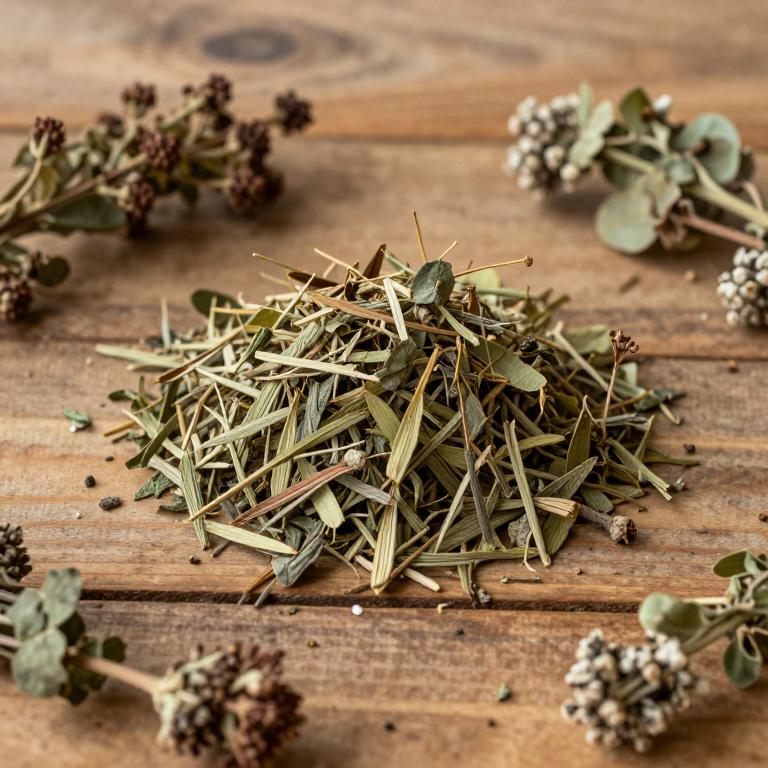
Sage glorybower, scientifically known as Clerodendrum phlomidis, is a versatile medicinal shrub celebrated in Ayurvedic medicine. Renowned for its potent antimicrobial and anti-inflammatory properties, this plant is widely used to treat skin disorders, respiratory ailments, and digestive issues. Its aromatic leaves and berries offer significant therapeutic benefits in traditional healing.
- Family
- Lamiaceae
- Native range
- Asia-Tropical
- Parts used
- Leaf
- Common names
- Sage Glorybower
- Scientific synonyms
- Volkameria Multiflora · Clerodendrum Phlomidis F. Rubrum · 1 more
Names and Synonyms
Common Names
- Sage glorybower
Scientific Names
Accepted name
Clerodendrum phlomidisSynonyms
- Volkameria multiflora
- Clerodendrum phlomidis f. rubrum
- Clerodendrum phlomidis var. rubrum
Sources: Wikidata, Catalogue of Life
Taxonomical Classification
This plant belongs to the kingdom Plantae and the phylum Streptophyta, falling under the class Equisetopsida and subclass Magnoliidae. Within the order Lamiales and the family Lamiaceae, it is specifically classified under the genus Clerodendrum.
| Rank | Classification |
|---|---|
| Kingdom | Plantae |
| Phylum | Streptophyta |
| Class | Equisetopsida |
| Subclass | Magnoliidae |
| Order | Lamiales |
| Family | Lamiaceae |
| Genus | Clerodendrum |
Sources: The World Checklist of Vascular Plants (WCVP)
Distribution
This plant is widely distributed across the diverse landscapes of the Indian Subcontinent. It can be found growing naturally throughout the various regions of India and Pakistan. Its presence extends to the tropical environments of Sri Lanka and the country of Bangladesh. Additionally, the species is known to inhabit the specific elevations of the West Himalaya. This broad range highlights its significant ecological footprint within the South Asian region.
| Region | Area |
|---|---|
| Indian Subcontinent | Bangladesh |
| Indian Subcontinent | India |
| Indian Subcontinent | Pakistan |
| Indian Subcontinent | Sri Lanka |
| Indian Subcontinent | West Himalaya |
| Malesia | Jawa |
Sources: The World Checklist of Vascular Plants (WCVP)
Botanical Identification
Life history
The life history of Clerodendrum phlomidis is characterized by its perennial growth habit, functioning primarily as a phanerophyte. This classification indicates that its permanent shoots are elevated well above the ground level, allowing the plant to maintain a robust, woody structure. While it is fundamentally categorized as a phanerophyte, its structural development can occasionally exhibit characteristics associated with a nanophanerophyte depending on the environmental conditions and the specific maturity of the shrubby branches. This life strategy enables the species to persist through various seasonal changes, utilizing its elevated canopy to optimize light interception and reproductive success within its natural habitat.
- Life form :
- nanophanerophyte
- Life form :
- phanerophyte
Morphology
The morphology of Clerodendrum phlomidis is characterized by its growth form as a woody shrub, exhibiting a robust and perennial structure. It functions as an independent organism, lacking any parasitic tendencies, and maintains a strictly terrestrial existence rather than acting as an epiphyte. While the plant possesses a self-supporting habit, it does not exhibit climbing behavior, instead relying on its woody stems to maintain its upright stature within its natural habitat.
- Climber :
- self-supporting
- Epiphyte :
- terrestrial
- Growth form :
- shrub
- Parasite :
- independent
- Woodiness :
- woody
Sources: Global Inventory of Floras and Traits (GIFT)
Plant Parts
Clerodendrum phlomidis has 1 reported plant parts identified across 1 scientific publications and several other databases that are studied for medicinal purposes. The most consistently reported plant part include leaf.
| Plant part | Supporting sources | Consensus |
|---|---|---|
| Leaf | 1 supporting sources | ★☆☆☆☆ |
Leaf
- Natural product research
Chemicals
Clerodendrum phlomidis has 8 reported phytochemicals identified across 1 scientific publications and several other databases. The most consistently reported chemicals include Pectolinaringenin, 24beta-ethylcholesta-5,22e,25-triene-3beta-ol, 7-Hydroxyflavone, Andrographolide, Clerodendrin.
| Chemical | Supporting sources | Consensus |
|---|---|---|
| Pectolinaringenin | 2 supporting sources | ★☆☆☆☆ |
| 24beta-ethylcholesta-5,22e,25-triene-3beta-ol | 1 supporting sources | ★☆☆☆☆ |
| 7-Hydroxyflavone | 1 supporting sources | ★☆☆☆☆ |
| Andrographolide | 1 supporting sources | ★☆☆☆☆ |
| Clerodendrin | 1 supporting sources | ★☆☆☆☆ |
| Clerodin | 1 supporting sources | ★☆☆☆☆ |
| Clerosterol | 1 supporting sources | ★☆☆☆☆ |
| Scutellarein | 1 supporting sources | ★☆☆☆☆ |
Pectolinaringenin
- Zhong xi yi jie he xue bao = Journal of Chinese integrative medicine
- Natural product research
24beta-ethylcholesta-5,22e,25-triene-3beta-ol
- Zhong xi yi jie he xue bao = Journal of Chinese integrative medicine
7-Hydroxyflavone
- Zhong xi yi jie he xue bao = Journal of Chinese integrative medicine
Andrographolide
- Natural product research
Clerodendrin
- Zhong xi yi jie he xue bao = Journal of Chinese integrative medicine
Clerodin
- Zhong xi yi jie he xue bao = Journal of Chinese integrative medicine
Clerosterol
- Zhong xi yi jie he xue bao = Journal of Chinese integrative medicine
Scutellarein
- Zhong xi yi jie he xue bao = Journal of Chinese integrative medicine
Activities
Clerodendrum phlomidis has 4 reported activities identified across 1 scientific publications and several other databases. The most consistently reported activities include Analgesic, Antifungal, Antiplasmodial, Hypoglycemic.
| Activity | Supporting sources | Consensus |
|---|---|---|
| Analgesic | 1 supporting sources | ★☆☆☆☆ |
| Antifungal | 1 supporting sources | ★☆☆☆☆ |
| Antiplasmodial | 1 supporting sources | ★☆☆☆☆ |
| Hypoglycemic | 1 supporting sources | ★☆☆☆☆ |
Analgesic
- Zhong xi yi jie he xue bao = Journal of Chinese integrative medicine
Antifungal
- Zhong xi yi jie he xue bao = Journal of Chinese integrative medicine
Antiplasmodial
- Zhong xi yi jie he xue bao = Journal of Chinese integrative medicine
Hypoglycemic
- Zhong xi yi jie he xue bao = Journal of Chinese integrative medicine
Conditions
Clerodendrum phlomidis has 8 reported investigations on conditions identified across 1 scientific publications and several other databases. The most consistently reported conditions include inflammation, analgesic, anti-asthmatic, arthritis, asthma.
| Condition | Supporting sources | Consensus |
|---|---|---|
| Inflammation | 2 supporting sources | ★☆☆☆☆ |
| Analgesic | 1 supporting sources | ★☆☆☆☆ |
| Anti-asthmatic | 1 supporting sources | ★☆☆☆☆ |
| Arthritis | 1 supporting sources | ★☆☆☆☆ |
| Asthma | 1 supporting sources | ★☆☆☆☆ |
| Granuloma | 1 supporting sources | ★☆☆☆☆ |
| Hypoglycemic | 1 supporting sources | ★☆☆☆☆ |
| Rheumatism | 1 supporting sources | ★☆☆☆☆ |
Inflammation
- Zhong xi yi jie he xue bao = Journal of Chinese integrative medicine
- Journal of ethnopharmacology
Analgesic
- Zhong xi yi jie he xue bao = Journal of Chinese integrative medicine
Anti-asthmatic
- Zhong xi yi jie he xue bao = Journal of Chinese integrative medicine
Arthritis
- Journal of ethnopharmacology
Asthma
- Zhong xi yi jie he xue bao = Journal of Chinese integrative medicine
Granuloma
- Journal of ethnopharmacology
Hypoglycemic
- Zhong xi yi jie he xue bao = Journal of Chinese integrative medicine
Rheumatism
- Zhong xi yi jie he xue bao = Journal of Chinese integrative medicine
Preparations
Clerodendrum phlomidis has 4 reported preparations identified across 1 scientific publications and several other databases. The most consistently reported preparations include alcoholic extracts, aqueous extracts, crude ethanol extract, ethanol extract.
| Preparation | Supporting sources | Consensus |
|---|---|---|
| Alcoholic extracts | 1 supporting sources | ★☆☆☆☆ |
| Aqueous extracts | 1 supporting sources | ★☆☆☆☆ |
| Crude ethanol extract | 1 supporting sources | ★☆☆☆☆ |
| Ethanol extract | 1 supporting sources | ★☆☆☆☆ |
Alcoholic extracts
- Zhong xi yi jie he xue bao = Journal of Chinese integrative medicine
Aqueous extracts
- Zhong xi yi jie he xue bao = Journal of Chinese integrative medicine
Crude ethanol extract
- Journal of ethnopharmacology
Ethanol extract
- Journal of ethnopharmacology