Cleome rutidosperma var. rutidosperma
Cleome rutidosperma var. rutidosperma · Accepted scientific name
Scientific literature: Very Sparse (0 studies) · ★☆☆☆☆
Cleome rutidosperma var. rutidosperma is a distinctive botanical variety recognized for its unique morphological features and biological potential. This specific plant has garnered significant interest within scientific communities due to its diverse chemical profile. Researchers are increasingly focusing on the development of various preparations to harness its natural properties. Specifically, the production of specialized extracts serves as a primary method for isolating its most bioactive components. Understanding these extracts is essential for exploring the plant's potential applications in medicinal and industrial fields.
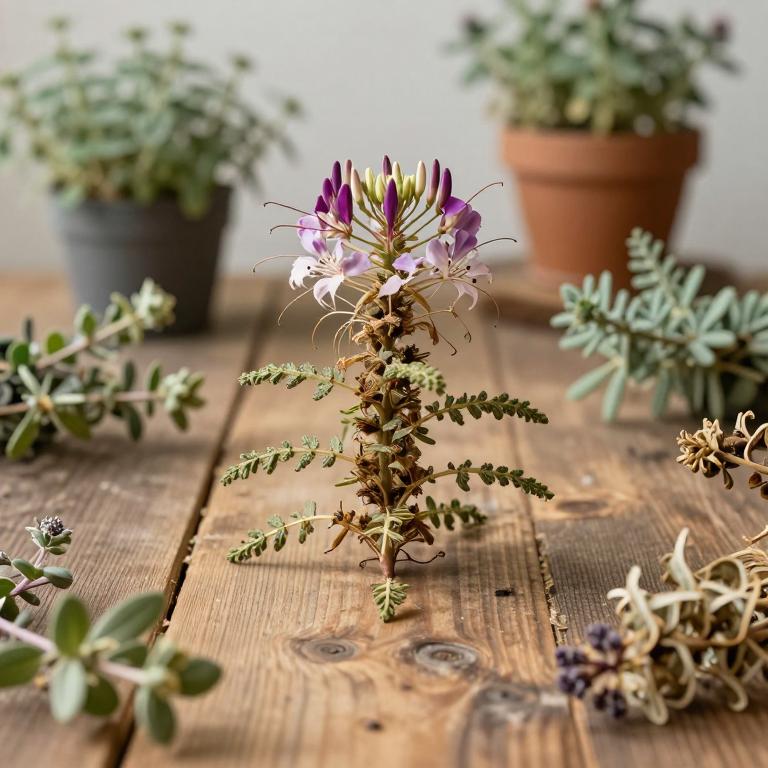
- Synonyms
- Cleome Guineensis · Cleome Ciliata · 2 more
- Common names
- Not available
- Family
- Cleomaceae
- Distribution
- Not available
- Plant Parts
- Not available
Classification
Synonyms
Cleome rutidosperma var. rutidosperma is a taxonomically complex plant that is frequently identified by several different scientific names. Due to historical classification shifts, it is widely recognized by the synonym Cleome ciliata. Researchers also encounter this variety under the name Cleome guineensis in various botanical records. Furthermore, it has been linked to the synonyms Cleome rutidosperma var. hainanensis and Cleome thyrsiflora. Understanding these overlapping designations is essential for accurate identification within the genus.
Sources: The World Checklist of Vascular Plants (WCVP)
Taxonomy
Cleome rutidosperma var. rutidosperma is a distinctive botanical specimen belonging to the vast kingdom Plantae. Within this kingdom, it is categorized under the class Equisetopsida, highlighting its fundamental evolutionary lineage. The plant is further organized into the order Brassicales, a group that connects it to several other significant flowering plants. It specifically falls under the family Cleomaceae, showcasing its unique morphological characteristics. Finally, its classification is completed within the genus Cleome, which defines its specific biological identity.
| Rank | Classification |
|---|---|
| Kingdom | Plantae |
| Phylum | Streptophyta |
| Class | Equisetopsida |
| Subclass | Magnoliidae |
| Order | Brassicales |
| Family | Cleomaceae |
| Genus | Cleome |
Sources: The World Checklist of Vascular Plants (WCVP)
Distribution
Geographic Regions
Cleome rutidosperma var. rutidosperma is a resilient botanical variety with a widespread distribution across the African continent. Its presence is notably established in East Tropical Africa, spanning through regions such as Tanzania and Uganda. The variety also extends its reach to the Atlantic islands of Macaronesia, specifically within Cape Verde. Moving toward the interior, it can be found in the Northeast Tropical African landscapes of Chad. Finally, its geographical footprint continues through the Sudan-South Sudan region, showcasing a broad ecological range.
Sources: The World Checklist of Vascular Plants (WCVP)
Identification
Biological Activities
Compounds
Conditions
Cleome rutidosperma var. rutidosperma, specifically noted in studies involving Cleome ciliata, is used as a local herbal extract for home medication in Nigerian children. Research indicates that a vast majority of patients utilizing these herbal extracts suffer from chronic otitis media with purulent effusion (OME). This specific condition was significantly more prevalent among children receiving home treatments compared to those who did not. The presence of pathogens like Staphylococcus aureus and Pseudomonas spp. characterizes these infections in the treated group. Further investigation is required to fully determine how these botanical treatments influence the pathogenesis of chronic OME.
Preparations
Cleome rutidosperma var. rutidosperma is prepared as extracts for use in home medication. These herbal preparations are utilized by certain populations as a form of self-administered treatment. In the context of studying chronic otitis media in Nigerian children, such botanical extracts are analyzed for their potential impact on ear pathology. The use of these specific plant extracts is closely linked to the microbiological profiles observed in patients with middle ear infections. Consequently, the preparation of these extracts plays a significant role in understanding local medicinal practices and their clinical outcomes.