Cleome pallida
Cleome pallida · Accepted scientific name
Scientific literature: Very Sparse (15 studies) · ★☆☆☆☆
Cleome pallida, scientifically known as Cleome pallida, is a resilient herbaceous plant valued in traditional medicine. Often found in tropical regions, it is recognized for its diverse therapeutic properties, including anti-inflammatory and antioxidant effects. This botanical species serves as a vital resource for treating various ailments in folk medicine.
- Family
- Cleomaceae
- Native range
- Africa
- Parts used
- Not available
- Common names
- Not available
- Scientific synonyms
- Pteroloma Glaucum · Dipterygium Glaucum · 2 more
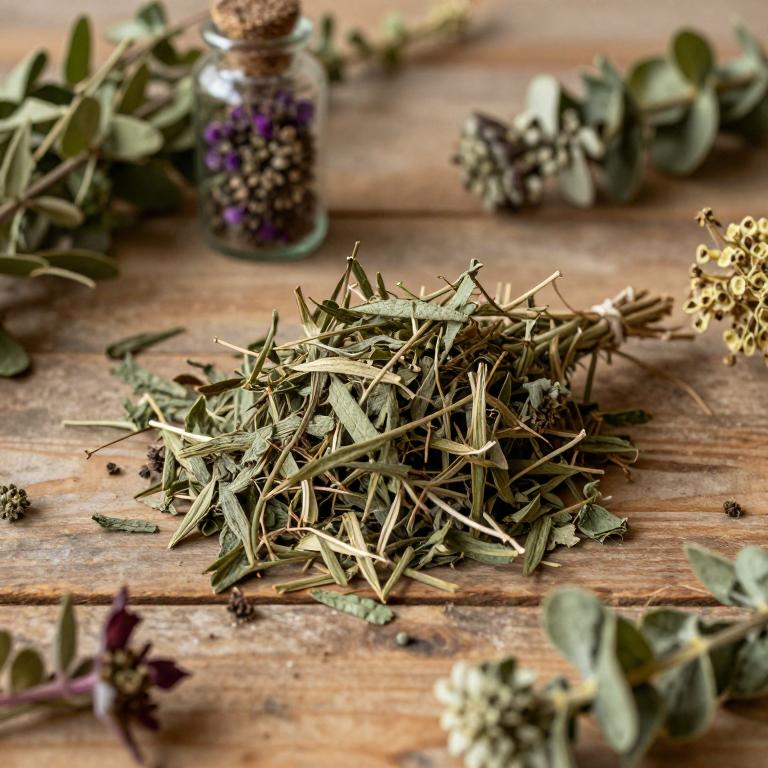
Names and Synonyms
Scientific Names
Accepted name
Cleome pallidaSynonyms
- Pteroloma glaucum
- Dipterygium glaucum
- Dipterygium scabrum
- Pteroloma arabicum
Sources: Wikidata
Taxonomical Classification
This plant belongs to the kingdom Plantae and the phylum Streptophyta, falling under the class Equisetopsida and subclass Magnoliidae. Within the order Brassicales, it is classified under the family Cleomaceae. Finally, its taxonomic identity is defined by the genus Cleome.
| Rank | Classification |
|---|---|
| Kingdom | Plantae |
| Phylum | Streptophyta |
| Class | Equisetopsida |
| Subclass | Magnoliidae |
| Order | Brassicales |
| Family | Cleomaceae |
| Genus | Cleome |
Sources: The World Checklist of Vascular Plants (WCVP)
Distribution
This plant exhibits a specific geographical distribution primarily concentrated within the African continent. In Northern Africa, its presence is notably recorded in Egypt. The species also extends into Northeast Tropical Africa, where it can be found in Djibouti and Eritrea. Furthermore, its range encompasses the coastal and inland regions of Somalia. Finally, the distribution continues through the vast territories of Sudan and South Sudan.
| Region | Area |
|---|---|
| Northern Africa | Egypt |
| Northeast Tropical Africa | Djibouti |
| Northeast Tropical Africa | Eritrea |
| Northeast Tropical Africa | Somalia |
| Northeast Tropical Africa | Sudan-South Sudan |
| Western Asia | Iran |
| Arabian Peninsula | Gulf States |
| Arabian Peninsula | Oman |
| Arabian Peninsula | Saudi Arabia |
| Arabian Peninsula | Yemen |
Sources: The World Checklist of Vascular Plants (WCVP)
Botanical Identification
Life history
The life history of Cleome pallida is characterized by a complex biological strategy that allows it to adapt to various environmental conditions. This plant follows a perennial lifecycle, meaning it can persist through multiple growing seasons, though its duration may exhibit variable tendencies depending on local ecological stability. In terms of its structural growth habit and survival strategy, the species manifests as both a therophyte and a chamaephyte. As a therophyte, it is capable of completing its entire life cycle from seed to seed within a single season when conditions demand rapid reproduction, whereas its classification as a chamaephyte indicates a growth form where the permanent buds are located close to or just above the soil surface, allowing it to withstand certain environmental stressors and persist over time.
- Life form :
- therophyte
- Life form :
- chamaephyte
- Lifecycle :
- perennial
Morphology
The morphology of Cleome pallida is characterized by its growth form as a herb, displaying a non-woody structure throughout its development. It functions as a terrestrial plant, growing in soil rather than as an epiphyte, and maintains an independent existence without being a parasite. While it possesses a self-supporting climbing habit, it does not rely on external structures for its primary upward growth, maintaining its herbaceous stature through its own physical integrity.
- Climber :
- self-supporting
- Epiphyte :
- terrestrial
- Growth form :
- herb
- Parasite :
- independent
- Woodiness :
- non-woody
Physiology
The physiology of Cleome pallida is characterized by a metabolic framework governed by the C3 photosynthetic pathway, which dictates its carbon fixation processes and water-use efficiency. Under this pathway, atmospheric carbon dioxide is initially fixed into a three-carbon compound, 3-phosphoglycerate, via the enzyme Ribulose-1,5-bisphosphate carboxylase/oxygenase (RuBisCO) during the Calvin cycle. This reliance on C3 metabolism implies that the plant's primary physiological adaptations are geared toward optimizing light interception and gas exchange within its specific ecological niche, often requiring a delicate balance between CO2 uptake and transpiration to mitigate photorespiration. The energy conversion processes within its chloroplasts drive the synthesis of carbohydrates, providing the metabolic fuel necessary for growth, cellular maintenance, and the production of secondary metabolites.
- Photosynthetic pathway :
- C3
Reproduction
The reproduction of Cleome pallida is characterized by a flexible flowering phenology and specific seed production metrics. The flowering period is highly variable, with the possibility of blooming in any month from January through December, depending on environmental conditions. Regarding its reproductive output, the plant produces relatively small seeds with a mean mass of approximately 0.004445 g. The seed size distribution shows a slight variation, with individual seed masses ranging from a minimum of 0.00323 g to a maximum of 0.00566 g.
- Flowering time :
- Mar
- Seed mass max:
- 0.00566 g
- Seed mass mean:
- 0.004445 g
- Seed mass min:
- 0.00323 g
Sources: Global Inventory of Floras and Traits (GIFT)
Chemicals
Cleome pallida has 12 reported phytochemicals identified across 0 scientific publications and several other databases. The most consistently reported chemicals include Ash, CALCIUM, Nitrogen, POTASSIUM, VITAMIN B COMPLEX.
| Chemical | Supporting sources | Consensus |
|---|---|---|
| Ash | 1 supporting sources | ★☆☆☆☆ |
| CALCIUM | 1 supporting sources | ★☆☆☆☆ |
| Nitrogen | 1 supporting sources | ★☆☆☆☆ |
| POTASSIUM | 1 supporting sources | ★☆☆☆☆ |
| VITAMIN B COMPLEX | 1 supporting sources | ★☆☆☆☆ |
| cysteine | 1 supporting sources | ★☆☆☆☆ |
| glycine | 1 supporting sources | ★☆☆☆☆ |
| histidine | 1 supporting sources | ★☆☆☆☆ |
| proline | 1 supporting sources | ★☆☆☆☆ |
| serine | 1 supporting sources | ★☆☆☆☆ |
Ash
- Molecules (Basel, Switzerland)
CALCIUM
- Molecules (Basel, Switzerland)
Nitrogen
- Molecules (Basel, Switzerland)
POTASSIUM
- Molecules (Basel, Switzerland)
VITAMIN B COMPLEX
- Molecules (Basel, Switzerland)
cysteine
- Molecules (Basel, Switzerland)
glycine
- Molecules (Basel, Switzerland)
histidine
- Molecules (Basel, Switzerland)
proline
- Molecules (Basel, Switzerland)
serine
- Molecules (Basel, Switzerland)
Activities
Cleome pallida has 3 reported activities identified across 0 scientific publications and several other databases. The most consistently reported activities include Antimicrobial, Antioxidant, Cytotoxic.
| Activity | Supporting sources | Consensus |
|---|---|---|
| Antimicrobial | 1 supporting sources | ★☆☆☆☆ |
| Antioxidant | 1 supporting sources | ★☆☆☆☆ |
| Cytotoxic | 1 supporting sources | ★☆☆☆☆ |
Antimicrobial
- Pharmacognosy magazine
Antioxidant
- Pharmacognosy magazine
Cytotoxic
- Pharmacognosy magazine
Preparations
Cleome pallida has 1 reported preparations identified across 0 scientific publications and several other databases. The most consistently reported preparations include Methanolic extract.
| Preparation | Supporting sources | Consensus |
|---|---|---|
| Methanolic extract | 1 supporting sources | ★☆☆☆☆ |
Methanolic extract
- Pharmacognosy magazine