Iberian Spiderflower
Cleome iberica · Accepted scientific name
Scientific literature: Very Sparse (8 studies) · ★☆☆☆☆
Iberian Spiderflower, scientifically known as Cleome iberica, is a distinctive medicinal herb native to the Mediterranean region. Renowned for its delicate blossoms and unique foliage, this plant has long been utilized in traditional folk medicine to address various ailments, offering promising therapeutic properties for holistic wellness and natural healing.
- Family
- Cleomaceae
- Native range
- Europe
- Parts used
- Not available
- Common names
- Iberian Spiderflower · Caucasian Beeplant
- Scientific synonyms
- Cleome Ornithopodioides Subsp. Donetzica · Cleome Ornithopodioides Subsp. Canescens · 6 more
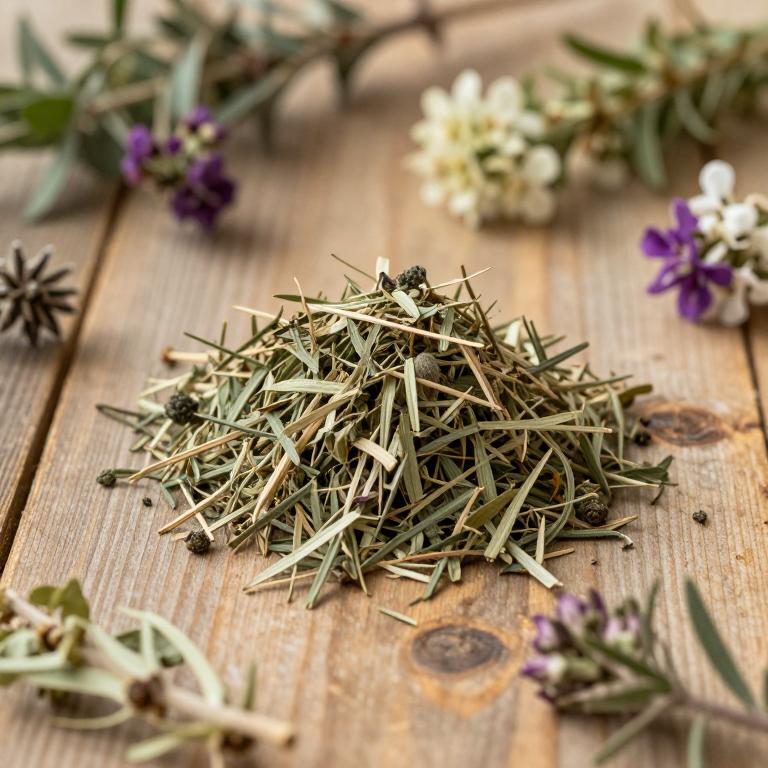
Names and Synonyms
Common Names
- Iberian Spiderflower
- Caucasian Beeplant
Scientific Names
Accepted name
Cleome ibericaSynonyms
- Cleome ornithopodioides subsp. donetzica
- Cleome ornithopodioides subsp. canescens
- Cleome ornithopodioides var. sessilis
- Cleome dagestanica
- Cleome circassica
- Cleome donetzica
- Cleome canescens
- Cleome ornithopodioides f. dagestanica
Regional and Traditional Names
German:
- Kaukasus-Spinnenblume
Sources: Wikidata, Catalogue of Life
Taxonomical Classification
This plant belongs to the kingdom Plantae and the phylum Streptophyta. It is classified under the class Equisetopsida and the subclass Magnoliidae, falling within the order Brassicales. Furthermore, it is a member of the family Cleomaceae and the genus Cleome.
| Rank | Classification |
|---|---|
| Kingdom | Plantae |
| Phylum | Streptophyta |
| Class | Equisetopsida |
| Subclass | Magnoliidae |
| Order | Brassicales |
| Family | Cleomaceae |
| Genus | Cleome |
Sources: The World Checklist of Vascular Plants (WCVP)
Distribution
This plant exhibits a specific range across several key regions in Eurasia. In Southeastern Europe, its presence is noted within the European territory of Türkiye. Moving into Eastern Europe, the species can be found in Krym and throughout Ukraine. It also maintains a distribution across South European Russia. Finally, its geographical reach extends into the Caucasus region, specifically within the North Caucasus.
| Region | Area |
|---|---|
| Southeastern Europe | Türkiye-in-Europe |
| Eastern Europe | Krym |
| Eastern Europe | South European Russia |
| Eastern Europe | Ukraine |
| Caucasus | North Caucasus |
| Caucasus | Transcaucasus |
| Western Asia | Cyprus |
| Western Asia | East Aegean Is. |
| Western Asia | Iran |
| Western Asia | Iraq |
Sources: The World Checklist of Vascular Plants (WCVP)
Botanical Identification
Life history
The life history of Cleome iberica is characterized by an annual lifecycle, meaning the plant completes its entire biological progression from germination to seed production within a single growing season. In terms of its ecological classification and structural growth, it functions as a therophyte, a life form defined by completing its life cycle rapidly and surviving unfavorable environmental periods primarily in the form of seeds. This strategy allows the species to exploit seasonal resources efficiently before returning to a dormant seed state.
- Life form :
- therophyte
- Lifecycle :
- annual
Morphology
The morphology of Cleome ibergica is characterized by a growth form consisting of a non-woody herb and specifically a forb. The plant is primarily terrestrial in its habitat preference, though it can exist within a spectrum of aquatic and semiaquatic environments. In terms of its structural habit, it is a self-supporting plant rather than a climber, maintaining an upright stature through its herbaceous tissues.
- Aquatic :
- terrestrial
- Climber :
- self-supporting
- Growth form :
- herb
- Growth form :
- forb
- Woodiness :
- non-woody
Sources: Global Inventory of Floras and Traits (GIFT)
Chemicals
Cleome iberica has 7 reported phytochemicals identified across 0 scientific publications and several other databases. The most consistently reported chemicals include Cabraleadiol, Calycopterin, Daucosterol, Lupeol, TRICOSANOIC ACID.
| Chemical | Supporting sources | Consensus |
|---|---|---|
| Cabraleadiol | 1 supporting sources | ★☆☆☆☆ |
| Calycopterin | 1 supporting sources | ★☆☆☆☆ |
| Daucosterol | 1 supporting sources | ★☆☆☆☆ |
| Lupeol | 1 supporting sources | ★☆☆☆☆ |
| TRICOSANOIC ACID | 1 supporting sources | ★☆☆☆☆ |
| cabraleadiol monoacetate | 1 supporting sources | ★☆☆☆☆ |
| glutinol | 1 supporting sources | ★☆☆☆☆ |
Cabraleadiol
- Natural product research
Calycopterin
- Natural product research
Daucosterol
- Natural product research
Lupeol
- Natural product research
TRICOSANOIC ACID
- Natural product research
cabraleadiol monoacetate
- Natural product research
glutinol
- Natural product research
Activities
Cleome iberica has 1 reported activities identified across 0 scientific publications and several other databases. The most consistently reported activities include Antimicrobial.
| Activity | Supporting sources | Consensus |
|---|---|---|
| Antimicrobial | 1 supporting sources | ★☆☆☆☆ |
Antimicrobial
- Natural product research