Cleome droserifolia
Cleome droserifolia · Accepted scientific name
Scientific literature: Very Sparse (48 studies) · ★☆☆☆☆
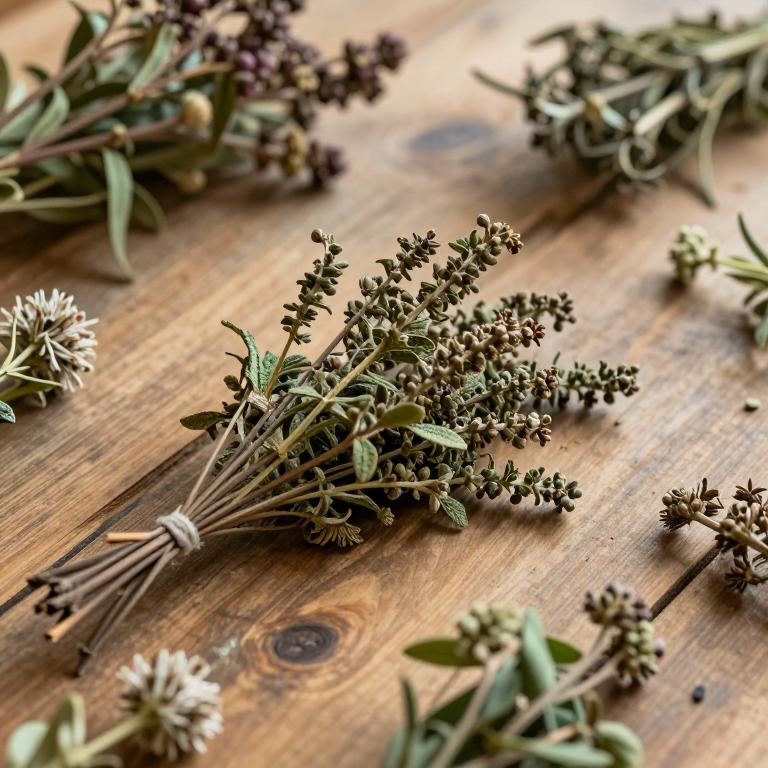
Cleome droserifolia, scientifically known as Cleome droserifolia, is a versatile medicinal herb valued in traditional healing practices. Known for its unique leaf structure, this plant offers significant therapeutic potential, particularly in treating inflammatory conditions and digestive ailments. Its bioactive compounds make it a subject of growing pharmacological interest.
- Family
- Cleomaceae
- Native range
- Africa
- Parts used
- Leaf
- Common names
- Not available
- Scientific synonyms
- Rorida Droserifolia · Roridula Tetrandra · 6 more
Names and Synonyms
Scientific Names
Accepted name
Cleome droserifoliaSynonyms
- Rorida droserifolia
- Roridula tetrandra
- Roridula droserifolia
- Cleome brachyadenia
- Cleome austroarabica
- Cleome austroarabica subsp. muscatensis
- Cleome ovalifolia
- Cleome pruinosa
Regional and Traditional Names
Spanish:
- Rorida arabica
- Roridula arabica
- Roridula droserifolia
- Roridula tetrandra
Sources: Wikidata
Taxonomical Classification
This plant belongs to the kingdom Plantae within the phylum Streptophyta and the class Equisetopsida. It is further classified under the subclass Magnoliidae in the order Brassicales, falling into the family Cleomaceae. Ultimately, it is identified by the genus Cleome.
| Rank | Classification |
|---|---|
| Kingdom | Plantae |
| Phylum | Streptophyta |
| Class | Equisetopsida |
| Subclass | Magnoliidae |
| Order | Brassicales |
| Family | Cleomaceae |
| Genus | Cleome |
Sources: The World Checklist of Vascular Plants (WCVP)
Distribution
This plant, Cleome droserifolia, exhibits a specific geographical range concentrated within the African continent. In the region of Northern Africa, its presence is documented in both Egypt and Libya. Moving eastward, the species is also found throughout Northeast Tropical Africa. Specifically, it inhabits the territories of Djibouti and Eritrea. Additionally, its distribution extends to the island of Socotra.
| Region | Area |
|---|---|
| Northern Africa | Egypt |
| Northern Africa | Libya |
| Northeast Tropical Africa | Djibouti |
| Northeast Tropical Africa | Eritrea |
| Northeast Tropical Africa | Socotra |
| Northeast Tropical Africa | Somalia |
| Northeast Tropical Africa | Sudan-South Sudan |
| Western Asia | Iran |
| Western Asia | Lebanon-Syria |
| Western Asia | Palestine |
Sources: The World Checklist of Vascular Plants (WCVP)
Botanical Identification
Life history
The life history of Cleome droserifolia is characterized by its classification as a hemicryptophyte, a life form where the perennating buds are located at or just below the soil surface, protected by the seasonal accumulation of leaf litter or soil. This growth strategy allows the plant to endure unfavorable environmental periods by maintaining dormant buds near the substrate, enabling rapid regrowth when conditions become optimal. Throughout its developmental cycle, the plant transitions from the establishment of these protective buds to active vegetative growth, eventually progressing through reproductive stages to ensure species continuity. As a hemicryptophyte, its survival mechanism balances the resilience of ground-level dormancy with the ability to exploit available nutrients and light during its active growing seasons.
- Life form :
- hemicryptophyte
Morphology
The morphology of Cleome droserifolia is characterized by its growth form as a subshrub, exhibiting a woody structure that provides physical stability. This plant functions as an independent organism, lacking any parasitic relationship with other species. In terms of its habitat adaptability, its ecological profile encompasses aquatic, semiaquatic, and terrestrial environments, allowing it to thrive across diverse moisture gradients.
- Aquatic :
- terrestrial
- Growth form :
- subshrub
- Parasite :
- independent
- Woodiness :
- woody
Physiology
The physiology of Cleome droserifolia is characterized by its reliance on the C3 photosynthetic pathway, a mechanism where the initial fixation of atmospheric carbon dioxide occurs via the enzyme RuBisCO to form a three-carbon compound. This metabolic process dictates the plant's efficiency in carbon assimilation and its water-use strategies, as it lacks the specialized Kranz anatomy or temporal separation of gas exchange found in C4 or CAM species. Consequently, its physiological performance, including transpiration rates and stomatal conductance, is highly sensitive to environmental variables such as light intensity, temperature, and moisture availability, which directly influence the rate of carboxylation and the potential for photorespiration during periods of heat or drought stress.
- Photosynthetic pathway :
- C3
Reproduction
Reproduction in Cleome droserifolia is characterized by the production of minute seeds that facilitate its dispersal and survival within its ecological niche. The seed mass of this species exhibits notable variability, with a measured mean seed mass of 0.000145 g. Detailed analysis of the seed dimensions reveals a range of sizes, reaching a maximum mass of 0.00022 g and a minimum mass as low as 7e-05 g. This distribution in seed size suggests a reproductive strategy optimized for high-volume output, allowing the plant to effectively colonize suitable substrates through its small, lightweight propagules.
- Seed mass max:
- 0.00022 g
- Seed mass mean:
- 0.000145 g
- Seed mass min:
- 7e-05 g
Sources: Global Inventory of Floras and Traits (GIFT)
Plant Parts
Cleome droserifolia has 1 reported plant parts identified across 1 scientific publications and several other databases that are studied for medicinal purposes. The most consistently reported plant part include leaf.
| Plant part | Supporting sources | Consensus |
|---|---|---|
| Leaf | 1 supporting sources | ★☆☆☆☆ |
Leaf
- Natural product research
Chemicals
Cleome droserifolia has 24 reported phytochemicals identified across 1 scientific publications and several other databases. The most consistently reported chemicals include 5,4'-Dihydroxy-6,7,8,3',5'-pentamethoxyflavone, 5,4'-dihydroxy-6,7,8,3'-tetramethoxyflavone, C1, C2, C3.
| Chemical | Supporting sources | Consensus |
|---|---|---|
| 5,4'-Dihydroxy-6,7,8,3',5'-pentamethoxyflavone | 1 supporting sources | ★☆☆☆☆ |
| 5,4'-dihydroxy-6,7,8,3'-tetramethoxyflavone | 1 supporting sources | ★☆☆☆☆ |
| C1 | 1 supporting sources | ★☆☆☆☆ |
| C2 | 1 supporting sources | ★☆☆☆☆ |
| C3 | 1 supporting sources | ★☆☆☆☆ |
| C4 | 1 supporting sources | ★☆☆☆☆ |
| C5 | 1 supporting sources | ★☆☆☆☆ |
| C6 | 1 supporting sources | ★☆☆☆☆ |
| Cyanidin 3-glucoside | 1 supporting sources | ★☆☆☆☆ |
| F1 | 1 supporting sources | ★☆☆☆☆ |
5,4'-Dihydroxy-6,7,8,3',5'-pentamethoxyflavone
- Planta medica
5,4'-dihydroxy-6,7,8,3'-tetramethoxyflavone
- Planta medica
C1
- Phytomedicine : international journal of phytotherapy and phytopharmacology
C2
- Phytomedicine : international journal of phytotherapy and phytopharmacology
C3
- Phytomedicine : international journal of phytotherapy and phytopharmacology
C4
- Phytomedicine : international journal of phytotherapy and phytopharmacology
C5
- Phytomedicine : international journal of phytotherapy and phytopharmacology
C6
- Phytomedicine : international journal of phytotherapy and phytopharmacology
Cyanidin 3-glucoside
- Antibiotics (Basel, Switzerland)
F1
- Phytomedicine : international journal of phytotherapy and phytopharmacology
Activities
Cleome droserifolia has 5 reported activities identified across 1 scientific publications and several other databases. The most consistently reported activities include Anticancer, Antidiabetic, Antimalarial, Hypoglycemic, Rubefacient.
| Activity | Supporting sources | Consensus |
|---|---|---|
| Anticancer | 1 supporting sources | ★☆☆☆☆ |
| Antidiabetic | 1 supporting sources | ★☆☆☆☆ |
| Antimalarial | 1 supporting sources | ★☆☆☆☆ |
| Hypoglycemic | 1 supporting sources | ★☆☆☆☆ |
| Rubefacient | 1 supporting sources | ★☆☆☆☆ |
Anticancer
- BMC complementary medicine and therapies
Antidiabetic
- Molecules (Basel, Switzerland)
Antimalarial
- BMC complementary medicine and therapies
Hypoglycemic
- Bollettino chimico farmaceutico
Rubefacient
- BMC complementary medicine and therapies
Conditions
Cleome droserifolia has 13 reported investigations on conditions identified across 1 scientific publications and several other databases. The most consistently reported conditions include antidiabetic, diabetes mellitus, oxidative stress, Plasmodium falciparum, Toxoplasma gondii.
| Condition | Supporting sources | Consensus |
|---|---|---|
| Antidiabetic | 2 supporting sources | ★☆☆☆☆ |
| Diabetes mellitus | 2 supporting sources | ★☆☆☆☆ |
| Oxidative stress | 2 supporting sources | ★☆☆☆☆ |
| Plasmodium falciparum | 1 supporting sources | ★☆☆☆☆ |
| Toxoplasma gondii | 1 supporting sources | ★☆☆☆☆ |
| Anti-oxidant | 1 supporting sources | ★☆☆☆☆ |
| Breast cancer | 1 supporting sources | ★☆☆☆☆ |
| Cervical cancer | 1 supporting sources | ★☆☆☆☆ |
| Diabetes complications | 1 supporting sources | ★☆☆☆☆ |
| Fatty liver | 1 supporting sources | ★☆☆☆☆ |
Antidiabetic
- Phytomedicine : international journal of phytotherapy and phytopharmacology
- Natural product research
Diabetes mellitus
- Clinical nutrition ESPEN
- Bollettino chimico farmaceutico
Oxidative stress
- Chemistry & biodiversity
- Molecules (Basel, Switzerland)
Plasmodium falciparum
- BMC complementary medicine and therapies
Toxoplasma gondii
- The Journal of veterinary medical science
Anti-oxidant
- BMC complementary medicine and therapies
Breast cancer
- BMC complementary medicine and therapies
Cervical cancer
- BMC complementary medicine and therapies
Diabetes complications
- Molecules (Basel, Switzerland)
Fatty liver
- Bollettino chimico farmaceutico
Preparations
Cleome droserifolia has 9 reported preparations identified across 1 scientific publications and several other databases. The most consistently reported preparations include Cleome droserifolia extract (CDE), Cleome droserifolia fermented by Lactobacillus casei, Extracts, Organic extracts, Organic fractions of the aerial parts.
| Preparation | Supporting sources | Consensus |
|---|---|---|
| Cleome droserifolia extract (cde) | 1 supporting sources | ★☆☆☆☆ |
| Cleome droserifolia fermented by lactobacillus casei | 1 supporting sources | ★☆☆☆☆ |
| Extracts | 1 supporting sources | ★☆☆☆☆ |
| Organic extracts | 1 supporting sources | ★☆☆☆☆ |
| Organic fractions of the aerial parts | 1 supporting sources | ★☆☆☆☆ |
| Selenium cleome droserifolia nanoparticles (se-cnps) | 1 supporting sources | ★☆☆☆☆ |
| Aqueous extract | 1 supporting sources | ★☆☆☆☆ |
| Fermented extract | 1 supporting sources | ★☆☆☆☆ |
| Methanolic extracts | 1 supporting sources | ★☆☆☆☆ |
Cleome droserifolia extract (cde)
- Antibiotics (Basel, Switzerland)
Cleome droserifolia fermented by lactobacillus casei
- Chemistry & biodiversity
Extracts
- Evidence-based complementary and alternative medicine : eCAM
Organic extracts
- BMC complementary medicine and therapies
Organic fractions of the aerial parts
- BMC complementary medicine and therapies
Selenium cleome droserifolia nanoparticles (se-cnps)
- Clinical nutrition ESPEN
Aqueous extract
- Molecules (Basel, Switzerland)
Fermented extract
- Chemistry & biodiversity
Methanolic extracts
- The Journal of veterinary medical science