virgin's-bower
Clematis · Accepted scientific name
Scientific literature: Very Sparse (17 studies) · ★☆☆☆☆
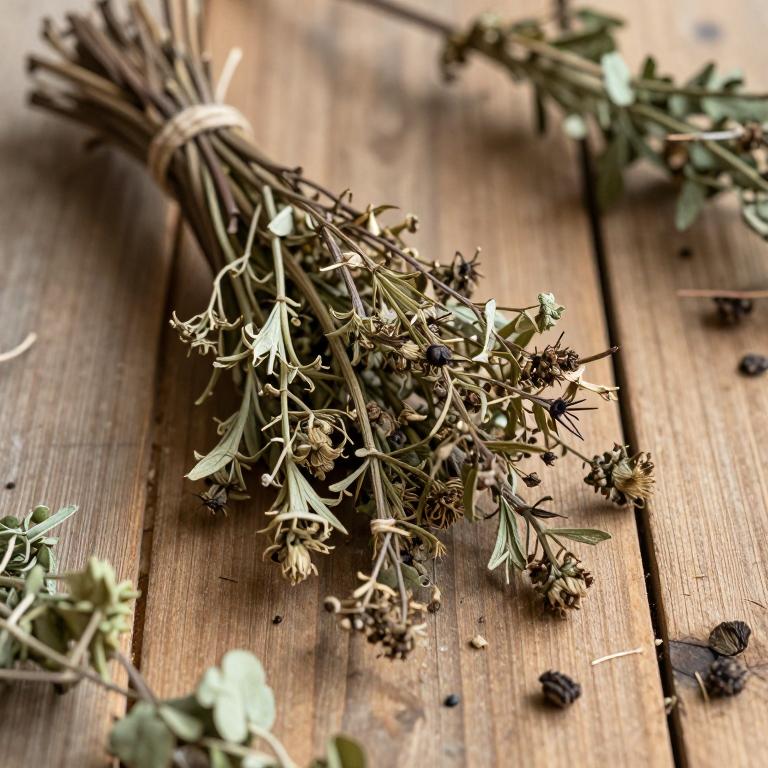
Virgin's-bower, scientifically known as Clematis, is a versatile climbing plant celebrated for its striking, star-shaped blooms. Beyond its ornamental beauty, various species hold significant roles in traditional medicine. Used historically to treat inflammatory conditions and skin ailments, this botanical wonder offers a fascinating intersection of aesthetics and herbal healing.
Names and Synonyms
Common Names
- virgin's-bower
- Clematis and leatherflowers
- Traveller's Joy
- leather flower
Scientific Names
Accepted name
ClematisSynonyms
- Coriflora
- Cheiropsis
- Archiclematis
- Muralta
- Meclatis
- Clematopsis
- Clematitis
- Valvaria
- Viorna
- Atragene
- Naravelia
- Sieboldia
Regional and Traditional Names
Spanish:
- Clematide
- Clemátide
- Clemátides y barbas de chivo
German:
- Waldreben
- Judenstrick
- Waldrebe
- Niele
- Klematis
- Waldreben
French:
- clématite
- Clematite
- Clématite
- Clématites
- Clématite
Sources: Wikidata, Catalogue of Life
Taxonomical Classification
This plant belongs to the kingdom Plantae and the phylum Streptophyta, placing it within the class Equisetopsida and subclass Magnoliidae. It is further classified under the order Ranunculales and the family Ranunculaceae. Finally, it is identified by its specific genus, Clematis.
| Rank | Classification |
|---|---|
| Kingdom | Plantae |
| Phylum | Streptophyta |
| Class | Equisetopsida |
| Subclass | Magnoliidae |
| Order | Ranunculales |
| Family | Ranunculaceae |
| Genus | Clematis |
Sources: The World Checklist of Vascular Plants (WCVP)
Distribution
This plant is widely distributed across several regions within Northern Europe. Specifically, it can be found growing in the natural landscapes of Denmark. Its presence is also well-documented throughout the coastal and inland areas of Great Britain and Ireland. Furthermore, the species thrives in the northern reaches of the continent, including Finland. Finally, its geographical range extends into the rugged terrains of Norway.
| Region | Area |
|---|---|
| Northern Europe | Denmark |
| Northern Europe | Finland |
| Northern Europe | Great Britain |
| Northern Europe | Ireland |
| Northern Europe | Norway |
| Northern Europe | Sweden |
| Middle Europe | Austria |
| Middle Europe | Belgium |
| Middle Europe | Czechia-Slovakia |
| Middle Europe | Germany |
Sources: The World Checklist of Vascular Plants (WCVP)
Chemicals
Clematis has 13 reported phytochemicals identified across 0 scientific publications and several other databases. The most consistently reported chemicals include Coumarins, Flavonoids, Isoflavones, Lignans, Phenols.
| Chemical | Supporting sources | Consensus |
|---|---|---|
| Coumarins | 1 supporting sources | ★☆☆☆☆ |
| Flavonoids | 1 supporting sources | ★☆☆☆☆ |
| Isoflavones | 1 supporting sources | ★☆☆☆☆ |
| Lignans | 1 supporting sources | ★☆☆☆☆ |
| Phenols | 1 supporting sources | ★☆☆☆☆ |
| Protoanemonin | 1 supporting sources | ★☆☆☆☆ |
| Steroids | 1 supporting sources | ★☆☆☆☆ |
| Triterpenes | 1 supporting sources | ★☆☆☆☆ |
| acetyl | 1 supporting sources | ★☆☆☆☆ |
| flavonols | 1 supporting sources | ★☆☆☆☆ |
Coumarins
- Zhongguo Zhong yao za zhi = Zhongguo zhongyao zazhi = China journal of Chinese materia medica
Flavonoids
- Zhongguo Zhong yao za zhi = Zhongguo zhongyao zazhi = China journal of Chinese materia medica
Isoflavones
- Zhongguo Zhong yao za zhi = Zhongguo zhongyao zazhi = China journal of Chinese materia medica
Lignans
- Zhongguo Zhong yao za zhi = Zhongguo zhongyao zazhi = China journal of Chinese materia medica
Phenols
- Zhongguo Zhong yao za zhi = Zhongguo zhongyao zazhi = China journal of Chinese materia medica
Protoanemonin
- Molecules (Basel, Switzerland)
Steroids
- Zhongguo Zhong yao za zhi = Zhongguo zhongyao zazhi = China journal of Chinese materia medica
Triterpenes
- Zhongguo Zhong yao za zhi = Zhongguo zhongyao zazhi = China journal of Chinese materia medica
acetyl
- Zhongguo Zhong yao za zhi = Zhongguo zhongyao zazhi = China journal of Chinese materia medica
flavonols
- Zhongguo Zhong yao za zhi = Zhongguo zhongyao zazhi = China journal of Chinese materia medica
Activities
Clematis has 2 reported activities identified across 0 scientific publications and several other databases. The most consistently reported activities include Analgesic, Antitumor.
| Activity | Supporting sources | Consensus |
|---|---|---|
| Analgesic | 1 supporting sources | ★☆☆☆☆ |
| Antitumor | 1 supporting sources | ★☆☆☆☆ |
Analgesic
- Plants (Basel, Switzerland)
Antitumor
- Plants (Basel, Switzerland)
Conditions
Clematis has 1 reported investigations on conditions identified across 0 scientific publications and several other databases. The most consistently reported conditions include analgesic.
| Condition | Supporting sources | Consensus |
|---|---|---|
| Analgesic | 1 supporting sources | ★☆☆☆☆ |
Analgesic
- Plants (Basel, Switzerland)