Ceylon Clematis
Clematis zeylanica · Accepted scientific name
Scientific literature: Very Sparse (3 studies) · ★☆☆☆☆
Ceylon Clematis, scientifically known as Clematis zeylanica, is a distinctive medicinal climber native to the tropical regions of Sri Lanka. Renowned in traditional Ayurvedic practices, this botanical treasure is valued for its therapeutic properties, often utilized to treat various ailments and support overall wellness through its unique bioactive compounds.
- Family
- Ranunculaceae
- Native range
- Asia-Temperate
- Parts used
- Not available
- Common names
- Ceylon Clematis
- Scientific synonyms
- Naravelia Lobata · Naravelia Zeylanica · 3 more
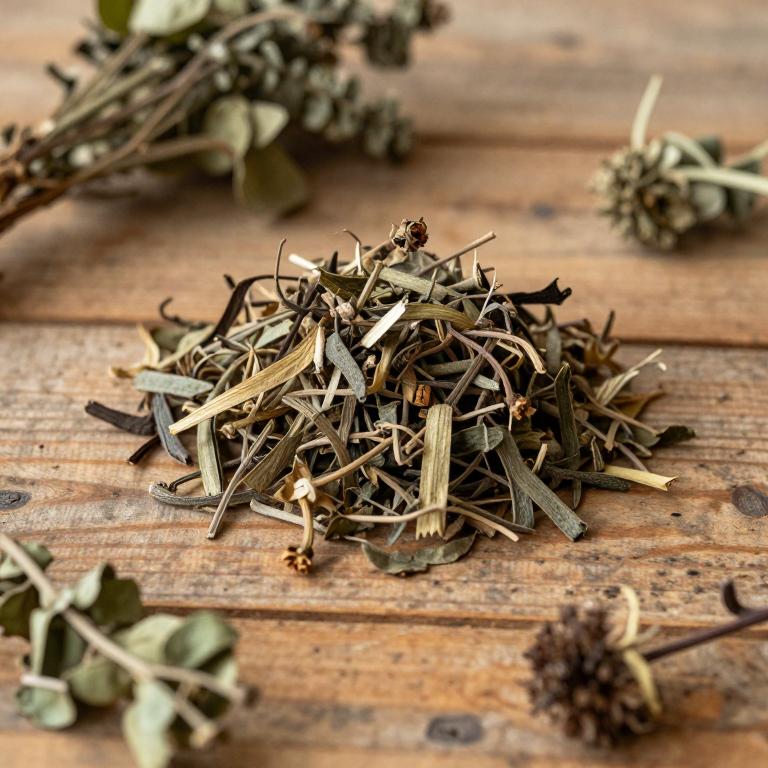
Names and Synonyms
Common Names
- Ceylon Clematis
Scientific Names
Accepted name
Clematis zeylanicaSynonyms
- Naravelia lobata
- Naravelia zeylanica
- Naravelia zeylanica var. roxburghii
- Atragene zeylanica
- Atragene lobata
Regional and Traditional Names
German:
- Naravelia zeylanica
Sources: Wikidata, Catalogue of Life
Taxonomical Classification
This plant, Clematis zeylanica, belongs to the kingdom Plantae and the phylum Streptophyta. Within the class Equisetopsida and subclass Magnoliidae, it is classified under the order Ranunculales and the family Ranunculaceae. Ultimately, its taxonomic placement is defined by the genus Clematis.
| Rank | Classification |
|---|---|
| Kingdom | Plantae |
| Phylum | Streptophyta |
| Class | Equisetopsida |
| Subclass | Magnoliidae |
| Order | Ranunculales |
| Family | Ranunculaceae |
| Genus | Clematis |
Sources: The World Checklist of Vascular Plants (WCVP)
Distribution
This plant exhibits a wide geographical distribution spanning across several key regions in Asia. In China, it can be specifically located within the South-Central territories. Its presence is also significant throughout the Indian Subcontinent, where it is found in India and Bangladesh. Furthermore, the species thrives in the specialized environments of Assam and the East Himalaya. Together, these locations highlight the diverse ecological range of Clematis zeylanica.
| Region | Area |
|---|---|
| China | China South-Central |
| Indian Subcontinent | Assam |
| Indian Subcontinent | Bangladesh |
| Indian Subcontinent | East Himalaya |
| Indian Subcontinent | India |
| Indian Subcontinent | Nepal |
| Indian Subcontinent | Sri Lanka |
| Indian Subcontinent | West Himalaya |
| Indo-China | Laos |
| Indo-China | Myanmar |
Sources: The World Checklist of Vascular Plants (WCVP)
Botanical Identification
Ecology
The ecology of Clematis zeylanica is characterized by a specific altitudinal distribution within its natural habitat, spanning a diverse vertical gradient. This species typically inhabits environments ranging from a minimum elevation of 270 m AMSL to a maximum elevation of 1000 m AMSL. Throughout its ecological range, the plant maintains a mean elevation of approximately 1000 m AMSL, indicating a preference for mid-to-high altitude zones within its ecosystem. This elevational positioning influences the specific climatic conditions, such as temperature fluctuations and moisture availability, to which the plant must adapt to thrive.
- Elevational range max:
- 1000 m AMSL
- Elevational range min:
- 270 m AMSL
Life history
The life history of Clematis zeylanica is characterized by its classification as a perennial, allowing the plant to persist through multiple growing seasons. As a climbing woody vine, it establishes a long-term presence in its habitat, utilizing its growth habit to ascend through surrounding vegetation to access sunlight. Throughout its life cycle, the plant undergoes seasonal phases of vegetative growth and flowering, eventually producing seeds that facilitate the propagation of new individuals. This perennial nature ensures that the plant can endure environmental fluctuations, maintaining its structural integrity and reproductive capacity over an extended duration.
- Lifecycle :
- perennial
Morphology
The morphology of Clematis zeylanica is characterized by its growth form as a woody shrub that functions as an obligatory climber, utilizing surrounding structures for support rather than being self-supporting. Although it can exist in various environments, its ecological positioning is primarily terrestrial rather than aquatic or epiphytic. The plant is biologically independent, functioning as a non-parasitic organism that does not rely on a host for nutrients. Its structural development is defined by woody stems that facilitate its climbing habit, allowing it to navigate through its terrestrial habitat.
- Aquatic :
- terrestrial
- Climber :
- obligatory
- Epiphyte :
- terrestrial
- Growth form :
- shrub
- Parasite :
- independent
- Woodiness :
- woody
Reproduction
The reproduction of Clematis zeylanica is characterized by the development of specialized fruit structures that facilitate seed dispersal. The fruit is remarkably consistent in its physical dimensions, exhibiting a highly uniform morphology across different specimens. Specifically, the fruit length maintains a strict measurement of 0.4 cm, with the minimum, mean, and maximum values all recorded at exactly 0.4 cm. This lack of variance in fruit length suggests a highly standardized developmental process during the maturation of the reproductive organs, ensuring that each fruit reaches a precise size of 0.4 cm before dispersal.
- Fruit length max:
- 0.4 cm
Sources: Global Inventory of Floras and Traits (GIFT)
Chemicals
Clematis zeylanica has 3 reported phytochemicals identified across 0 scientific publications and several other databases. The most consistently reported chemicals include 3,4-methylenedioxybenzamide, 4-Hydroxy-3-methoxybenzamide, 4-Methoxybenzamide.
| Chemical | Supporting sources | Consensus |
|---|---|---|
| 3,4-methylenedioxybenzamide | 1 supporting sources | ★☆☆☆☆ |
| 4-Hydroxy-3-methoxybenzamide | 1 supporting sources | ★☆☆☆☆ |
| 4-Methoxybenzamide | 1 supporting sources | ★☆☆☆☆ |
3,4-methylenedioxybenzamide
- Natural product research
4-Hydroxy-3-methoxybenzamide
- Natural product research
4-Methoxybenzamide
- Natural product research
Preparations
Clematis zeylanica has 1 reported preparations identified across 0 scientific publications and several other databases. The most consistently reported preparations include Extract.
| Preparation | Supporting sources | Consensus |
|---|---|---|
| Extract | 1 supporting sources | ★☆☆☆☆ |
Extract
- Natural product research