Clematis simensis
Clematis simensis · Accepted scientific name
Scientific literature: Very Sparse (7 studies) · ★☆☆☆☆
Clematis simensis, scientifically known as Clematis simensis, is a remarkable medicinal shrub native to the high-altitude regions of Ethiopia. Renowned for its potent ethnobotanical properties, this plant is traditionally utilized in folk medicine to treat various ailments, offering significant pharmacological potential for modern therapeutic research and herbal development.
- Family
- Ranunculaceae
- Native range
- Africa
- Parts used
- Leaf
- Common names
- Not available
- Scientific synonyms
- Clematis Simensis F. Glabrescens · Clematis Simensis Var. Kilimandscharica · 7 more
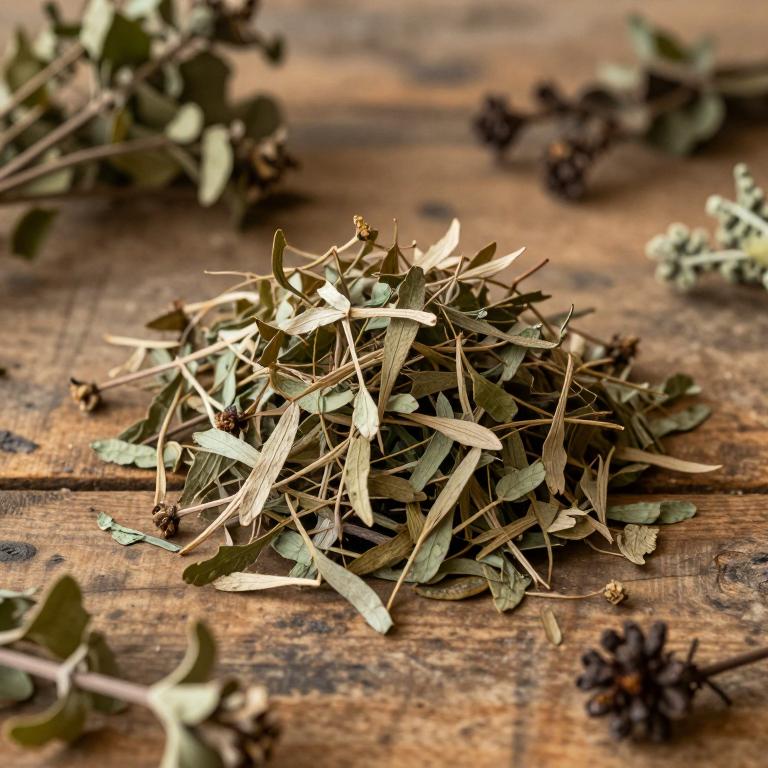
Names and Synonyms
Scientific Names
Accepted name
Clematis simensisSynonyms
- Clematis simensis f. glabrescens
- Clematis simensis var. kilimandscharica
- Clematis simensis var. ruwenzoriensis
- Clematis sigensis
- Clematis orientalis subsp. simensis
- Clematis orientalis var. longifoliola
- Clematis orientalis var. brevifoliola
- Clematis altissima
- Clematis kissenyensis
Sources: Wikidata, Catalogue of Life
Taxonomical Classification
This plant, Clematis simensis, belongs to the kingdom Plantae and the phylum Streptophyta. Within the class Equisetopsida and subclass Magnoliidae, it is classified under the order Ranunculales and the family Ranunculaceae. Ultimately, its taxonomic identity is defined by its placement within the genus Clematis.
| Rank | Classification |
|---|---|
| Kingdom | Plantae |
| Phylum | Streptophyta |
| Class | Equisetopsida |
| Subclass | Magnoliidae |
| Order | Ranunculales |
| Family | Ranunculaceae |
| Genus | Clematis |
Sources: The World Checklist of Vascular Plants (WCVP)
Distribution
This plant exhibits a diverse geographical distribution across several key regions of the African continent. In West Tropical Africa, it can be found growing in both Nigeria and Sierra Leone. Moving toward the central regions, its presence extends into West-Central Tropical Africa. Specifically, it is documented in the countries of Burundi, Cameroon, and Congo. Consequently, the species spans a wide latitudinal range throughout these tropical territories.
| Region | Area |
|---|---|
| West Tropical Africa | Nigeria |
| West Tropical Africa | Sierra Leone |
| West-Central Tropical Africa | Burundi |
| West-Central Tropical Africa | Cameroon |
| West-Central Tropical Africa | Congo |
| West-Central Tropical Africa | Gulf of Guinea Is. |
| West-Central Tropical Africa | Rwanda |
| West-Central Tropical Africa | DR Congo |
| Northeast Tropical Africa | Chad |
| Northeast Tropical Africa | Eritrea |
Sources: The World Checklist of Vascular Plants (WCVP)
Botanical Identification
Life history
The life history of Clematis simensis is characterized by its status as a perennial plant, allowing it to persist through multiple growing seasons within its natural habitat. Regarding its structural growth and survival strategy, the species is classified under the life form of a chamaephyte, a designation that reflects its ability to maintain its perennable buds close to or just above the soil surface, providing a level of resilience against environmental fluctuations. This specific botanical categorization as a chamaephyte ensures its long-term establishment and continuity within its ecological niche.
- Life form :
- chamaephyte
- Lifecycle :
- perennial
Morphology
The morphology of Clematis simensis is characterized by its growth habit as a woody liana, functioning as an obligatory climber that relies on external support to ascend. As a terrestrial plant, it does not inhabit aquatic or epiphytic niches and maintains an independent existence, functioning as a non-parasitic organism. The plant exhibits significant vertical development, with its height ranging from a minimum of 5 m to a maximum of approximately 36.58 m, maintaining an average plant height of 12.5 m.
- Aquatic :
- terrestrial
- Climber :
- liana
- Climber :
- obligatory
- Epiphyte :
- terrestrial
- Parasite :
- independent
- Plant height max:
- 36.57644477 m
- Plant height mean:
- 12.5 m
- Plant height min:
- 5 m
- Woodiness :
- woody
Physiology
The physiology of Clematis simensis is characterized by its specific metabolic adaptations to its high-altitude environment, most notably through its reliance on the C3 photosynthetic pathway. As a C3 plant, its carbon fixation process occurs primarily through the Calvin cycle, where atmospheric carbon dioxide is directly incorporated into organic compounds via the enzyme RuBisCO within the mesophyll cells. This pathway is typical for many temperate and montane species, allowing the plant to efficiently utilize available moisture and light conditions in its native habitat, although it necessitates careful management of photorespiration during periods of high light intensity or temperature fluctuations. The metabolic efficiency of this C3 mechanism dictates the plant's growth rates, water-use efficiency, and overall energy assimilation patterns, which are central to its physiological response to the unique ecological pressures of its ecosystem.
- Photosynthetic pathway :
- C3
Reproduction
The reproduction of Clematis simensis is characterized by specific seed morphological traits and a specialized dispersal strategy. The plant produces small seeds with a mean mass of approximately 0.002076667 g, falling within a narrow range between a minimum mass of 0.00197 g and a maximum mass of 0.00226 g. In terms of its dispersal mechanism, the species utilizes an anemochorous syndrome, meaning its seeds are primarily adapted for dispersal via wind currents.
- Dispersal syndrome :
- anemochorous
- Seed mass max:
- 0.00226 g
- Seed mass mean:
- 0.002076667 g
- Seed mass min:
- 0.00197 g
Sources: Global Inventory of Floras and Traits (GIFT)
Plant Parts
Clematis simensis has 1 reported plant parts identified across 1 scientific publications and several other databases that are studied for medicinal purposes. The most consistently reported plant part include leaf.
| Plant part | Supporting sources | Consensus |
|---|---|---|
| Leaf | 1 supporting sources | ★☆☆☆☆ |
Leaf
- Clinical, cosmetic and investigational dermatology
Activities
Clematis simensis has 2 reported activities identified across 1 scientific publications and several other databases. The most consistently reported activities include Anticancer, Antioxidant.
| Activity | Supporting sources | Consensus |
|---|---|---|
| Anticancer | 1 supporting sources | ★☆☆☆☆ |
| Antioxidant | 1 supporting sources | ★☆☆☆☆ |
Anticancer
- Evidence-based complementary and alternative medicine : eCAM
Antioxidant
- Clinical, cosmetic and investigational dermatology
Conditions
Clematis simensis has 3 reported investigations on conditions identified across 1 scientific publications and several other databases. The most consistently reported conditions include breast cancer, inflammation, wound.
| Condition | Supporting sources | Consensus |
|---|---|---|
| Breast cancer | 1 supporting sources | ★☆☆☆☆ |
| Inflammation | 1 supporting sources | ★☆☆☆☆ |
| Wound | 1 supporting sources | ★☆☆☆☆ |
Breast cancer
- BMC complementary medicine and therapies
Inflammation
- Clinical, cosmetic and investigational dermatology
Wound
- Clinical, cosmetic and investigational dermatology
Preparations
Clematis simensis has 2 reported preparations identified across 1 scientific publications and several other databases. The most consistently reported preparations include 80% methanol leaf extract, chloroform fraction.
| Preparation | Supporting sources | Consensus |
|---|---|---|
| 80% methanol leaf extract | 1 supporting sources | ★☆☆☆☆ |
| Chloroform fraction | 1 supporting sources | ★☆☆☆☆ |
80% methanol leaf extract
- Clinical, cosmetic and investigational dermatology
Chloroform fraction
- BMC complementary medicine and therapies