Clematis ispahanica
Clematis ispahanica · Accepted scientific name
Scientific literature: Very Sparse (2 studies) · ★☆☆☆☆
Clematis ispahanica, scientifically known as Clematis ispahanica, is a traditional medicinal herb valued for its potent therapeutic properties. Renowned for its ability to soothe the digestive system, it is frequently used to combat intestinal worms and alleviate gastrointestinal discomfort, serving as a vital remedy in various herbal practices.
- Family
- Ranunculaceae
- Native range
- Asia-Temperate
- Parts used
- Not available
- Common names
- Not available
- Scientific synonyms
- Clematis Pseudo-Orientalis
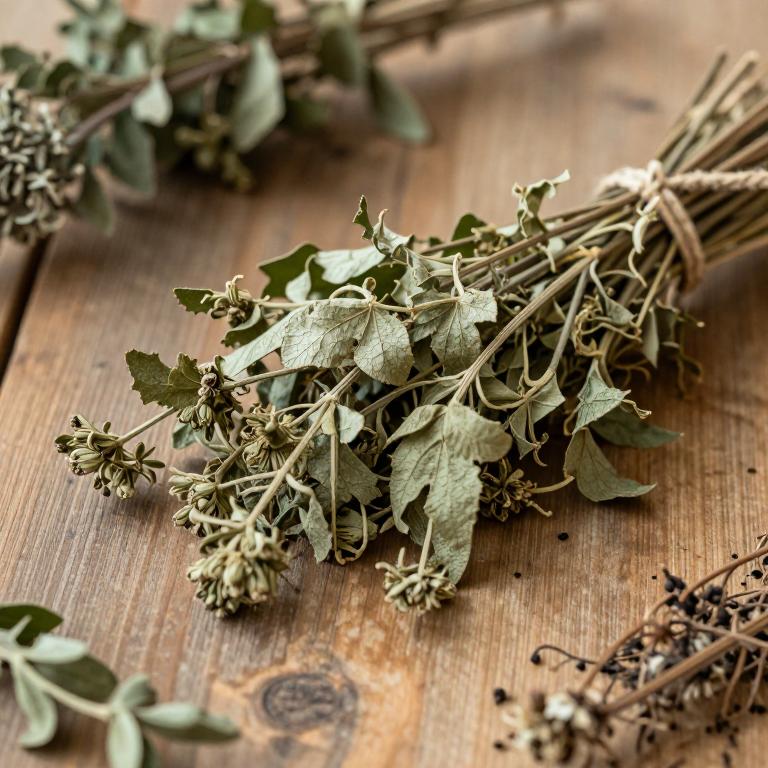
Names and Synonyms
Scientific Names
Accepted name
Clematis ispahanicaSynonyms
- Clematis pseudo-orientalis
Sources: Wikidata, Catalogue of Life
Taxonomical Classification
This plant belongs to the kingdom Plantae and is classified under the phylum Streptophyta and class Equisetopsida. Within the subclass Magnoliidae, it is organized under the order Ranunculales and the family Ranunculaceae. Finally, it is identified by the genus Clematis, specifically as the species Clematis ispahanica.
| Rank | Classification |
|---|---|
| Kingdom | Plantae |
| Phylum | Streptophyta |
| Class | Equisetopsida |
| Subclass | Magnoliidae |
| Order | Ranunculales |
| Family | Ranunculaceae |
| Genus | Clematis |
Sources: The World Checklist of Vascular Plants (WCVP)
Distribution
This plant exhibits a specific geographical distribution concentrated within the arid regions of Western and Central Asia. Primarily, its presence is documented throughout the country of Iran in Western Asia. Additionally, the species can be found extending into the territory of Turkmenistan within Central Asia. These specific locations define the natural range where the species is known to thrive. Consequently, its habitat is limited to these distinct parts of the Asian continent.
| Region | Area |
|---|---|
| Central Asia | Turkmenistan |
| Western Asia | Iran |
Sources: The World Checklist of Vascular Plants (WCVP)
Botanical Identification
Ecology
The ecology of Clematis ispanica is characterized by its preference for elevated and rugged terrain, specifically thriving within mountainous regions. It is frequently found colonizing shrubberies, where it utilizes the structural complexity of woody vegetation to establish itself. In these environments, the plant integrates into the local community by navigating the transitional spaces between open slopes and denser shrub layers, benefiting from the microclimates provided by mountain flora.
- Habitat :
- mountains, shrubberies
Life history
The life history of Clematis ispahanica is characterized by its status as a perennial plant, allowing it to persist through multiple growing seasons and establish a robust presence within its natural habitat. As a perennial, it does not complete its life cycle in a single year but instead undergoes cyclical periods of vegetative growth and dormancy, often developing woody climbing stems that provide structural longevity. Its life cycle involves the gradual development of foliage and the eventual production of flowers, which facilitate reproduction through seed dispersal. This enduring growth habit enables the species to navigate seasonal environmental changes, continuously expanding its root system and climbing structures to optimize its access to light and resources over many years.
- Lifecycle :
- perennial
Morphology
The morphology of Clematis ispahanica is characterized by its growth habit as a climber, specifically exhibiting a facultative climbing nature where it can function as both an obligatory climber using specialized structures and a self-supporting plant depending on the availability of external physical support. The stems are typically slender, elongated, and twining, allowing the plant to ascend through surrounding vegetation or structures. The leaves are oppositely arranged and are generally compound, often trifoliate or pinnate, with leaflets that possess serrated or entire margins. The inflorescence is notable for its large, showy, and solitary flowers that emerge from the leaf axils; these blooms feature prominent, spreading petals (or petaloid sepals) that are typically creamy white to pale yellow, surrounding a central cluster of numerous, long-exerted stamens. The fruit develops into characteristic achenes, each equipped with a long, feathery, or plumose style that facilitates wind dispersal, a common morphological adaptation within the genus.
- Climber :
- facultative
Reproduction
The reproduction of Clematis ispahanica is characterized by a specific seasonal flowering cycle that is essential for its pollination and subsequent seed production. The flowering process typically begins in July and continues through the month of August. This concentrated period of blooming ensures that the plant's reproductive organs are active and available for pollinators during the height of the summer months. Following this flowering stage, the plant transitions into seed development, which is a critical phase for the dispersal and propagation of the species.
- Flowering time :
- Jul
- Flowering time :
- Aug
Sources: Global Inventory of Floras and Traits (GIFT)
Chemicals
Clematis ispahanica has 1 reported phytochemicals identified across 0 scientific publications and several other databases. The most consistently reported chemicals include ellagic acid.
| Chemical | Supporting sources | Consensus |
|---|---|---|
| ellagic acid | 1 supporting sources | ★☆☆☆☆ |
ellagic acid
- Natural product research
Conditions
Clematis ispahanica has 1 reported investigations on conditions identified across 0 scientific publications and several other databases. The most consistently reported conditions include eczema.
| Condition | Supporting sources | Consensus |
|---|---|---|
| Eczema | 1 supporting sources | ★☆☆☆☆ |
Eczema
- Journal of ethnobiology and ethnomedicine
Preparations
Clematis ispahanica has 5 reported preparations identified across 0 scientific publications and several other databases. The most consistently reported preparations include Butanol, Chloroform, Ethyl Acetate, Hexane, Water.
| Preparation | Supporting sources | Consensus |
|---|---|---|
| Butanol | 1 supporting sources | ★☆☆☆☆ |
| Chloroform | 1 supporting sources | ★☆☆☆☆ |
| Ethyl acetate | 1 supporting sources | ★☆☆☆☆ |
| Hexane | 1 supporting sources | ★☆☆☆☆ |
| Water | 1 supporting sources | ★☆☆☆☆ |
Butanol
- Natural product research
Chloroform
- Natural product research
Ethyl acetate
- Natural product research
Hexane
- Natural product research
Water
- Natural product research