Clematis hirsuta
Clematis hirsuta · Accepted scientific name
Scientific literature: Very Sparse (11 studies) · ★☆☆☆☆
Clematis hirsuta, scientifically known as Clematis hirsuta, is a climbing perennial renowned in traditional medicine for its diverse therapeutic properties. Often found in various habitats, this plant is valued for its ability to treat skin ailments and respiratory issues, offering a rich source of bioactive compounds for herbal remedies.
- Family
- Ranunculaceae
- Native range
- Africa
- Parts used
- Leaf · Root
- Common names
- Not available
- Scientific synonyms
- Not available
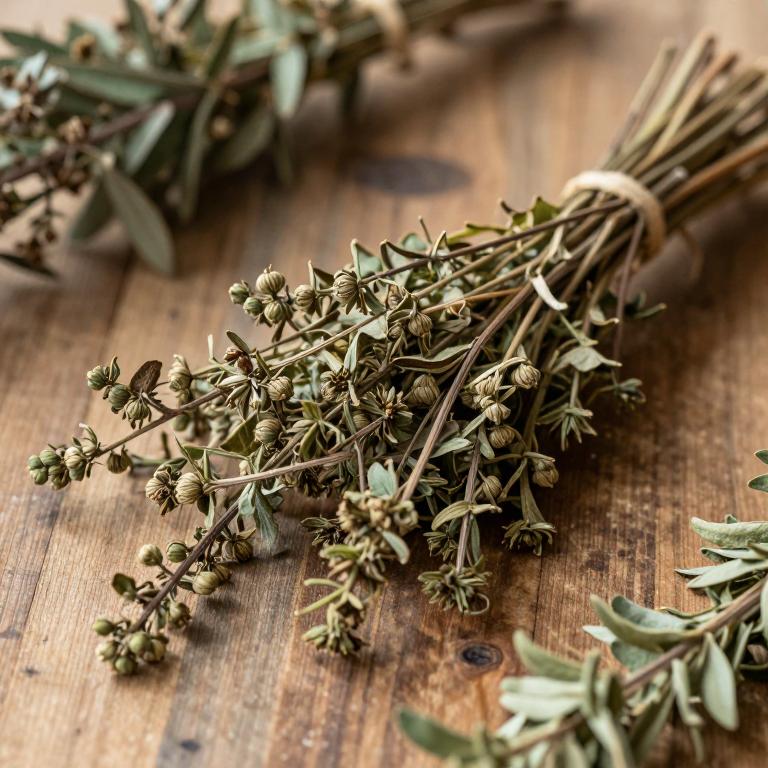
Names and Synonyms
Scientific Names
Accepted name
Clematis hirsutaSources: Wikidata, Catalogue of Life
Taxonomical Classification
This plant belongs to the kingdom Plantae and the phylum Streptophyta, falling under the class Equisetopsida and subclass Magnoliidae. Within the order Ranunculales, it is classified under the family Ranunculaceae. Finally, its specific taxonomic designation is within the genus Clematis.
| Rank | Classification |
|---|---|
| Kingdom | Plantae |
| Phylum | Streptophyta |
| Class | Equisetopsida |
| Subclass | Magnoliidae |
| Order | Ranunculales |
| Family | Ranunculaceae |
| Genus | Clematis |
Sources: The World Checklist of Vascular Plants (WCVP)
Distribution
This plant exhibits a diverse geographical range spanning across several distinct regions. In Northern Africa, it can be found growing in the territories of Algeria and Libya. Its distribution extends into the Macaronesian region, specifically within Cape Verde. Furthermore, the species is present in West Tropical Africa, where it inhabits Benin. Finally, its range includes the landlocked nation of Burkina Faso.
| Region | Area |
|---|---|
| Northern Africa | Algeria |
| Northern Africa | Libya |
| Macaronesia | Cape Verde |
| West Tropical Africa | Benin |
| West Tropical Africa | Burkina |
| West Tropical Africa | Gambia |
| West Tropical Africa | Ghana |
| West Tropical Africa | Guinea-Bissau |
| West Tropical Africa | Guinea |
| West Tropical Africa | Ivory Coast |
Sources: The World Checklist of Vascular Plants (WCVP)
Botanical Identification
Ecology
The ecology of Clematis hirsuta is characterized by a broad altitudinal distribution, allowing it to inhabit diverse topographical landscapes. This species exhibits significant adaptability across varying gradients, occupying an elevational range that begins from sea level at 0 m AMSL and extends up to a maximum altitude of 2125 m AMSL. This expansive vertical range suggests that the plant is capable of thriving in a variety of climatic zones, from lowland coastal or riverine environments to more temperate or montane habitats found at higher elevations. Such ecological plasticity enables the species to colonize a wide array of niches within its geographic territory, responding to the varying temperature regimes and moisture availability present across its extensive altitudinal span.
- Elevational range max:
- 2125 m AMSL
- Elevational range min:
- 0 m AMSL
Life history
The life history of Clematis hirsuta is characterized by its classification as a perennial plant, meaning it persists through multiple growing seasons. In terms of its structural growth strategy and survival mechanism, it is categorized as a phanerophyte, specifically exhibiting life forms such as phanerophyte and nanophanerophyte, where its perennating buds are elevated above the ground surface.
- Life form :
- phanerophyte
- Lifecycle :
- perennial
Morphology
The morphology of Clematis hirsuta is characterized by its growth as a woody liana, functioning as an obligatory climber that relies on external structures for support. Although it exhibits a growth form that can occasionally be described in broader botanical contexts as tree-like in its structural complexity, it primarily operates as a climbing vine. The plant is non-aquatic, maintaining a strictly terrestrial existence, and it is an independent organism that does not function as a parasite or an epiphyte. In terms of scale, the plant's dimensions are variable, with a minimum height of approximately 0.5 m and the potential to reach a maximum height of roughly 6.10 m.
- Aquatic :
- terrestrial
- Climber :
- liana
- Climber :
- obligatory
- Epiphyte :
- terrestrial
- Growth form :
- tree
- Parasite :
- independent
- Plant height max:
- 6.096074128 m
- Plant height min:
- 0.5 m
- Woodiness :
- woody
Physiology
The physiology of Clematis hirsuta is characterized by its reliance on the C3 photosynthetic pathway, a common metabolic process in many dicotyledonous climbing plants where carbon fixation occurs directly through the Calvin cycle without the intermediate use of specialized anatomy like Kranz tissue. This C3 pathway involves the initial fixation of atmospheric carbon dioxide by the enzyme RuBisCO to form a three-carbon compound, which is the fundamental mechanism driving the plant's energy production and biomass accumulation. Consequently, its physiological efficiency and water-use strategy are closely tied to environmental factors such as light intensity and moisture availability, as the C3 metabolism typically necessitates higher rates of transpiration to maintain internal CO2 concentrations during gas exchange.
- Photosynthetic pathway :
- C3
Reproduction
The reproduction of Clematis hirsuta is characterized by specific seed morphologies and specialized dispersal strategies. The plant produces small seeds with a mean mass of approximately 0.001963333 g, though individual seed sizes vary within a range spanning from a minimum of 0.00156 g to a maximum of 0.00233 g. Regarding its dispersal mechanism, the species primarily utilizes an anemochorous syndrome, relying on wind to transport its seeds away from the parent plant to colonize new areas.
- Dispersal syndrome :
- anemochorous
- Seed mass max:
- 0.00233 g
- Seed mass mean:
- 0.001963333 g
- Seed mass min:
- 0.00156 g
Sources: Global Inventory of Floras and Traits (GIFT)
Plant Parts
Clematis hirsuta has 2 reported plant parts identified across 2 scientific publications and several other databases that are studied for medicinal purposes. The most consistently reported plant part include leaf, root.
| Plant part | Supporting sources | Consensus |
|---|---|---|
| Leaf | 1 supporting sources | ★☆☆☆☆ |
| Root | 1 supporting sources | ★☆☆☆☆ |
Leaf
- Journal of ethnopharmacology
Root
- Advances in pharmacological and pharmaceutical sciences
Chemicals
Clematis hirsuta has 4 reported phytochemicals identified across 2 scientific publications and several other databases. The most consistently reported chemicals include Boehmenan, Sterols, oleic acid, palmitic acid.
| Chemical | Supporting sources | Consensus |
|---|---|---|
| Boehmenan | 1 supporting sources | ★☆☆☆☆ |
| Sterols | 1 supporting sources | ★☆☆☆☆ |
| oleic acid | 1 supporting sources | ★☆☆☆☆ |
| palmitic acid | 1 supporting sources | ★☆☆☆☆ |
Boehmenan
- Advances in pharmacological and pharmaceutical sciences
Sterols
- Advances in pharmacological and pharmaceutical sciences
oleic acid
- Advances in pharmacological and pharmaceutical sciences
palmitic acid
- Advances in pharmacological and pharmaceutical sciences
Activities
Clematis hirsuta has 2 reported activities identified across 2 scientific publications and several other databases. The most consistently reported activities include Antibacterial, Anticancer.
| Activity | Supporting sources | Consensus |
|---|---|---|
| Antibacterial | 1 supporting sources | ★☆☆☆☆ |
| Anticancer | 1 supporting sources | ★☆☆☆☆ |
Antibacterial
- Advances in pharmacological and pharmaceutical sciences
Anticancer
- Advances in pharmacological and pharmaceutical sciences
Conditions
Clematis hirsuta has 3 reported investigations on conditions identified across 2 scientific publications and several other databases. The most consistently reported conditions include Candida albicans, bacteria, cancer.
| Condition | Supporting sources | Consensus |
|---|---|---|
| Candida albicans | 1 supporting sources | ★☆☆☆☆ |
| Bacteria | 1 supporting sources | ★☆☆☆☆ |
| Cancer | 1 supporting sources | ★☆☆☆☆ |
Candida albicans
- Journal of ethnopharmacology
Bacteria
- Advances in pharmacological and pharmaceutical sciences
Cancer
- Advances in pharmacological and pharmaceutical sciences
Preparations
Clematis hirsuta has 3 reported preparations identified across 2 scientific publications and several other databases. The most consistently reported preparations include MeOH extracts, leaves, n-hexane: EtOAc (1 : 1) extracts.
| Preparation | Supporting sources | Consensus |
|---|---|---|
| Meoh extracts | 1 supporting sources | ★☆☆☆☆ |
| Leaves | 1 supporting sources | ★☆☆☆☆ |
| N-hexane: etoac (1 : 1) extracts | 1 supporting sources | ★☆☆☆☆ |
Meoh extracts
- Advances in pharmacological and pharmaceutical sciences
Leaves
- Journal of ethnopharmacology
N-hexane: etoac (1 : 1) extracts
- Advances in pharmacological and pharmaceutical sciences