Forster's clematis
Clematis forsteri · Accepted scientific name
Scientific literature: Very Sparse (22 studies) · ★☆☆☆☆
Forster's clematis, scientifically known as Clematis forsteri, is a captivating evergreen climber native to the subtropical forests of China. Renowned for its elegant, bell-shaped creamy-white flowers, this resilient plant thrives in shaded, moist environments. It serves as both a stunning ornamental specimen and a valuable component in medicinal herbalism.
- Family
- Ranunculaceae
- Native range
- Australasia
- Parts used
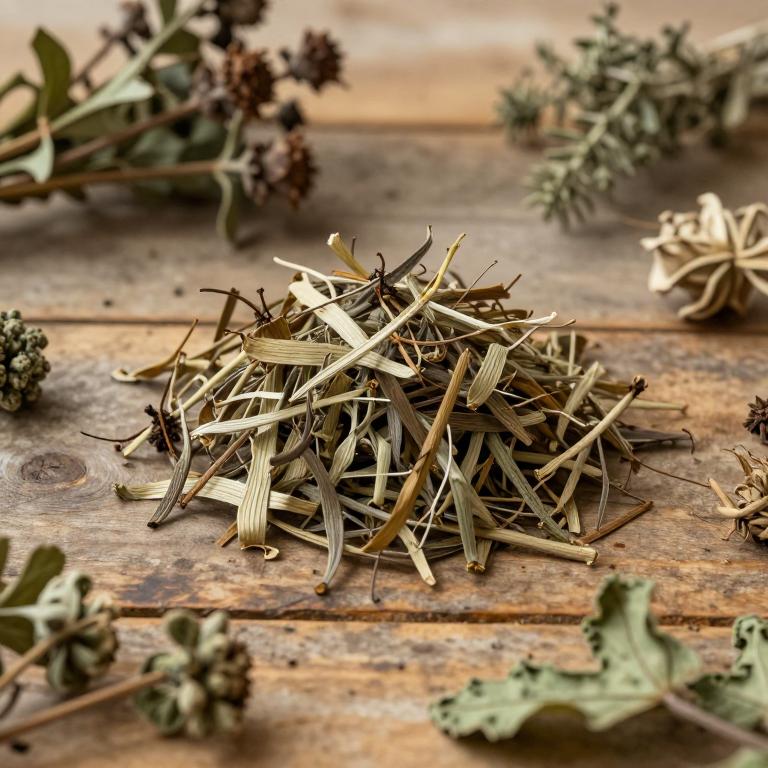
- Rhizome · Root
- Common names
- Forster'S Clematis
- Scientific synonyms
- Clematis Hookeriana Var. Lobulata · Clematis Hexapetala Subsp. Colensoi · 8 more
Names and Synonyms
Common Names
- Forster's Clematis
Scientific Names
Accepted name
Clematis forsteriSynonyms
- Clematis hookeriana var. lobulata
- Clematis hexapetala subsp. colensoi
- Clematis traversiana
- Clematis australis
- Clematis longifoliolata
- Clematis hexasepala
- Clematis hexasepala var. rutifolia
- Clematis australis var. rutifolia
- Clematis colensoi
- Clematis colensoi var. rutifolia
Sources: Wikidata, Catalogue of Life
Taxonomical Classification
This plant belongs to the kingdom Plantae and is classified under the phylum Streptophyta and class Equisetopsida. Within the subclass Magnoliidae and order Ranunculales, it is further categorized into the family Ranunculaceae. Finally, it is identified by the genus Clematis.
| Rank | Classification |
|---|---|
| Kingdom | Plantae |
| Phylum | Streptophyta |
| Class | Equisetopsida |
| Subclass | Magnoliidae |
| Order | Ranunculales |
| Family | Ranunculaceae |
| Genus | Clematis |
Sources: The World Checklist of Vascular Plants (WCVP)
Distribution
This plant exhibits a specific geographical distribution throughout the islands of New Zealand. It can be found growing across the northern regions of the country. Additionally, its presence extends into the southern parts of the nation. These findings confirm that the species inhabits both the North Island and the South Island. Consequently, the plant is widely spread across both major landmasses of New Zealand.
| Region | Area |
|---|---|
| New Zealand | New Zealand North |
| New Zealand | New Zealand South |
Sources: The World Checklist of Vascular Plants (WCVP)
Botanical Identification
Morphology
The morphology of Clematis forsteri is characterized by its growth habit as a perennial, climbing vine that exhibits a woody nature in its older stems, providing a structural foundation for its sprawling tendrils. The stems are typically slender and twining, transitioning from herbaceous qualities in new growth to a more robust, woody texture as the plant matures. The leaves are oppositely arranged and are generally trifoliate or occasionally unifoliate, featuring ovate to lanceolate leaflets with finely serrated margins and acute tips. The inflorescence consists of solitary or few-flowered cymes, bearing star-shaped flowers that are typically creamy white to pale yellowish. Each flower possesses four to five petaloid sepals that are spreading and delicate, surrounding a central cluster of numerous prominent stamens. The fruit develops into characteristic achenes, which are equipped with long, feathery, persistent styles that facilitate wind dispersal.
- Woodiness :
- woody
Sources: Global Inventory of Floras and Traits (GIFT)
Plant Parts
Clematis forsteri has 2 reported plant parts identified across 2 scientific publications and several other databases that are studied for medicinal purposes. The most consistently reported plant part include rhizome, root.
| Plant part | Supporting sources | Consensus |
|---|---|---|
| Rhizome | 1 supporting sources | ★☆☆☆☆ |
| Root | 1 supporting sources | ★☆☆☆☆ |
Rhizome
- Zhongguo Zhong yao za zhi = Zhongguo zhongyao zazhi = China journal of Chinese materia medica
Root
- Zhongguo Zhong yao za zhi = Zhongguo zhongyao zazhi = China journal of Chinese materia medica
Chemicals
Clematis forsteri has 9 reported phytochemicals identified across 2 scientific publications and several other databases. The most consistently reported chemicals include 5-hydroxumethyl-5H-furan-2-one, Anemonin, BETA-SITOSTEROL, Daucosterol, Friedelin.
| Chemical | Supporting sources | Consensus |
|---|---|---|
| 5-hydroxumethyl-5H-furan-2-one | 1 supporting sources | ★☆☆☆☆ |
| Anemonin | 1 supporting sources | ★☆☆☆☆ |
| BETA-SITOSTEROL | 1 supporting sources | ★☆☆☆☆ |
| Daucosterol | 1 supporting sources | ★☆☆☆☆ |
| Friedelin | 1 supporting sources | ★☆☆☆☆ |
| Isolariciresinol | 1 supporting sources | ★☆☆☆☆ |
| Vanillic acid | 1 supporting sources | ★☆☆☆☆ |
| n-Nonane | 1 supporting sources | ★☆☆☆☆ |
| palmitic acid | 1 supporting sources | ★☆☆☆☆ |
5-hydroxumethyl-5H-furan-2-one
- Zhongguo Zhong yao za zhi = Zhongguo zhongyao zazhi = China journal of Chinese materia medica
Anemonin
- Zhongguo Zhong yao za zhi = Zhongguo zhongyao zazhi = China journal of Chinese materia medica
BETA-SITOSTEROL
- Zhongguo Zhong yao za zhi = Zhongguo zhongyao zazhi = China journal of Chinese materia medica
Daucosterol
- Zhongguo Zhong yao za zhi = Zhongguo zhongyao zazhi = China journal of Chinese materia medica
Friedelin
- Zhongguo Zhong yao za zhi = Zhongguo zhongyao zazhi = China journal of Chinese materia medica
Isolariciresinol
- Zhongguo Zhong yao za zhi = Zhongguo zhongyao zazhi = China journal of Chinese materia medica
Vanillic acid
- Zhongguo Zhong yao za zhi = Zhongguo zhongyao zazhi = China journal of Chinese materia medica
n-Nonane
- Zhongguo Zhong yao za zhi = Zhongguo zhongyao zazhi = China journal of Chinese materia medica
palmitic acid
- Zhongguo Zhong yao za zhi = Zhongguo zhongyao zazhi = China journal of Chinese materia medica
Activities
Clematis forsteri has 1 reported activities identified across 2 scientific publications and several other databases. The most consistently reported activities include Analgesic.
| Activity | Supporting sources | Consensus |
|---|---|---|
| Analgesic | 1 supporting sources | ★☆☆☆☆ |
Analgesic
- Journal of ethnopharmacology
Preparations
Clematis forsteri has 2 reported preparations identified across 2 scientific publications and several other databases. The most consistently reported preparations include rhizomes, root.
| Preparation | Supporting sources | Consensus |
|---|---|---|
| Rhizomes | 1 supporting sources | ★☆☆☆☆ |
| Root | 1 supporting sources | ★☆☆☆☆ |
Rhizomes
- Zhongguo Zhong yao za zhi = Zhongguo zhongyao zazhi = China journal of Chinese materia medica
Root
- Zhongguo Zhong yao za zhi = Zhongguo zhongyao zazhi = China journal of Chinese materia medica