Cleistopholis patens
Cleistopholis patens · Accepted scientific name
Scientific literature: Very Sparse (5 studies) · ★☆☆☆☆
, scientifically known as Cleistopholis patens, is a rare medicinal plant native to the rainforests of West Africa. Renowned for its potent bioactive compounds, it is traditionally used to treat various ailments. Modern research continues to explore its significant pharmacological potential, particularly in developing new antimicrobial and anti-inflammatory therapies.
- Family
- Annonaceae
- Native range
- Africa
- Parts used
- Leaf
- Common names
- Not available
- Scientific synonyms
- Cleistopholis Patens Var. Klaineana · Cleistopholis Verschuerenii · 5 more
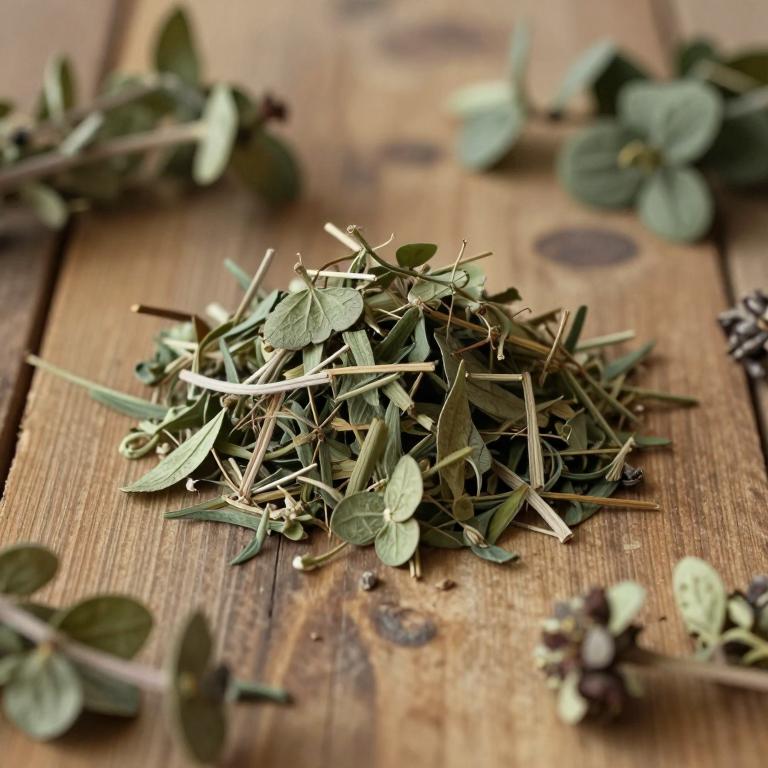
Names and Synonyms
Scientific Names
Accepted name
Cleistopholis patensSynonyms
- Cleistopholis patens var. klaineana
- Cleistopholis verschuerenii
- Oxymitra patens
- Cleistopholis pynaertii
- Cleistopholis klaineana
- Cleistopholis lucens
- Cleistopholis brevipetala
Sources: Wikidata, Catalogue of Life
Taxonomical Classification
This plant belongs to the kingdom Plantae and is classified under the phylum Streptophyta within the class Equisetopsida. As a member of the subclass Magnoliidae and the order Magnoliales, it falls under the family Annonaceae. Specifically, its taxonomic identity is defined by the genus Cleistopholis, within which the species Cleistopholis patens is situated.
| Rank | Classification |
|---|---|
| Kingdom | Plantae |
| Phylum | Streptophyta |
| Class | Equisetopsida |
| Subclass | Magnoliidae |
| Order | Magnoliales |
| Family | Annonaceae |
| Genus | Cleistopholis |
Sources: The World Checklist of Vascular Plants (WCVP)
Distribution
This plant, Cleistopholis patens, exhibits a specific distribution pattern across the West Tropical Africa region. Its presence is documented within the borders of Benin, where it thrives in local ecosystems. Furthermore, the species can be found growing in the territories of Burkina and Gambia. The geographical range also extends into the nation of Ghana. Finally, the distribution of this medicinal plant includes the coastal areas of Guinea-Bissau.
| Region | Area |
|---|---|
| West Tropical Africa | Benin |
| West Tropical Africa | Burkina |
| West Tropical Africa | Gambia |
| West Tropical Africa | Ghana |
| West Tropical Africa | Guinea-Bissau |
| West Tropical Africa | Guinea |
| West Tropical Africa | Ivory Coast |
| West Tropical Africa | Liberia |
| West Tropical Africa | Nigeria |
| West Tropical Africa | Senegal |
Sources: The World Checklist of Vascular Plants (WCVP)
Botanical Identification
Life history
The life history of Cleistopholis patens is characterized by its status as a perennial plant, allowing it to persist in its environment through multiple growing seasons. In terms of its structural growth strategy, the species is classified as a phanerophyte, specifically identified under both phanerophyte life form categories, which indicates that its perennating buds are elevated above the ground level on woody stems.
- Life form :
- phanerophyte
- Lifecycle :
- perennial
Morphology
The morphology of Cleistopholis patens is characterized by its significant stature and robust structure, functioning as a woody tree with a growth form categorized consistently as a tree. It reaches substantial dimensions in the forest canopy, exhibiting a mean plant height of approximately 19 m, with maximum heights recorded up to 27.43 m. As a terrestrial species, it does not exhibit aquatic or epiphytic tendencies, maintaining an independent existence rather than acting as a parasite. Although it possesses certain structural characteristics, its climbing habit is defined as self-supporting, distinguishing it from obligatory or facultative vines or lianas.
- Aquatic :
- terrestrial
- Climber :
- self-supporting
- Epiphyte :
- terrestrial
- Growth form :
- tree
- Parasite :
- independent
- Plant height max:
- 27.43233358 m
- Plant height mean:
- 19 m
- Woodiness :
- woody
Physiology
The physiology of Cleistopholis patens is characterized by a C3 photosynthetic pathway, which dictates its carbon fixation process and metabolic efficiency in its natural habitat. This plant does not possess the specialized mechanisms for nitrogen fixation, meaning it relies on the uptake of available nitrogenous compounds from the soil rather than engaging in symbiotic nitrogen-fixing relationships.
- Nitrogen fixer :
- no
- Photosynthetic pathway :
- C3
Reproduction
The reproduction of Cleistopholis patens is characterized by a highly flexible phenology and specific fruit morphology. The flowering period for this species is notably variable, with the ability to initiate flowering and conclude its blooming cycle at various points throughout the year, potentially spanning any month from January through December depending on environmental conditions. The plant produces fleshy fruits, which serve as the vessel for its reproductive development. Within these fruits, the seeds maintain a highly consistent size, possessing a seed volume that is uniform across the population, with a minimum, maximum, and mean volume all recorded at exactly 900 mm³.
- Flowering time :
- variable
- Fruit dryness :
- fleshy
- Seed volume max:
- 900 mm³
Sources: Global Inventory of Floras and Traits (GIFT)
Plant Parts
Cleistopholis patens has 1 reported plant parts identified across 1 scientific publications and several other databases that are studied for medicinal purposes. The most consistently reported plant part include leaf.
| Plant part | Supporting sources | Consensus |
|---|---|---|
| Leaf | 1 supporting sources | ★☆☆☆☆ |
Leaf
- African health sciences
Activities
Cleistopholis patens has 2 reported activities identified across 1 scientific publications and several other databases. The most consistently reported activities include Antibacterial, Cytotoxic.
| Activity | Supporting sources | Consensus |
|---|---|---|
| Antibacterial | 1 supporting sources | ★☆☆☆☆ |
| Cytotoxic | 1 supporting sources | ★☆☆☆☆ |
Antibacterial
- Journal of natural products
Cytotoxic
- Molecules (Basel, Switzerland)
Conditions
Cleistopholis patens has 2 reported investigations on conditions identified across 1 scientific publications and several other databases. The most consistently reported conditions include Buruli ulcer, skin diseases.
| Condition | Supporting sources | Consensus |
|---|---|---|
| Buruli ulcer | 1 supporting sources | ★☆☆☆☆ |
| Skin diseases | 1 supporting sources | ★☆☆☆☆ |
Buruli ulcer
- Molecules (Basel, Switzerland)
Skin diseases
- Medicines (Basel, Switzerland)
Preparations
Cleistopholis patens has 4 reported preparations identified across 1 scientific publications and several other databases. The most consistently reported preparations include Extracts, methanolic extract, methanolic leaf extract, stem bark extracts.
| Preparation | Supporting sources | Consensus |
|---|---|---|
| Extracts | 1 supporting sources | ★☆☆☆☆ |
| Methanolic extract | 1 supporting sources | ★☆☆☆☆ |
| Methanolic leaf extract | 1 supporting sources | ★☆☆☆☆ |
| Stem bark extracts | 1 supporting sources | ★☆☆☆☆ |
Extracts
- Journal of ethnopharmacology
Methanolic extract
- African health sciences
Methanolic leaf extract
- African health sciences
Stem bark extracts
- International journal of mycobacteriology