Oduvan
Cleistanthus collinus · Accepted scientific name
Scientific literature: Very Sparse (11 studies) · ★☆☆☆☆
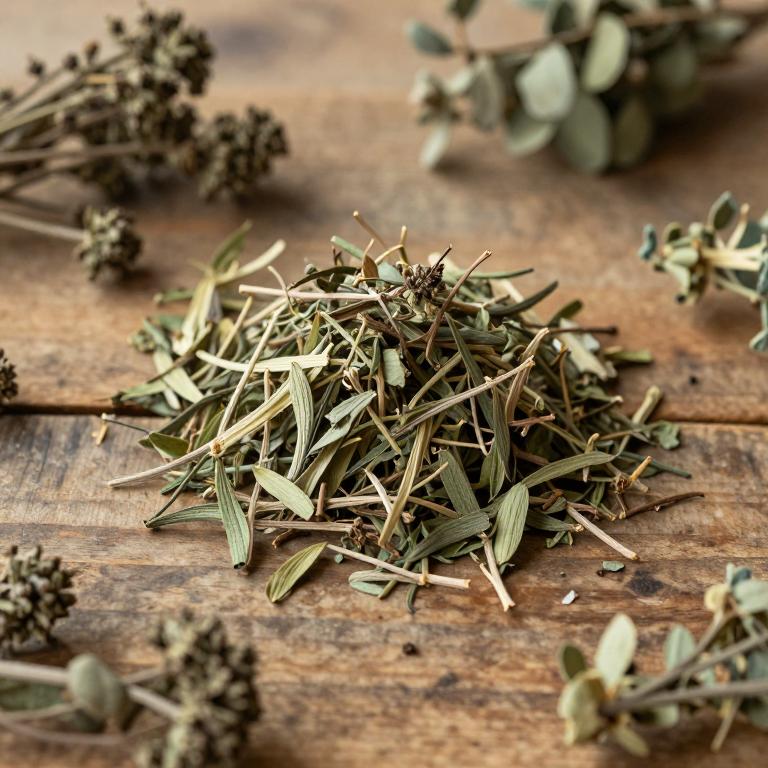
Oduvan, scientifically known as Cleistanthus collinus, is a versatile medicinal herb widely used in traditional Ayurvedic practices. Often found in tropical regions, this plant is celebrated for its potent anti-inflammatory, antioxidant, and antimicrobial properties. It serves as a natural remedy for various ailments, including skin disorders and digestive issues.
- Family
- Phyllanthaceae
- Native range
- Asia-Tropical
- Parts used
- Leaf
- Common names
- Toxic Gooseberry
- Scientific synonyms
- Clutia Collina · Andrachne Orbiculata · 6 more
Names and Synonyms
Common Names
- Toxic Gooseberry
Scientific Names
Accepted name
Cleistanthus collinusSynonyms
- Clutia collina
- Andrachne orbiculata
- Bridelia collina
- Amanoa collina
- Lebidieropsis collina
- Emblica palasis
- Lebidieropsis orbiculata
- Lebidieropsis orbiculata var. lambertii
Regional and Traditional Names
Spanish:
- planta del suicida
Sources: Wikidata, Catalogue of Life
Taxonomical Classification
This plant, Cleistanthus collinus, belongs to the kingdom Plantae and is classified under the phylum Streptophyta. Within the class Equisetopsida and subclass Magnoliidae, it is organized under the order Malpighiales. Finally, it is situated in the family Phyllanthaceae and the genus Cleistanthus.
| Rank | Classification |
|---|---|
| Kingdom | Plantae |
| Phylum | Streptophyta |
| Class | Equisetopsida |
| Subclass | Magnoliidae |
| Order | Malpighiales |
| Family | Phyllanthaceae |
| Genus | Cleistanthus |
Sources: The World Checklist of Vascular Plants (WCVP)
Distribution
This plant exhibits a widespread presence across the diverse landscapes of the Indian Subcontinent. It is commonly found growing within the borders of India, where it thrives in various local habitats. The species also extends its range into Pakistan, contributing to the regional biodiversity of the area. Furthermore, its distribution includes the lush environments of Bangladesh. Finally, the geographical reach of this medicinal species is completed by its occurrence in Sri Lanka.
| Region | Area |
|---|---|
| Indian Subcontinent | Bangladesh |
| Indian Subcontinent | India |
| Indian Subcontinent | Pakistan |
| Indian Subcontinent | Sri Lanka |
Sources: The World Checklist of Vascular Plants (WCVP)
Botanical Identification
Life history
The life history of Cleistanthus collinus is characterized by its distinct growth strategies and structural classifications, primarily functioning as a phanerophyte, which indicates that its permanent shoots are elevated above the ground level. Within this framework, the plant also exhibits characteristics of a nanophanerophyte, meaning its reproductive and vegetative shoots remain relatively low to the ground, typically staying below one meter in height. This combination of life forms allows the species to navigate its specific ecological niche by maintaining elevated bud structures while staying compact, facilitating survival through seasonal variations in its habitat.
- Life form :
- nanophanerophyte
- Life form :
- phanerophyte
Morphology
The morphology of Cleistanthes collinus is characterized by its growth habit as a self-supporting climber, utilizing its structure to ascend without being an obligate parasite. It functions as an independent organism rather than a parasitic one, and it maintains a terrestrial existence rather than growing as an epiphyte. In terms of its structural composition, the plant exhibits woody characteristics, providing the necessary firmness for its climbing lifestyle.
- Climber :
- self-supporting
- Epiphyte :
- terrestrial
- Parasite :
- independent
- Woodiness :
- woody
Sources: Global Inventory of Floras and Traits (GIFT)
Plant Parts
Cleistanthus collinus has 1 reported plant parts identified across 1 scientific publications and several other databases that are studied for medicinal purposes. The most consistently reported plant part include leaf.
| Plant part | Supporting sources | Consensus |
|---|---|---|
| Leaf | 1 supporting sources | ★☆☆☆☆ |
Leaf
- Journal de mycologie medicale
Activities
Cleistanthus collinus has 4 reported activities identified across 1 scientific publications and several other databases. The most consistently reported activities include Antibacterial, Antioxidant, Antitumor, Cardiotoxic.
| Activity | Supporting sources | Consensus |
|---|---|---|
| Antibacterial | 1 supporting sources | ★☆☆☆☆ |
| Antioxidant | 1 supporting sources | ★☆☆☆☆ |
| Antitumor | 1 supporting sources | ★☆☆☆☆ |
| Cardiotoxic | 1 supporting sources | ★☆☆☆☆ |
Antibacterial
- Natural product research
Antioxidant
- Natural product research
Antitumor
- Natural product research
Cardiotoxic
- Tropical doctor
Conditions
Cleistanthus collinus has 5 reported investigations on conditions identified across 1 scientific publications and several other databases. The most consistently reported conditions include Gram-negative bacteria, Gram-positive bacteria, Klebsiella pneumoniae, Pseudomonas aeruginosa, dermatophytes.
| Condition | Supporting sources | Consensus |
|---|---|---|
| Gram-negative bacteria | 2 supporting sources | ★☆☆☆☆ |
| Gram-positive bacteria | 1 supporting sources | ★☆☆☆☆ |
| Klebsiella pneumoniae | 1 supporting sources | ★☆☆☆☆ |
| Pseudomonas aeruginosa | 1 supporting sources | ★☆☆☆☆ |
| Dermatophytes | 1 supporting sources | ★☆☆☆☆ |
Gram-negative bacteria
- Natural product research
- Molecules (Basel, Switzerland)
Gram-positive bacteria
- Molecules (Basel, Switzerland)
Klebsiella pneumoniae
- Natural product research
Pseudomonas aeruginosa
- Natural product research
Dermatophytes
- Journal de mycologie medicale
Preparations
Cleistanthus collinus has 1 reported preparations identified across 1 scientific publications and several other databases. The most consistently reported preparations include Different solvent extracts of leaves.
| Preparation | Supporting sources | Consensus |
|---|---|---|
| Different solvent extracts of leaves | 1 supporting sources | ★☆☆☆☆ |
Different solvent extracts of leaves
- Journal de mycologie medicale