Chamaemelum mixtum
Cladanthus mixtus · Accepted scientific name
Scientific literature: Very Sparse (26 studies) · ★☆☆☆☆
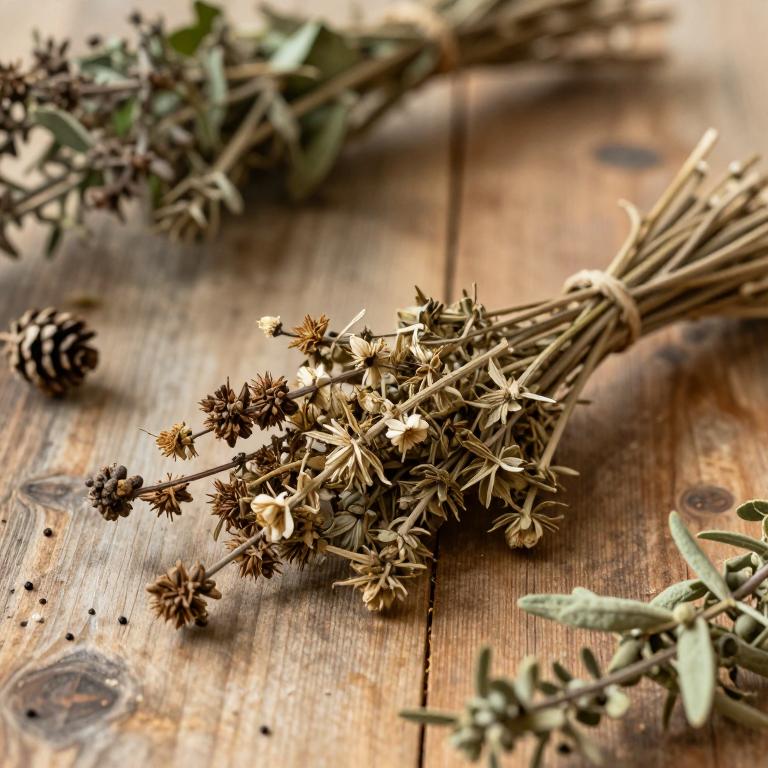
Chamaemelum mixtum, scientifically known as Cladanthus mixtus, is a versatile medicinal plant revered for its therapeutic properties. Renowned for its soothing aromatic qualities, it is frequently utilized in traditional herbal medicine to alleviate digestive discomfort, reduce inflammation, and promote relaxation, offering a natural approach to holistic wellness and healing.
Names and Synonyms
Common Names
- Moroccan chamomile
- branched chamomile
- weedy dog-fennel
Scientific Names
Accepted name
Cladanthus mixtusSynonyms
- Maruta mixta
- Ormenis mixta
- Chamaemelum mixtum var. aureum
- Chamaemelum mixtum
- Chamomilla mixta
- Chamaemelum mixtum var. glabrescens
- Ormenis coronopifolia
- Ormenis mixta var. glabrescens
- Ormenis praecox
- Chamaemelum pinnatifidum
- Ormenis mixta subsp. multicaulis
- Ormenis mixta subsp. aurea
- Ormenis multicaulis
- Hiorthia aurea
- Cladanthus mixtus var. aureus
- Anthemis hispanica
- Anthemis mixta
- Anthemis praecox
Regional and Traditional Names
German:
- Falsche Römerkamille
French:
- camomille mixte
- anthémis panachée
Sources: Wikidata, Catalogue of Life
Taxonomical Classification
This plant belongs to the kingdom Plantae and the phylum Streptophyta, falling under the class Equisetopsida and subclass Magnoliidae. Within the order Asterales, it is classified under the family Asteraceae. Finally, its specific taxonomic identity is defined by the genus Cladanthus.
| Rank | Classification |
|---|---|
| Kingdom | Plantae |
| Phylum | Streptophyta |
| Class | Equisetopsida |
| Subclass | Magnoliidae |
| Order | Asterales |
| Family | Asteraceae |
| Genus | Cladanthus |
Sources: The World Checklist of Vascular Plants (WCVP)
Distribution
This plant exhibits a specific distribution pattern across various regions of the European continent. In Northern Europe, its presence can be recorded within Great Britain and Ireland. Moving toward Middle Europe, the species is also found inhabiting the territory of Belgium. Its range extends further through Germany, where it maintains a local population. Finally, the geographical footprint of this medicinal plant reaches into Poland.
| Region | Area |
|---|---|
| Northern Europe | Great Britain |
| Northern Europe | Ireland |
| Middle Europe | Belgium |
| Middle Europe | Germany |
| Middle Europe | Poland |
| Middle Europe | Switzerland |
| Southwestern Europe | Baleares |
| Southwestern Europe | Corse |
| Southwestern Europe | France |
| Southwestern Europe | Portugal |
Sources: The World Checklist of Vascular Plants (WCVP)
Botanical Identification
Ecology
The ecology of Cladanthus mixtus is characterized by its distribution across a wide altitudinal gradient, spanning from sea level up to a maximum elevation of 800 m AMSL. This broad elevational range, from 0 to 800 m AMSL, suggests that the species is highly adaptable to varying environmental conditions and diverse microclimates found within lowland and subtropical zones. Such a distribution pattern typically indicates an ability to thrive in a variety of soil types and moisture regimes, allowing it to occupy diverse ecological niches throughout its vertical range.
- Elevational range max:
- 800 m AMSL
- Elevational range min:
- 0 m AMSL
Life history
The life history of Cladanthus mixtus is characterized by its classification as an annual plant, completing its entire developmental cycle from germination to seed production within a single growing season. In terms of its structural growth strategy and survival mechanism, the species functions as a therophyte, meaning it avoids unfavorable environmental conditions by existing solely as seeds during dormant periods, only emerging as a fully developed plant when seasonal conditions become favorable. This life form allows the plant to rapidly exploit available resources and complete its reproductive phase before the onset of seasonal stress, ensuring the continuity of the species through seed dispersal.
- Life form :
- therophyte
- Lifecycle :
- annual
Morphology
The morphology of Cladanthus mixtus is characterized by its growth form as a non-woody herb and forb, typically maintaining a relatively low profile with a plant height ranging from a minimum of 0.2 m to a maximum of 0.6 m. The plant exhibits an ascending shoot orientation and functions as a self-supporting climber, rather than an obligatory liana or vine. In terms of its ecological positioning, it is a terrestrial organism that operates as an independent species, meaning it is neither a parasite nor an epiphyte. Its physical structure is defined by its non-woody nature, facilitating its development within its specific habitat.
- Aquatic :
- terrestrial
- Climber :
- self-supporting
- Epiphyte :
- terrestrial
- Growth form :
- herb
- Growth form :
- forb
- Parasite :
- independent
- Plant height max:
- 0.6 m
- Plant height min:
- 0.2 m
- Shoot orientation :
- ascending
- Woodiness :
- non-woody
Physiology
The physiology of Cladanthus mixtus is characterized by a C3 photosynthetic pathway, a mechanism that facilitates carbon fixation through the direct carboxylation of ribulose-1,5-bisphosphate by the enzyme RuBisCO within the mesophyll cells. This metabolic strategy governs the plant's energy production and carbon assimilation processes, influencing its gas exchange patterns and water-use efficiency. Complementing its metabolic profile, the plant exhibits a distinct morphological physiology reflected in its pinnatisect leaf form, where the leaf blade is deeply lobed or divided into narrow segments. This specialized leaf structure plays a critical role in regulating the plant's microclimate, potentially enhancing heat dissipation and optimizing light interception within its specific ecological niche.
- Leaf form :
- pinnatisect
- Photosynthetic pathway :
- C3
Reproduction
The reproduction of Cladanthus mixtus is characterized by a flowering period that typically begins in March and extends through September, though the timing can be variable throughout the year. The plant produces white flowers that measure between 1.5 cm and 2.5 cm in width, with a maximum flower length of 1 cm. Following pollination, the plant develops fruit in the form of an achene. These fruits are quite small, with a length ranging from a minimum of 0.08 cm to a maximum of 0.16 cm. The resulting seeds are minute, possessing a mean seed mass of approximately 8e-05 g. Furthermore, the fruit is classified as indehiscent, meaning it does not split open at maturity to release its seeds.
- Dehiscence :
- indehiscent
- Flower colour :
- white
- Flower length max:
- 1 cm
- Flower width max:
- 2.5 cm
- Flower width min:
- 1.5 cm
- Flowering time :
- Mar
- Flowering time :
- Sep
- Fruit length max:
- 0.16 cm
- Fruit length min:
- 0.08 cm
- Fruit type :
- achene
- Seed mass mean:
- 8e-05 g
Sources: Global Inventory of Floras and Traits (GIFT)
Plant Parts
Cladanthus mixtus has 4 reported plant parts identified across 5 scientific publications and several other databases that are studied for medicinal purposes. The most consistently reported plant part include root, flower, leaf, stem.
| Plant part | Supporting sources | Consensus |
|---|---|---|
| Root | 2 supporting sources | ★☆☆☆☆ |
| Flower | 1 supporting sources | ★☆☆☆☆ |
| Leaf | 1 supporting sources | ★☆☆☆☆ |
| Stem | 1 supporting sources | ★☆☆☆☆ |
Root
- Molecules (Basel, Switzerland)
- Journal of natural products
Flower
- Molecules (Basel, Switzerland)
Leaf
- Molecules (Basel, Switzerland)
Stem
- Molecules (Basel, Switzerland)
Chemicals
Cladanthus mixtus has 8 reported phytochemicals identified across 5 scientific publications and several other databases. The most consistently reported chemicals include (E)-2-Methylbut-2-en-1-yl methacrylate, 3'-Hydroxycorfin, Caryophyllene oxide, Fatty acids, Flavonoid.
| Chemical | Supporting sources | Consensus |
|---|---|---|
| (E)-2-Methylbut-2-en-1-yl methacrylate | 1 supporting sources | ★☆☆☆☆ |
| 3'-Hydroxycorfin | 1 supporting sources | ★☆☆☆☆ |
| Caryophyllene oxide | 1 supporting sources | ★☆☆☆☆ |
| Fatty acids | 1 supporting sources | ★☆☆☆☆ |
| Flavonoid | 1 supporting sources | ★☆☆☆☆ |
| Humulene | 1 supporting sources | ★☆☆☆☆ |
| Polyphenol | 1 supporting sources | ★☆☆☆☆ |
| corfin | 1 supporting sources | ★☆☆☆☆ |
(E)-2-Methylbut-2-en-1-yl methacrylate
- Chemistry & biodiversity
3'-Hydroxycorfin
- Journal of natural products
Caryophyllene oxide
- Chemistry & biodiversity
Fatty acids
- Molecules (Basel, Switzerland)
Flavonoid
- Molecules (Basel, Switzerland)
Humulene
- Chemistry & biodiversity
Polyphenol
- Molecules (Basel, Switzerland)
corfin
- Journal of natural products
Activities
Cladanthus mixtus has 3 reported activities identified across 5 scientific publications and several other databases. The most consistently reported activities include Antioxidant, Antibacterial, Antifungal.
| Activity | Supporting sources | Consensus |
|---|---|---|
| Antioxidant | 2 supporting sources | ★☆☆☆☆ |
| Antibacterial | 1 supporting sources | ★☆☆☆☆ |
| Antifungal | 1 supporting sources | ★☆☆☆☆ |
Antioxidant
- Environmental science and pollution research international
- Chemistry & biodiversity
Antibacterial
- Environmental science and pollution research international
Antifungal
- Journal of natural products
Conditions
Cladanthus mixtus has 5 reported investigations on conditions identified across 5 scientific publications and several other databases. The most consistently reported conditions include Aspergillus fumigatus, Candida albicans, Escherichia coli, Staphylococcus aureus, antioxidant.
| Condition | Supporting sources | Consensus |
|---|---|---|
| Aspergillus fumigatus | 1 supporting sources | ★☆☆☆☆ |
| Candida albicans | 1 supporting sources | ★☆☆☆☆ |
| Escherichia coli | 1 supporting sources | ★☆☆☆☆ |
| Staphylococcus aureus | 1 supporting sources | ★☆☆☆☆ |
| Antioxidant | 1 supporting sources | ★☆☆☆☆ |
Aspergillus fumigatus
- Molecules (Basel, Switzerland)
Candida albicans
- Molecules (Basel, Switzerland)
Escherichia coli
- Molecules (Basel, Switzerland)
Staphylococcus aureus
- Molecules (Basel, Switzerland)
Antioxidant
- Chemistry & biodiversity
Preparations
Cladanthus mixtus has 7 reported preparations identified across 5 scientific publications and several other databases. The most consistently reported preparations include Root and flower methanolic extracts, essential oils, flower and leaf extracts, flower extracts, leaf extract.
| Preparation | Supporting sources | Consensus |
|---|---|---|
| Root and flower methanolic extracts | 1 supporting sources | ★☆☆☆☆ |
| Essential oils | 1 supporting sources | ★☆☆☆☆ |
| Flower and leaf extracts | 1 supporting sources | ★☆☆☆☆ |
| Flower extracts | 1 supporting sources | ★☆☆☆☆ |
| Leaf extract | 1 supporting sources | ★☆☆☆☆ |
| Lipophilic extracts of aerial as well as underground organs | 1 supporting sources | ★☆☆☆☆ |
| Methanolic extracts | 1 supporting sources | ★☆☆☆☆ |
Root and flower methanolic extracts
- Molecules (Basel, Switzerland)
Essential oils
- Environmental science and pollution research international
Flower and leaf extracts
- Molecules (Basel, Switzerland)
Flower extracts
- Molecules (Basel, Switzerland)
Leaf extract
- Molecules (Basel, Switzerland)
Lipophilic extracts of aerial as well as underground organs
- Journal of natural products
Methanolic extracts
- Molecules (Basel, Switzerland)