sage-leaved rock-rose
Cistus salviifolius · Accepted scientific name
Scientific literature: Very Sparse (10 studies) · ★☆☆☆☆
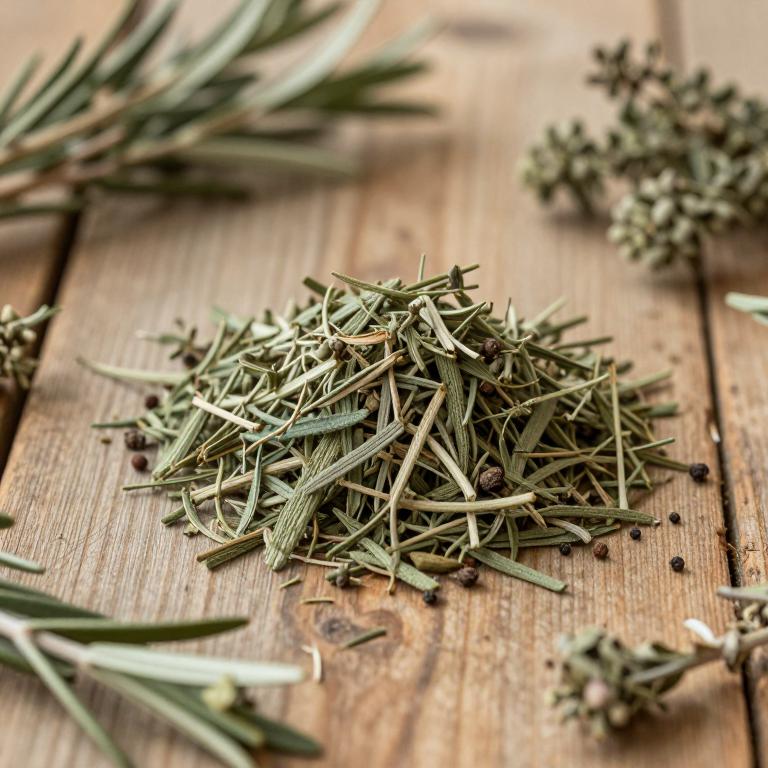
Sage-leaved rock-rose, scientifically known as Cistus salvaiifolius, is a resilient Mediterranean shrub prized for its aromatic foliage and delicate blossoms. Renowned in traditional herbalism, this plant offers potent antioxidant and anti-inflammatory properties, making it a valuable botanical resource for supporting skin health and holistic wellness through natural remedies.
Names and Synonyms
Common Names
- Sage-leaved Rock-rose
- sage-leaf rock-rose
- Salvia Cistus
Scientific Names
Accepted name
Cistus salviifoliusSynonyms
- Cistus salviifolius var. macrocalyx
- Cistus salviifolius var. biflorus
- Cistus salviifolius proles arrigens
- Cistus salviifolius proles elegans
- Cistus salviifolius proles apricus
- Cistus salviifolius proles platyphyllus
- Cistus salviifolius microphyllus
- Cistus salviifolius var. undulatifolius
- Cistus salviifolius var. corbariensis
- Cistus salviifolius var. flavescens
- Cistus salviifolius var. pandoanus
- Cistus salviifolius var. fissipetalus
- Cistus arrigens
- Cistus apricus
- Cistus elegans
- Cistus fruticans
- Cistus velutinus
- Cistus microphyllus
- Cistus platyphyllus
- Cistus rhodanensis
- Cistus sideritis
- Ledonia platyphylla
- Ledonia arrigens
- Ledonia elegans
- Ledonia humilis
- Ledonia microphylla
- Ledonia fruticans
- Ledonia aprica
- Ledonia peduncularis
- Ledonia rhodanensis
- Ledonia salviifolia
- Ledonia velutina
- Cistus salviifolius var. brevipedunculatus
- Cistus salviifolius var. rierae
- Cistus salviifolius var. cymosus
- Cistus salviifolius var. schizocalyx
- Cistus salviifolius f. biflorus
- Cistus salviifolius var. occidentalis
- Cistus salviifolius var. grandifolius
- Cistus salviifolius f. brevipedunculatus
- Cistus salviifolius var. longipedunculatus
- Cistus salviifolius f. grandifolius
- Cistus salviifolius f. cymosus
- Cistus salviifolius var. vulgaris
- Cistus salviifolius f. longipedunculatus
- Ledonia peduncularis var. salviifolia
- Cistus salviifolius f. macrocalyx
- Cistus salviifolius proles fruticans
- Cistus salviifolius proles rhodanensis
- Cistus salviifolius proles velutinus
- Cistus salviifolius var. elegans
Regional and Traditional Names
Spanish:
- Jaguarzo morisco
- Jaguarzo morisco
German:
- Salbeiblättrige Zistrose
- salbeiblättrige Zistrose
- Salbeiblaettrige Zistrose
French:
- Ciste à feuilles de sauge
- Ciste a feuilles de sauge
- Ciste à feuilles de sauge
Sources: Wikidata, Catalogue of Life
Taxonomical Classification
This plant belongs to the kingdom Plantae and is classified under the phylum Streptophyta and the class Equisetopsida. Within the subclass Magnoliidae, it is categorized under the order Malvales and the family Cistaceae. Ultimately, its specific taxonomic identification is placed within the genus Cistus.
| Rank | Classification |
|---|---|
| Kingdom | Plantae |
| Phylum | Streptophyta |
| Class | Equisetopsida |
| Subclass | Magnoliidae |
| Order | Malvales |
| Family | Cistaceae |
| Genus | Cistus |
Sources: The World Checklist of Vascular Plants (WCVP)
Distribution
This plant exhibits a specific geographical distribution across several regions of Europe. In Middle Europe, it can be found growing within the country of Switzerland. Its presence extends into Southwestern Europe, where it inhabits the Baleares islands. Furthermore, the species is distributed throughout the island of Corse and across the mainland of France. Finally, the plant's range reaches the southwestern coastal areas of Portugal.
| Region | Area |
|---|---|
| Middle Europe | Switzerland |
| Southwestern Europe | Baleares |
| Southwestern Europe | Corse |
| Southwestern Europe | France |
| Southwestern Europe | Portugal |
| Southwestern Europe | Sardegna |
| Southwestern Europe | Spain |
| Southeastern Europe | Albania |
| Southeastern Europe | Bulgaria |
| Southeastern Europe | Greece |
Sources: The World Checklist of Vascular Plants (WCVP)
Botanical Identification
Ecology
The ecology of Cistus salviifolius is characterized by its preference for diverse landscape types, ranging from forest edges to open meadows. It is particularly well-adapted to environmental conditions found in dry, mountainous, and stony places, where it can thrive in nutrient-poor or rocky substrates. This species typically occupies an elevational range with a mean altitude of approximately 471 m AMSL, positioning it within specific montane and sub-montane ecological niches.
- Elevational range mean:
- 471 m AMSL
- Habitat :
- forest, meadows: dry, mountains, stony places
Life history
The life history of Cistus salviifolius is characterized by a perennial lifecycle, allowing the plant to persist through multiple growing seasons. It exhibits a complex morphological strategy, functioning as both a phanerophyte and a nanophanerophyte depending on its growth stage and environmental conditions. Furthermore, the plant maintains an evergreen deciduousness, ensuring that its foliage remains functional throughout various seasonal shifts.
- Deciduousness :
- evergreen
- Life form :
- nanophanerophyte
- Life form :
- phanerophyte
- Lifecycle :
- perennial
Morphology
The morphology of Cistus salviifolius is characterized by a shrubby growth form, functioning as a self-supporting woody plant. It is classified as a terrestrial species, existing independently without parasitic or epiphytic tendencies. The plant maintains a relatively compact stature, with a maximum height reaching approximately 1 meter. As a woody shrub, it exhibits a sturdy, self-supporting structure rather than behaving as a climber, liana, or vine.
- Aquatic :
- terrestrial
- Climber :
- self-supporting
- Epiphyte :
- terrestrial
- Growth form :
- shrub
- Parasite :
- independent
- Plant height max:
- 1 m
- Woodiness :
- woody
Physiology
The physiology of Cistus salviifolius is characterized by a metabolic framework centered on the C3 photosynthetic pathway, which dictates its carbon fixation processes and gas exchange patterns. As a C3 plant, it utilizes the enzyme Ribulose-1,5-bisphosphate carboxylase/oxygenase (RuBisCO) to catalyze the initial fixation of atmospheric carbon dioxide into a three-carbon molecule, typically 3-phosphoglycerate. This metabolic route implies that the plant's stomatal conductance and photosynthetic efficiency are closely linked to environmental moisture availability and temperature, as the lack of specialized concentrating mechanisms (found in C4 or CAM plants) makes the enzyme more susceptible to photorespiration under high-heat or water-stressed conditions. Consequently, its physiological adaptations for survival in Mediterranean-type ecosystems often involve balancing the water loss incurred through transpiration with the carbon gain required for biomass production through this fundamental C3 cycle.
- Photosynthetic pathway :
- C3
Reproduction
The reproduction of Cistus salviifolius is characterized by a specific flowering phenology and a specialized seed dispersal mechanism. The plant enters its flowering period in May and concludes its blooming cycle in June. The reproductive output consists of dry fruits that contain very small seeds, with a mean seed mass of approximately 0.001071111 g. Individual seed weights vary within a narrow range, with a minimum mass of 0.00074 g and a maximum mass of 0.0012 g. Regarding the movement of its progeny, the plant utilizes an autochorous dispersal syndrome, meaning the seeds are dispersed by their own mechanism rather than relying on external agents like wind or animals.
- Dispersal syndrome :
- autochorous
- Flowering time :
- May
- Flowering time :
- Jun
- Fruit dryness :
- dry
- Seed mass max:
- 0.0012 g
- Seed mass mean:
- 0.001071111 g
- Seed mass min:
- 0.00074 g
Sources: Global Inventory of Floras and Traits (GIFT)
Chemicals
Cistus salviifolius has 3 reported phytochemicals identified across 0 scientific publications and several other databases. The most consistently reported chemicals include Flavonoids, Tannins, polyphenols.
| Chemical | Supporting sources | Consensus |
|---|---|---|
| Flavonoids | 1 supporting sources | ★☆☆☆☆ |
| Tannins | 1 supporting sources | ★☆☆☆☆ |
| polyphenols | 1 supporting sources | ★☆☆☆☆ |
Flavonoids
- Molecules (Basel, Switzerland)
Tannins
- Molecules (Basel, Switzerland)
polyphenols
- Molecules (Basel, Switzerland)
Activities
Cistus salviifolius has 2 reported activities identified across 0 scientific publications and several other databases. The most consistently reported activities include Antimicrobial, Antioxidant.
| Activity | Supporting sources | Consensus |
|---|---|---|
| Antimicrobial | 2 supporting sources | ★☆☆☆☆ |
| Antioxidant | 1 supporting sources | ★☆☆☆☆ |
Antimicrobial
- Turkish journal of pharmaceutical sciences
- Molecules (Basel, Switzerland)
Antioxidant
- Molecules (Basel, Switzerland)
Conditions
Cistus salviifolius has 4 reported investigations on conditions identified across 0 scientific publications and several other databases. The most consistently reported conditions include Acne vulgaris, Candida albicans, Dermatitis, hyperglycemia.
| Condition | Supporting sources | Consensus |
|---|---|---|
| Acne vulgaris | 1 supporting sources | ★☆☆☆☆ |
| Candida albicans | 1 supporting sources | ★☆☆☆☆ |
| Dermatitis | 1 supporting sources | ★☆☆☆☆ |
| Hyperglycemia | 1 supporting sources | ★☆☆☆☆ |
Acne vulgaris
- Molecules (Basel, Switzerland)
Candida albicans
- Turkish journal of pharmaceutical sciences
Dermatitis
- International journal of microbiology
Hyperglycemia
- BioMed research international
Preparations
Cistus salviifolius has 2 reported preparations identified across 0 scientific publications and several other databases. The most consistently reported preparations include aqueous extracts, methanolic extracts.
| Preparation | Supporting sources | Consensus |
|---|---|---|
| Aqueous extracts | 1 supporting sources | ★☆☆☆☆ |
| Methanolic extracts | 1 supporting sources | ★☆☆☆☆ |
Aqueous extracts
- International journal of microbiology
Methanolic extracts
- International journal of microbiology