Laurel-Leaved Cistus
Cistus laurifolius · Accepted scientific name
Scientific literature: Very Sparse (39 studies) · ★☆☆☆☆
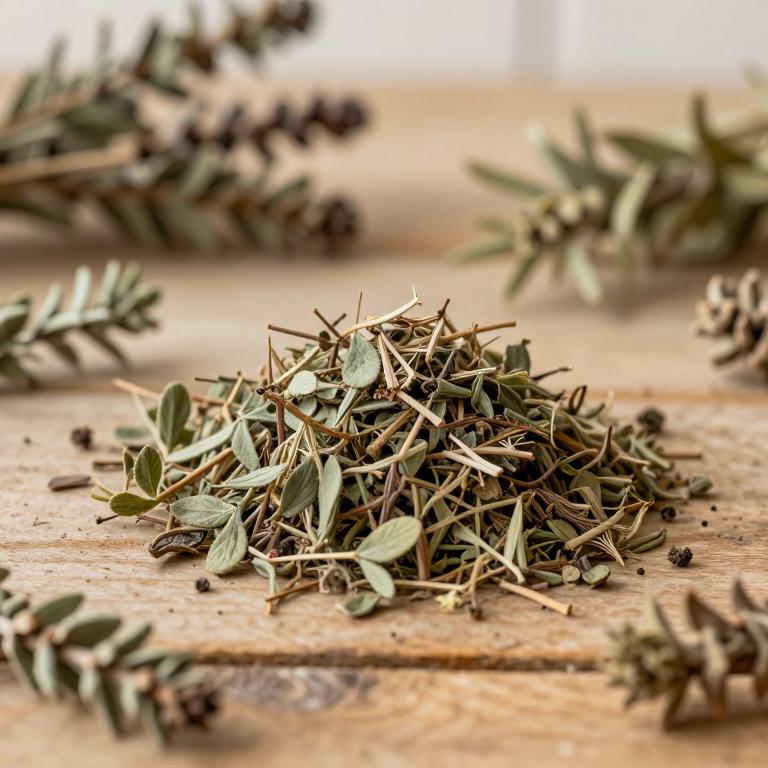
Laurel-Leaved Cistus, scientifically known as Cistus laurifolius, is a remarkable medicinal shrub native to the Mediterranean. Renowned for its aromatic, laurel-like foliage, this plant has been utilized in traditional healing for centuries. It offers potent antioxidant and anti-inflammatory properties, making it a valuable subject in contemporary ethnobotanical studies.
- Family
- Cistaceae
- Native range
- Europe
- Parts used
- Leaf
- Common names
- Laurel-Leaved Cistus · Laurel-Leaf Cistus
- Scientific synonyms
- Not available
Names and Synonyms
Common Names
- Laurel-Leaved Cistus
- laurel-leaf cistus
Scientific Names
Accepted name
Cistus laurifoliusRegional and Traditional Names
Spanish:
- Bordiol
- Churrunera
- Jara borde
- Jara cepa
- Jaracepas
- Jara de estepa
- Jara de hojas de laurel
- Jara laurifolia
- Cistus laurifolius var. lanceolatus
- Cistus laurifolius var. laurifolius
- Cistus laurifolius var. ovatus
- Ladanium laurifolius
- Cistus laurifolius var lanceolatus
- Cistus laurifolius var laurifolius
- Cistus laurifolius var ovatus
- Estepa
- Jara estepa
German:
- lorbeerblättrige Zistrose
French:
- Ciste à feuilles de laurier
- Ciste à feuilles de laurier
Sources: Wikidata, Catalogue of Life
Taxonomical Classification
This plant, known scientifically as Cistus laurifolius, belongs to the kingdom Plantae and the phylum Streptophyta. Within the class Equisetopsida and subclass Magnoliidae, it is classified under the order Malvales. Finally, it is a member of the family Cistaceae and falls under the genus Cistus.
| Rank | Classification |
|---|---|
| Kingdom | Plantae |
| Phylum | Streptophyta |
| Class | Equisetopsida |
| Subclass | Magnoliidae |
| Order | Malvales |
| Family | Cistaceae |
| Genus | Cistus |
Sources: The World Checklist of Vascular Plants (WCVP)
Distribution
This plant is primarily distributed across various regions within Southwestern Europe. Specifically, it can be found growing in the coastal and inland areas of France and Portugal. Its presence is also well-documented throughout the Iberian Peninsula, including Spain. Additionally, this species is located on the island of Corse. Finally, its geographical range extends into Southeastern Europe, where it inhabits parts of Greece.
| Region | Area |
|---|---|
| Southwestern Europe | Corse |
| Southwestern Europe | France |
| Southwestern Europe | Portugal |
| Southwestern Europe | Spain |
| Southeastern Europe | Greece |
| Southeastern Europe | Italy |
| Southeastern Europe | Türkiye-in-Europe |
| Northern Africa | Morocco |
| Western Asia | Türkiye |
Sources: The World Checklist of Vascular Plants (WCVP)
Botanical Identification
Ecology
The ecology of Cistus laurifolius is characterized by its presence in lowland environments, where it adapts to specific topographical and altitudinal conditions. Within its native range, the species is found at a mean elevation of 1592 m AMSL, indicating an ability to thrive in mid-to-high altitude zones despite its preference for lowland habitats. This altitudinal positioning suggests the plant is integrated into specific ecological niches that balance the temperature and moisture levels typical of these elevations.
- Elevational range mean:
- 1592 m AMSL
- Habitat :
- Lowland
Life history
The life history of Cistus laurifolius is characterized by its status as a perennial species, allowing it to maintain presence in its ecosystem over multiple growing seasons. In terms of its structural growth habit, it is classified as a chamaephyte, a life form where the photosynthetic buds are located close to the soil surface, often protected by leaf litter or upper soil layers. This combination of a long-lived perennial lifecycle and a chamaephyte growth strategy enables the plant to persist through seasonal fluctuations and recover effectively from environmental stressors.
- Life form :
- chamaephyte
- Lifecycle :
- perennial
Morphology
The morphology of Cistus laurifolius is characterized by its growth form as a woody shrub, which can reach a maximum plant height of approximately 2 meters. This species exhibits a versatile ecological adaptation, capable of thriving in habitats ranging from terrestrial environments to semiaquatic or aquatic settings. Its structure is defined by a woody consistency, providing a robust framework for its shrubby habit.
- Aquatic :
- terrestrial
- Growth form :
- shrub
- Plant height max:
- 2 m
- Woodiness :
- woody
Physiology
The physiology of Cistus laurifolius is characterized by a C3 photosynthetic pathway, which governs its carbon fixation processes and metabolic efficiency. The morphological expression of its photosynthetic organs is highly consistent, featuring leaves with a mean width of 2 cm, a minimum width of 2 cm, and a maximum width of 2 cm, indicating a standardized leaf structure. In terms of longitudinal development, the foliage reaches a maximum leaf length of 6 cm, providing the necessary surface area for light interception and gas exchange optimized for its specific environmental niche.
- Leaf length max:
- 6 cm
- Leaf width mean:
- 2 cm
- Photosynthetic pathway :
- C3
Reproduction
The reproduction of Cistus laurifolius is characterized by specific morphological traits of its reproductive structures and a specialized mechanism for offspring distribution. The plant produces fruits with an average length of 0.8 cm, which serve to protect the developing seeds. The seeds themselves are extremely minute, maintaining a consistent mass where the minimum, mean, and maximum values are all recorded at 0.001 g. Regarding the dispersal of these seeds, the species follows an anemochorous syndrome, meaning the seeds are primarily dispersed by the action of the wind to colonize new areas.
- Dispersal syndrome :
- anemochorous
- Fruit length mean:
- 0.8 cm
- Seed mass mean:
- 0.001 g
Sources: Global Inventory of Floras and Traits (GIFT)
Plant Parts
Cistus laurifolius has 1 reported plant parts identified across 3 scientific publications and several other databases that are studied for medicinal purposes. The most consistently reported plant part include leaf.
| Plant part | Supporting sources | Consensus |
|---|---|---|
| Leaf | 3 supporting sources | ★★☆☆☆ |
Leaf
- Scientific reports
- The new microbiologica
- Journal of ethnopharmacology
Chemicals
Cistus laurifolius has 15 reported phytochemicals identified across 3 scientific publications and several other databases. The most consistently reported chemicals include 3-O-Methyl Quercetin, Astragalin, Betulin, EtOH, Flavonoids.
| Chemical | Supporting sources | Consensus |
|---|---|---|
| 3-O-Methyl Quercetin | 1 supporting sources | ★☆☆☆☆ |
| Astragalin | 1 supporting sources | ★☆☆☆☆ |
| Betulin | 1 supporting sources | ★☆☆☆☆ |
| EtOH | 1 supporting sources | ★☆☆☆☆ |
| Flavonoids | 1 supporting sources | ★☆☆☆☆ |
| Gallic acid | 1 supporting sources | ★☆☆☆☆ |
| Genkwanin | 1 supporting sources | ★☆☆☆☆ |
| Isoquercetin | 1 supporting sources | ★☆☆☆☆ |
| TAXIFOLIN | 1 supporting sources | ★☆☆☆☆ |
| Tannins | 1 supporting sources | ★☆☆☆☆ |
3-O-Methyl Quercetin
- Journal of ethnopharmacology
Astragalin
- Scientific reports
Betulin
- Dr. Duke
EtOH
- The new microbiologica
Flavonoids
- Molecules (Basel, Switzerland)
Gallic acid
- Scientific reports
Genkwanin
- Journal of ethnopharmacology
Isoquercetin
- Scientific reports
TAXIFOLIN
- Scientific reports
Tannins
- Molecules (Basel, Switzerland)
Activities
Cistus laurifolius has 15 reported activities identified across 3 scientific publications and several other databases. The most consistently reported activities include Antioxidant, Antimicrobial, Analgesic, AntiHIV, Anticarcinomic.
| Activity | Supporting sources | Consensus |
|---|---|---|
| Antioxidant | 3 supporting sources | ★★☆☆☆ |
| Antimicrobial | 2 supporting sources | ★☆☆☆☆ |
| Analgesic | 1 supporting sources | ★☆☆☆☆ |
| AntiHIV | 1 supporting sources | ★☆☆☆☆ |
| Anticarcinomic | 1 supporting sources | ★☆☆☆☆ |
| Antifeedant | 1 supporting sources | ★☆☆☆☆ |
| Antiflu | 1 supporting sources | ★☆☆☆☆ |
| Antiinflammatory | 1 supporting sources | ★☆☆☆☆ |
| Antitumor | 1 supporting sources | ★☆☆☆☆ |
| Antiviral | 1 supporting sources | ★☆☆☆☆ |
Antioxidant
- Scientific reports
- Journal of ethnopharmacology
- Molecules (Basel, Switzerland)
Antimicrobial
- Turkish journal of pharmaceutical sciences
- Molecules (Basel, Switzerland)
Analgesic
- Scientific reports
AntiHIV
- Dr. Duke
Anticarcinomic
- Dr. Duke
Antifeedant
- Dr. Duke
Antiflu
- Dr. Duke
Antiinflammatory
- Dr. Duke
Antitumor
- Dr. Duke
Antiviral
- Dr. Duke
Conditions
Cistus laurifolius has 3 reported investigations on conditions identified across 3 scientific publications and several other databases. The most consistently reported conditions include Acne vulgaris, Candida albicans, inflammation.
| Condition | Supporting sources | Consensus |
|---|---|---|
| Acne vulgaris | 1 supporting sources | ★☆☆☆☆ |
| Candida albicans | 1 supporting sources | ★☆☆☆☆ |
| Inflammation | 1 supporting sources | ★☆☆☆☆ |
Acne vulgaris
- Molecules (Basel, Switzerland)
Candida albicans
- Turkish journal of pharmaceutical sciences
Inflammation
- Scientific reports
Preparations
Cistus laurifolius has 1 reported preparations identified across 3 scientific publications and several other databases. The most consistently reported preparations include leaf extract.
| Preparation | Supporting sources | Consensus |
|---|---|---|
| Leaf extract | 1 supporting sources | ★☆☆☆☆ |
Leaf extract
- Journal of ethnopharmacology