Cistus multiflorus
Cistus halimifolius · Accepted scientific name
Scientific literature: Very Sparse (4 studies) · ★☆☆☆☆
Cistus multiflorus, scientifically known as Cistus halimifolius, is a resilient Mediterranean shrub celebrated for its profound therapeutic potential. Rich in bioactive polyphenols and essential oils, this botanical treasure offers potent antioxidant, anti-inflammatory, and antimicrobial properties, making it a vital component in traditional herbal medicine and modern pharmacological research.
- Family
- Cistaceae
- Native range
- Europe
- Parts used
- Not available
- Common names
- Cistus Multiflorus · Spotted Yellow Sun Rose
- Scientific synonyms
- Strobon Halimifolium · Cistus Multiflorus · 37 more
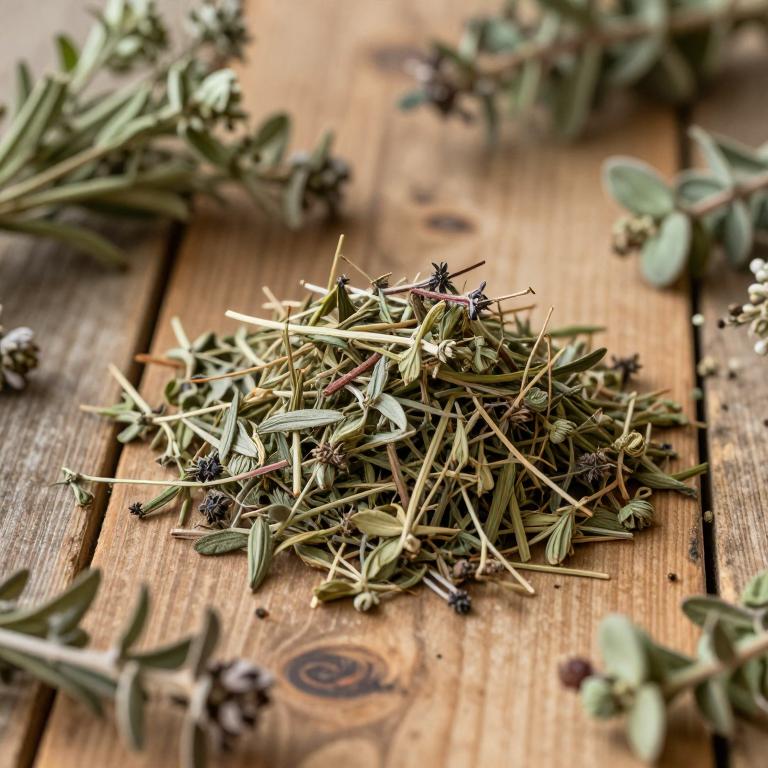
Names and Synonyms
Common Names
- Cistus multiflorus
- Spotted yellow sun rose
Scientific Names
Accepted name
Cistus halimifoliusSynonyms
- Strobon halimifolium
- Cistus multiflorus
- Halimium multiflorum
- Helianthemum halimifolium
- Halimium lasiocalycinum var. angustifolium
- Halimium halimifolium f. multiflorum
- Halimium halimifolium f. planifolium
- Halimium lepidotum var. crispatum
- Helianthemum halimifolium var. multiflorum
- Helianthemum halimifolium proles multiflorum
- Helianthemum halimifolium var. maculatum
- Halimium multiflorum var. microphyllum
- Halimium halimifolium subsp. rhiphaeum
- Halimium lepidotum
- Cistus halimifolius var. rhiphaeus
- Helianthemum halimifolium var. stellatotomentosum
- Cistus halimifolius var. obtusifolius
- Halimium halimifolium
- Halimium halimifolium subsp. lepidotum
- Halimium halimifolium subsp. multiflorum
- Halimium halimifolium var. rhiphaeum
- Cistus lepidotus
- Halimium hirsutissimum
- Halimium lasiocalycinum subsp. rhiphaeum
- Halimium antiatlanticum
- Halimium rhiphaeum
- Helianthemum halimifolium subsp. multiflorum
- Halimium lepidotum var. planifolium
- Helianthemum rhiphaeum
- Helianthemum halimifolium var. obtusifolium
- Helianthemum rhiphaeum var. elatum
- Halimium halimifolium var. planifolium
- Helianthemum crispatum
- Helianthemum halimifolium var. crispatum
- Helianthemum halimifolium var. inmaculatum
- Halimium halimifolium var. crispatum
- Halimium halimifolium var. multiflorum
- Helianthemum halimifolium var. minoriifolium
- Helianthemum lasiocalycinum var. angustifolium
Regional and Traditional Names
Spanish:
- Jaguarzo
German:
- Gelbe Zistrose
French:
- Ciste à feuille d'obiome
- Hélianthème à feuille d’arroche
Sources: Wikidata, Catalogue of Life
Taxonomical Classification
This plant belongs to the kingdom Plantae within the phylum Streptophyta and is classified under the class Equisetopsida and subclass Magnoliidae. It is further organized into the order Malvales and the family Cistaceae. Finally, it is identified by its specific genus, Cistus halimifolius.
| Rank | Classification |
|---|---|
| Kingdom | Plantae |
| Phylum | Streptophyta |
| Class | Equisetopsida |
| Subclass | Magnoliidae |
| Order | Malvales |
| Family | Cistaceae |
| Genus | Cistus |
Sources: The World Checklist of Vascular Plants (WCVP)
Distribution
This plant exhibits a specific geographical distribution centered within the Mediterranean region of Southwestern Europe. Its presence is notably documented across the diverse landscapes of Spain and Portugal. Additionally, the species can be found inhabiting several key islands, including the Balearic Islands and Corsica. It also maintains a documented range within the territory of Sardinia. Collectively, these locations define its specialized habitat throughout the southwestern European coastline.
| Region | Area |
|---|---|
| Southwestern Europe | Baleares |
| Southwestern Europe | Corse |
| Southwestern Europe | Portugal |
| Southwestern Europe | Sardegna |
| Southwestern Europe | Spain |
| Southeastern Europe | Italy |
| Northern Africa | Algeria |
| Northern Africa | Morocco |
| Northern Africa | Tunisia |
Sources: The World Checklist of Vascular Plants (WCVP)
Botanical Identification
Ecology
The ecology of Cistus halimifolius is characterized by its adaptation to specific altitudinal gradients, primarily thriving in low-lying Mediterranean landscapes. This species typically occupies an elevational range that centers around a mean of 64 m AMSL, positioning it within coastal or lowland scrubland ecosystems. It is well-suited to open, sunny habitats where it often functions as a pioneer species in disturbed or nutrient-poor soils. Its presence is indicative of sclerophyllous vegetation patterns, where it manages environmental stressors such as seasonal drought and high solar radiation through specialized physiological adaptations.
- Elevational range mean:
- 64 m AMSL
Life history
The life history of Cistus halimifolius is characterized by its status as a perennial plant, allowing it to persist through multiple growing seasons and maintain a stable presence within its ecological niche. In terms of its structural development and survival strategy, the species exhibits a nanophanerophyte life form, meaning its woody stems are kept very close to the ground, typically not exceeding a few centimeters in height, which helps the plant navigate specific environmental pressures.
- Life form :
- nanophanerophyte
- Lifecycle :
- perennial
Morphology
The morphology of Cistus halimifolius is characterized by a woody growth form, primarily manifesting as a shrub or subshrub. While it possesses the structural capacity to act as a self-supporting climber, functioning as a liana or vine in certain contexts, it is fundamentally categorized by its shrubby habit. The plant is an independent organism, showing no parasitic tendencies, and maintains a terrestrial existence rather than an epiphytic one. Its physical structure is defined by its woody nature, providing the necessary rigidity for its growth form.
- Climber :
- self-supporting
- Epiphyte :
- terrestrial
- Growth form :
- shrub
- Parasite :
- independent
- Woodiness :
- woody
Physiology
The physiology of Cistus halimifolius is characterized by a specialized metabolic framework optimized for survival in Mediterranean climates, specifically utilizing a C3 photosynthetic pathway. Under this C3 mechanism, the plant fixes atmospheric carbon dioxide through the enzyme RuBisCO during the Calvin cycle, a process that is highly efficient under moderate temperatures and adequate moisture but makes the plant susceptible to photorespiration during periods of extreme heat or drought. To compensate for the inherent vulnerabilities of the C3 pathway in arid environments, the plant employs various physiological adaptations, including regulated stomatal conductance to minimize transpirational water loss and structural modifications to its leaf anatomy. These physiological traits allow the species to maintain carbon assimilation and metabolic homeostasis while navigating the seasonal fluctuations of its native habitat.
- Photosynthetic pathway :
- C3
Reproduction
The reproduction of Cistus halimifolius is characterized by the production of extremely lightweight seeds, with a recorded mean seed mass of 0.00054 g. This specific seed mass remains consistent across its measured range, with both the minimum and maximum values documented at 0.00054 g. Regarding its dispersal strategy, the plant primarily exhibits an anemochorous dispersal syndrome, utilizing wind to transport its seeds away from the parent plant.
- Dispersal syndrome :
- anemochorous
- Seed mass mean:
- 0.00054 g
Sources: Global Inventory of Floras and Traits (GIFT)
Chemicals
Cistus halimifolius has 3 reported phytochemicals identified across 0 scientific publications and several other databases. The most consistently reported chemicals include kaempferol, myricetin, quercetin.
| Chemical | Supporting sources | Consensus |
|---|---|---|
| kaempferol | 1 supporting sources | ★☆☆☆☆ |
| myricetin | 1 supporting sources | ★☆☆☆☆ |
| quercetin | 1 supporting sources | ★☆☆☆☆ |
kaempferol
- Planta medica
myricetin
- Planta medica
quercetin
- Planta medica
Preparations
Cistus halimifolius has 2 reported preparations identified across 0 scientific publications and several other databases. The most consistently reported preparations include hydrohalcolic extract, infusion.
| Preparation | Supporting sources | Consensus |
|---|---|---|
| Hydrohalcolic extract | 1 supporting sources | ★☆☆☆☆ |
| Infusion | 1 supporting sources | ★☆☆☆☆ |
Hydrohalcolic extract
- Planta medica
Infusion
- Planta medica