Grey-leaved Cistus
Cistus albidus · Accepted scientific name
Scientific literature: Very Sparse (25 studies) · ★☆☆☆☆
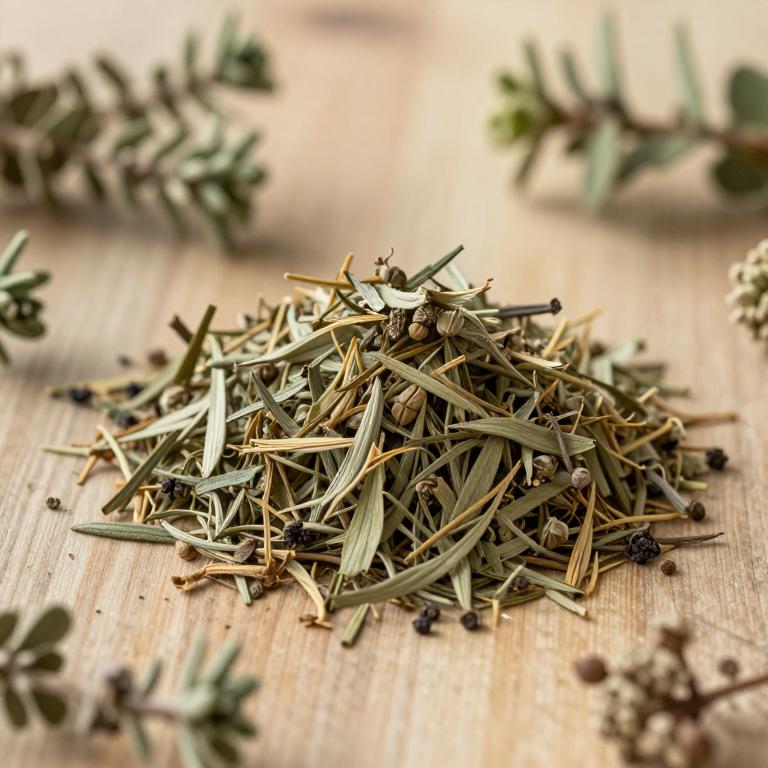
Grey-leaved Cistus, scientifically known as Cistus albiudus, is a remarkable medicinal shrub prized for its unique therapeutic properties. Renowned for its distinctive silvery foliage, this plant offers potent antioxidant and anti-inflammatory benefits. Traditionally utilized in holistic healing, it serves as a vital natural resource for various wellness applications.
Names and Synonyms
Common Names
- Grey-leaved Cistus
- grey-leaf cistus
- white-leaf rock-rose
Scientific Names
Accepted name
Cistus albidusSynonyms
- Cistus albidus f. albus
- Cistus albidus var. albus
- Cistus albidus var. anthyllidetorum
- Cistus albereensis
- Cistus albeerensis var. barcinonensis
- Cistus albidus var. angustifolius
- Cistus vulgaris var. albidus
- Cistus albidus var. attenuatifolius
- Cistus albidus var. grandifolius
- Cistus albidus var. latifolius
- Cistus albidus var. longifolius
- Cistus albidus var. parvifolius
- Cistus albidus f. platyphyllus
- Cistus albidus var. stenophyllus
Regional and Traditional Names
Spanish:
- Cistus lloverae
- Estepa mosquera
- Jogarzo blanco
- Jara blanquecina
- Cistus albeerensis var. barcinonensis
- Jaraestopa
- Cistus albidus var. attenuatifolius
- Cistus vulgaris
- Cistus eulaliae
- Cistus albidus f albus
- Cistus albidus var attenuatifolius
- Cistus albidus var anthyllidetorum
- Cistus pascalis
- Cistus chevalieri
- Cistus albidus var. microcarpus
- Cistus albidus f platyphyllus
- Jara Blanca
German:
- Weißliche Zistrose
- weißliche Zistrose
French:
- Ciste blanc
- Ciste cotonneux
Sources: Wikidata, Catalogue of Life
Taxonomical Classification
This plant belongs to the kingdom Plantae and the phylum Streptophyta, falling under the class Equisetopsida and subclass Magnoliidae. Within the order Malvales, it is classified under the family Cistaceae and the genus Cistus.
| Rank | Classification |
|---|---|
| Kingdom | Plantae |
| Phylum | Streptophyta |
| Class | Equisetopsida |
| Subclass | Magnoliidae |
| Order | Malvales |
| Family | Cistaceae |
| Genus | Cistus |
Sources: The World Checklist of Vascular Plants (WCVP)
Distribution
This plant exhibits a specific geographical distribution concentrated within the Mediterranean region of Southwestern Europe. It can be found growing across several key island territories, including the Baleares, Corse, and Sardegna. Beyond these islands, its range extends to the mainland portions of the European coast. Specifically, its presence is documented within the borders of France. Finally, the species is also distributed throughout the coastal landscapes of Portugal.
| Region | Area |
|---|---|
| Southwestern Europe | Baleares |
| Southwestern Europe | Corse |
| Southwestern Europe | France |
| Southwestern Europe | Portugal |
| Southwestern Europe | Sardegna |
| Southwestern Europe | Spain |
| Southeastern Europe | Italy |
| Northern Africa | Algeria |
| Northern Africa | Morocco |
Sources: The World Checklist of Vascular Plants (WCVP)
Botanical Identification
Ecology
The ecology of Cistus albidus is characterized by its preference for specific altitudinal zones within Mediterranean ecosystems, typically thriving at an elevational range that centers around a mean of 748 m AMSL. It is most frequently found in maquis shrublands and garrigue habitats, where it occupies well-drained, calcareous, or siliceous soils. This species is highly adapted to xeric environments, demonstrating significant resilience to summer droughts and high solar radiation through its specialized physiological mechanisms. It often functions as a pioneer species in disturbed areas or in landscapes shaped by fire, playing a crucial role in soil stabilization and nutrient cycling within its specific montane and sub-montane ecological niches.
- Elevational range mean:
- 748 m AMSL
Life history
The life history of Cistus albidus is characterized by its status as a perennial plant, allowing it to persist through multiple growing seasons and maintain a stable presence within its Mediterranean ecosystem. As a nanophanerophyte, its growth habit is defined by having small, woody stems that remain relatively low to the ground, typically staying below a certain height threshold while providing a structural foundation for its foliage and seasonal blooms. This combination of a long-lived lifecycle and a compact, low-growing life form enables the species to endure environmental fluctuations and successfully colonize rocky or scrubland habitats.
- Life form :
- nanophanerophyte
- Lifecycle :
- perennial
Morphology
The morphology of Cistus albidus is characterized by a growth form primarily categorized as a shrub or subshrub, exhibiting a robust and distinctly woody structure. While it functions as a self-supporting plant, its architectural habit can occasionally manifest climbing tendencies, behaving as a self-supporting liana or vine in certain environmental contexts. This woody development allows the plant to maintain a stable, perennial framework, distinguishing its physical stature from non-woody or herbaceous species.
- Climber :
- self-supporting
- Growth form :
- shrub
- Woodiness :
- woody
Physiology
The physiology of Cistus albidus is characterized by a specialized carbon assimilation strategy and distinct morphological adaptations to its environment. The plant utilizes a C3 photosynthetic pathway, which dictates its metabolic processes and gas exchange mechanisms during carbon fixation. This metabolic framework is complemented by its structural leaf properties, specifically a mean Specific Leaf Area (SLA) of 95.16 cm²/g. This value reflects a specific balance between leaf thickness and surface area, playing a crucial role in the plant's resource acquisition, water-use efficiency, and its ability to regulate transpiration within its ecological niche.
- Photosynthetic pathway :
- C3
- Specific Leaf Area (SLA) mean:
- 95.16 cm²/g
Reproduction
The reproduction of Cistus albidus is characterized by the production of small seeds and specific dispersal mechanisms. The seeds produced by this species are notably lightweight, with a minimum mass of 0.00098 g, a maximum mass of 0.00123 g, and a mean seed mass of approximately 0.001105 g. These seeds are contained within dry fruits, a trait that facilitates their release and subsequent movement. Regarding the dispersal syndrome, the plant is primarily anemochorous, relying on wind for the distribution of its seeds, though it also exhibits characteristics consistent with unspecialized dispersal strategies.
- Dispersal syndrome :
- anemochorous
- Fruit dryness :
- dry
- Seed mass max:
- 0.00123 g
- Seed mass mean:
- 0.001105 g
- Seed mass min:
- 0.00098 g
Sources: Global Inventory of Floras and Traits (GIFT)
Plant Parts
Cistus albidus has 1 reported plant parts identified across 1 scientific publications and several other databases that are studied for medicinal purposes. The most consistently reported plant part include leaf.
| Plant part | Supporting sources | Consensus |
|---|---|---|
| Leaf | 1 supporting sources | ★☆☆☆☆ |
Leaf
- Food science & nutrition
Chemicals
Cistus albidus has 11 reported phytochemicals identified across 1 scientific publications and several other databases. The most consistently reported chemicals include Gallic acid, RUTIN, polyphenols, Astragalin, CALCIUM.
| Chemical | Supporting sources | Consensus |
|---|---|---|
| Gallic acid | 2 supporting sources | ★☆☆☆☆ |
| RUTIN | 2 supporting sources | ★☆☆☆☆ |
| polyphenols | 2 supporting sources | ★☆☆☆☆ |
| Astragalin | 1 supporting sources | ★☆☆☆☆ |
| CALCIUM | 1 supporting sources | ★☆☆☆☆ |
| CATECHIN | 1 supporting sources | ★☆☆☆☆ |
| POTASSIUM | 1 supporting sources | ★☆☆☆☆ |
| Terpenes | 1 supporting sources | ★☆☆☆☆ |
| catechol | 1 supporting sources | ★☆☆☆☆ |
| quercetin | 1 supporting sources | ★☆☆☆☆ |
Gallic acid
- Acta pharmaceutica (Zagreb, Croatia)
- Food science & nutrition
RUTIN
- Acta pharmaceutica (Zagreb, Croatia)
- Food science & nutrition
polyphenols
- Plants (Basel, Switzerland)
- Food science & nutrition
Astragalin
- Acta pharmaceutica (Zagreb, Croatia)
CALCIUM
- Acta pharmaceutica (Zagreb, Croatia)
CATECHIN
- Acta pharmaceutica (Zagreb, Croatia)
POTASSIUM
- Acta pharmaceutica (Zagreb, Croatia)
Terpenes
- Plants (Basel, Switzerland)
catechol
- Acta pharmaceutica (Zagreb, Croatia)
quercetin
- Food science & nutrition
Activities
Cistus albidus has 3 reported activities identified across 1 scientific publications and several other databases. The most consistently reported activities include Analgesic, Antioxidant, Hypoglycemic.
| Activity | Supporting sources | Consensus |
|---|---|---|
| Analgesic | 1 supporting sources | ★☆☆☆☆ |
| Antioxidant | 1 supporting sources | ★☆☆☆☆ |
| Hypoglycemic | 1 supporting sources | ★☆☆☆☆ |
Analgesic
- Acta pharmaceutica (Zagreb, Croatia)
Antioxidant
- Acta pharmaceutica (Zagreb, Croatia)
Hypoglycemic
- Food science & nutrition
Conditions
Cistus albidus has 4 reported investigations on conditions identified across 1 scientific publications and several other databases. The most consistently reported conditions include inflammation, leukemia, pain, prostate cancer.
| Condition | Supporting sources | Consensus |
|---|---|---|
| Inflammation | 1 supporting sources | ★☆☆☆☆ |
| Leukemia | 1 supporting sources | ★☆☆☆☆ |
| Pain | 1 supporting sources | ★☆☆☆☆ |
| Prostate cancer | 1 supporting sources | ★☆☆☆☆ |
Inflammation
- Plants (Basel, Switzerland)
Leukemia
- Plants (Basel, Switzerland)
Pain
- Plants (Basel, Switzerland)
Prostate cancer
- Plants (Basel, Switzerland)
Preparations
Cistus albidus has 1 reported preparations identified across 1 scientific publications and several other databases. The most consistently reported preparations include aqueous extract.
| Preparation | Supporting sources | Consensus |
|---|---|---|
| Aqueous extract | 1 supporting sources | ★☆☆☆☆ |
Aqueous extract
- Food science & nutrition