Cistanche
Cistanche · Accepted scientific name
Scientific literature: Very Sparse (7 studies) · ★☆☆☆☆
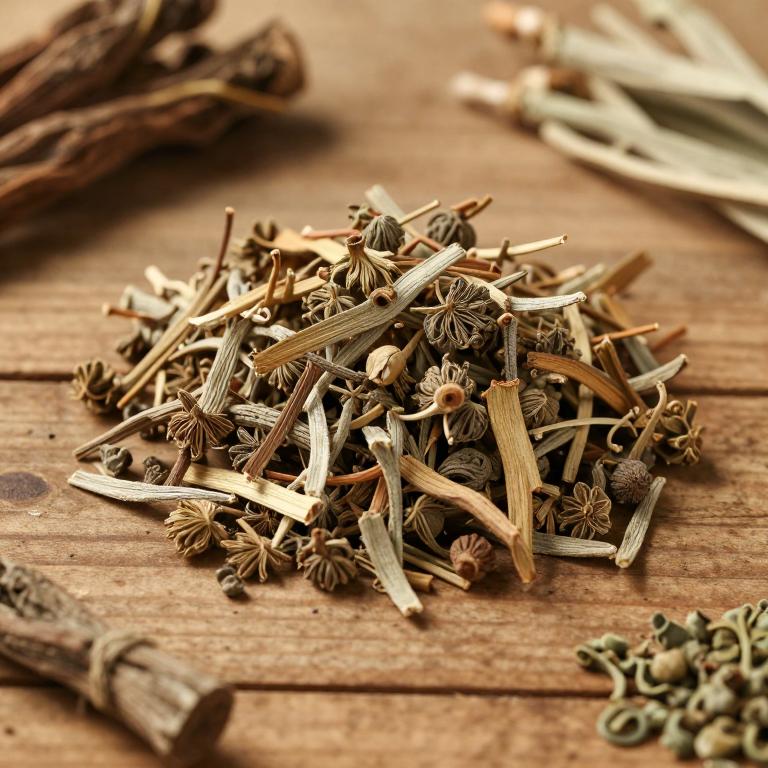
Cistanche, scientifically known as Cistanche, is a fascinating parasitic plant renowned in traditional medicine for its therapeutic potential. Often referred to as "desert ginseng," it is prized for its ability to support vitality, enhance cognitive function, and combat fatigue, offering unique bioactive compounds that promote overall longevity and wellness.
- Family
- Orobanchaceae
- Native range
- Europe
- Parts used
- Not available
- Common names
- Not available
- Scientific synonyms
- Haemodoron
Names and Synonyms
Scientific Names
Accepted name
CistancheSynonyms
- Haemodoron
Regional and Traditional Names
French:
- Cistanches
Sources: Wikidata, Catalogue of Life
Taxonomical Classification
This plant belongs to the kingdom Plantae and the phylum Streptophyta, falling under the class Equisetopsida and subclass Magnoliidae. Within the order Lamiales, it is classified under the family Orobanchaceae and specifically within the genus Cistanche.
| Rank | Classification |
|---|---|
| Kingdom | Plantae |
| Phylum | Streptophyta |
| Class | Equisetopsida |
| Subclass | Magnoliidae |
| Order | Lamiales |
| Family | Orobanchaceae |
| Genus | Cistanche |
Sources: The World Checklist of Vascular Plants (WCVP)
Distribution
This plant is primarily distributed across several regions within Southwestern Europe. Specifically, its presence can be documented in the countries of France, Portugal, and Spain. Moving eastward, the species is also found throughout Southeastern Europe. Within this area, it inhabits the territory of Italy. Additionally, its geographical range extends to the island of Kriti.
| Region | Area |
|---|---|
| Southwestern Europe | France |
| Southwestern Europe | Portugal |
| Southwestern Europe | Spain |
| Southeastern Europe | Italy |
| Southeastern Europe | Kriti |
| Eastern Europe | East European Russia |
| Eastern Europe | South European Russia |
| Northern Africa | Algeria |
| Northern Africa | Egypt |
| Northern Africa | Libya |
Sources: The World Checklist of Vascular Plants (WCVP)
Chemicals
Cistanche has 1 reported phytochemicals identified across 0 scientific publications and several other databases. The most consistently reported chemicals include Echinacoside.
| Chemical | Supporting sources | Consensus |
|---|---|---|
| Echinacoside | 2 supporting sources | ★☆☆☆☆ |
Echinacoside
- OncoTargets and therapy
- Journal of molecular histology
Activities
Cistanche has 3 reported activities identified across 0 scientific publications and several other databases. The most consistently reported activities include Antiaging, Anticancer, Neuroprotective.
| Activity | Supporting sources | Consensus |
|---|---|---|
| Antiaging | 1 supporting sources | ★☆☆☆☆ |
| Anticancer | 1 supporting sources | ★☆☆☆☆ |
| Neuroprotective | 1 supporting sources | ★☆☆☆☆ |
Antiaging
- Journal of molecular histology
Anticancer
- Journal of molecular histology
Neuroprotective
- Journal of molecular histology
Conditions
Cistanche has 2 reported investigations on conditions identified across 0 scientific publications and several other databases. The most consistently reported conditions include cancer, ovarian cancer.
| Condition | Supporting sources | Consensus |
|---|---|---|
| Cancer | 1 supporting sources | ★☆☆☆☆ |
| Ovarian cancer | 1 supporting sources | ★☆☆☆☆ |
Cancer
- OncoTargets and therapy
Ovarian cancer
- Journal of molecular histology
Preparations
Cistanche has 1 reported preparations identified across 0 scientific publications and several other databases. The most consistently reported preparations include ECH extract.
| Preparation | Supporting sources | Consensus |
|---|---|---|
| Ech extract | 1 supporting sources | ★☆☆☆☆ |
Ech extract
- Phytotherapy research : PTR