Cistanche sinensis
Cistanche sinensis · Accepted scientific name
Scientific literature: Very Sparse (15 studies) · ★☆☆☆☆
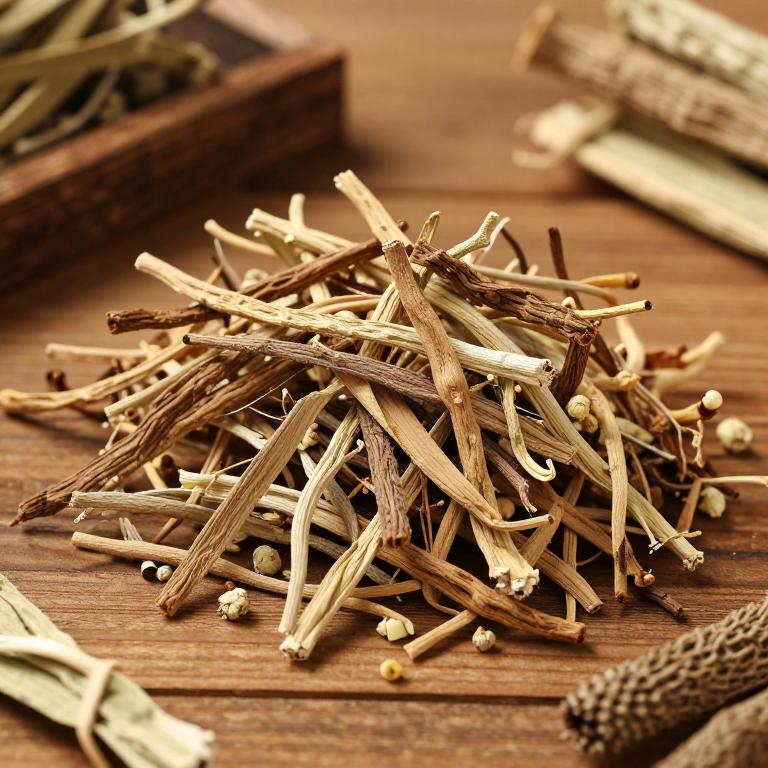
, scientifically known as Cistanche sinensis, is a parasitic medicinal herb deeply rooted in traditional Chinese medicine. Renowned for its unique bioactive compounds, it is widely utilized to nourish the kidneys, tonify the blood, and alleviate fatigue. This potent plant offers significant therapeutic potential for enhancing overall vitality and wellness.
- Family
- Orobanchaceae
- Native range
- Asia-Temperate
- Parts used
- Stem
- Common names
- Not available
- Scientific synonyms
- Not available
Names and Synonyms
Scientific Names
Accepted name
Cistanche sinensisSources: Wikidata, Catalogue of Life
Taxonomical Classification
This plant belongs to the kingdom Plantae and is classified under the phylum Streptophyta and class Equisetopsida. Within the subclass Magnoliidae, it is organized under the order Lamiales and the family Orobanchaceae. Its specific taxonomic designation is placed within the genus Cistanche, specifically as the species Cistanche sinensis.
| Rank | Classification |
|---|---|
| Kingdom | Plantae |
| Phylum | Streptophyta |
| Class | Equisetopsida |
| Subclass | Magnoliidae |
| Order | Lamiales |
| Family | Orobanchaceae |
| Genus | Cistanche |
Sources: The World Checklist of Vascular Plants (WCVP)
Distribution
This plant, known scientifically as Cistanche sinensis, exhibits a specific geographical distribution across several key regions of China. It can be found growing in the northern territories within Inner Mongolia. The species is also widely documented across the China North-Central region. Furthermore, its presence extends westward into the Xinjiang province. These locations highlight the plant's preference for the arid and semi-arid environments found in these parts of the country.
| Region | Area |
|---|---|
| China | Inner Mongolia |
| China | China North-Central |
| China | Xinjiang |
Sources: The World Checklist of Vascular Plants (WCVP)
Plant Parts
Cistanche sinensis has 1 reported plant parts identified across 1 scientific publications and several other databases that are studied for medicinal purposes. The most consistently reported plant part include stem.
| Plant part | Supporting sources | Consensus |
|---|---|---|
| Stem | 1 supporting sources | ★☆☆☆☆ |
Stem
- Frontiers in microbiology
Chemicals
Cistanche sinensis has 9 reported phytochemicals identified across 1 scientific publications and several other databases. The most consistently reported chemicals include Echinacoside, Acteoside, 6-Deoxycatalpol, 8-epi-Loganic acid, Cistanoside A.
| Chemical | Supporting sources | Consensus |
|---|---|---|
| Echinacoside | 3 supporting sources | ★★☆☆☆ |
| Acteoside | 2 supporting sources | ★☆☆☆☆ |
| 6-Deoxycatalpol | 1 supporting sources | ★☆☆☆☆ |
| 8-epi-Loganic acid | 1 supporting sources | ★☆☆☆☆ |
| Cistanoside A | 1 supporting sources | ★☆☆☆☆ |
| Isoacteoside | 1 supporting sources | ★☆☆☆☆ |
| betaine | 1 supporting sources | ★☆☆☆☆ |
| mannitol | 1 supporting sources | ★☆☆☆☆ |
| sucrose | 1 supporting sources | ★☆☆☆☆ |
Echinacoside
- Journal of pharmaceutical and biomedical analysis
- Frontiers in microbiology
- Biological & pharmaceutical bulletin
Acteoside
- Journal of pharmaceutical and biomedical analysis
- Biological & pharmaceutical bulletin
6-Deoxycatalpol
- Journal of pharmaceutical and biomedical analysis
8-epi-Loganic acid
- Journal of pharmaceutical and biomedical analysis
Cistanoside A
- Frontiers in microbiology
Isoacteoside
- Frontiers in microbiology
betaine
- Journal of pharmaceutical and biomedical analysis
mannitol
- Journal of pharmaceutical and biomedical analysis
sucrose
- Journal of pharmaceutical and biomedical analysis
Conditions
Cistanche sinensis has 2 reported investigations on conditions identified across 1 scientific publications and several other databases. The most consistently reported conditions include impotence, infertility.
| Condition | Supporting sources | Consensus |
|---|---|---|
| Impotence | 1 supporting sources | ★☆☆☆☆ |
| Infertility | 1 supporting sources | ★☆☆☆☆ |
Impotence
- Yao xue xue bao = Acta pharmaceutica Sinica
Infertility
- Yao xue xue bao = Acta pharmaceutica Sinica
Preparations
Cistanche sinensis has 1 reported preparations identified across 1 scientific publications and several other databases. The most consistently reported preparations include fleshy stems.
| Preparation | Supporting sources | Consensus |
|---|---|---|
| Fleshy stems | 1 supporting sources | ★☆☆☆☆ |
Fleshy stems
- Frontiers in microbiology